Red Light Through Closed Eyelids

Red Light

Red light through closed eyelids gave the order: get up!

Squinting and scratching myself, I stood, looked around. Nothing of interest.

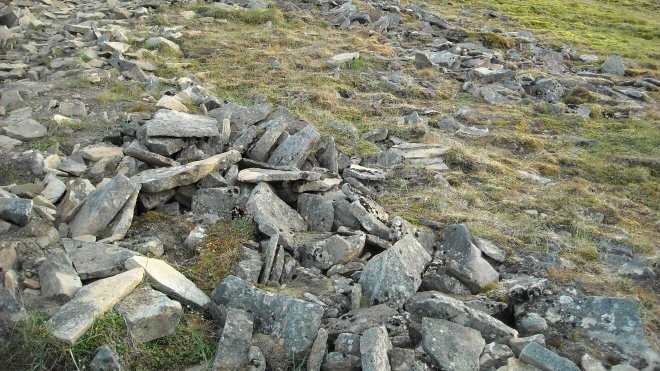
Morning in the old scenery: moraines, kurums, cubic meters of rock. Explosions rumbled in the distance, machine guns rattled, light artillery yapped and heavy artillery barked. A war had genuinely started.

Nothing to do over there.


I turned my back on the rocks, faced the sands.

What had Anton said? Nobody ever came back from there? I had no wish to die of thirst, hunger and hallucinations in the white silence. It’s romantic in songs and repellent in the flesh. Proven by the pink sands. No desire to trudge into the desert.

No choice either, though.

Fate pushed me in the only direction there was: toward the path between the sands and the rocks, racing across the ground like a little snake and then suddenly frozen. I put my hand in my trouser pocket and found the grenade.

Where from?

Ah, yes. The horse in the overcoat slipped it to me. Let it be. I’m not capable of going out with music, but I had to get moving. Singing to myself: «What the hell do we need a war for, to hell with it!» I set off toward the path.

Notes

White Silence

Vysotsky's song "White Silence" (1972) was written for the film "Sannikov Land," but he was not approved for the role due to censorship. The song later appeared in the film "72 Degrees Below Zero" (1976).
Kurums

Kurums are boulder fields formed in mountains through the weathering of rock. They form in harsh climates, especially permafrost zones, where temperature swings shatter stone. There are mobile and stabilized kurums, as well as stone seas, rivers, and streams. They matter for ecosystems and pose challenges for construction.
Moraines

Moraines are deposits of debris (from boulders to clay) transported and accumulated by glaciers as they move and grind down rock.
Who the Hell Needs This War

"Who the Hell Needs This War" is a 1994 anti-war song by Olga Arefyeva from the album "Batakakumba." The story behind the reggae-style track, its influence on Russian music, and a chronological slip in the novel.
Samuil Marshak's "February"

An analysis of Samuil Marshak's poem "February" (1926): its origins, artistic features, the image of the snake-like snowdrift, its patriotic themes, and its place in the poet's body of work.