July 5, 1993
Monday
6:40 PM
For the first five minutes Anton spoke, dully and monotonously, without swearing. The hyperboles were gone. The epithets vanished. The allegories and metaphors perished. Even adjectives and participles had disappeared from his brief and clear speech.
He reported, regulation-style, that he no longer ran protection on kiosks and did not drive to meets with the blue ones. He had opened a charitable foundation to help veterans of Afghanistan. Now he ran consumer goods by the truckload. Customs sucked it up and had nothing against Anton – the right people had forbidden fiscal thoughts about trucks carrying Anton’s cargo. The foundation had reinforced-concrete tax breaks obtained through the right lads. Payments in favor of the state came to zero. Profit was assured! If anything went wrong, the right lads with epaulets would help, because they held a share in the foundation. Zhorik perked up at «customs sucked it up», but after «the right lads» sank into melancholy. Anton summed up:
— No. Roughing people up isn’t profitable anymore. Why waste time and manpower on shakedowns? Three years ago there was money in squeezing kiosks. That angle’s dead now.
— Well put, not like Chicha, — Zhorik concluded. — Maybe you know some people who could help out? Anyone not tied up with something already?
Anton puffed his cigar, walked over to the desk, flipped through his planner, muttered doubtfully:
— Everyone’s tied up. Hm… Maybe this one. Write it down.
Zhorik pulled out his Nokia, got ready to listen. Anton dictated a number, explained it was a home number, don’t call without good reason, and added: «the guy’s sharp, one of ours, a fellow vet. Name’s Seva. In reserve right now, but he’ll help if it comes to it. Has to be something serious, though. Seva doesn’t bother with piddling stuff.»
Zhorik assured him: «We’ll sort the small stuff ourselves,» and finished fiddling with the phone. Anton took an interest in the device:
— Let me take a look at the mobile.
The two of them dove into a discussion of the technical characteristics of the handsets available on the official and black markets of Moscow mobile communications, condemned the lack of competition at Moscow Cellular and the resulting dearness of prices, and then measured their prosperity. This time Zhorik won, boasting that he spent a grand of green a week on communications. Anton gave in: about three times less. Probably because he sits in an office. Whoever needs him calls the office number.
The conversation swung around to rent payments.
It came out that some clowns owed money to a creditor, and the creditor came to Anton. The mansion had to be taken from the clowns for the debt. The creditor got nothing, because he was a clown too. It had to be kept. What else? He restored the hovel with the help of some Yugoslavs. Now it has a Euro-renovation with excesses like an attic, a winter garden and a little fountain in the inner courtyard. Sixteen hundred square meters in all. Seven people sit in the building. Monthly expenses for the foundation – ten grand of Baku money a month. Worth it. It brings a profit. The building has everything that ought to be there.
At the word «profit» Zhorik perked up and cut into Anton’s monologue: «Maybe we should get something going? Got the cash, got the manpower too!» and nodded toward me.
Anton, without missing a beat, continued in the same monotone, like he was reading a report on the labor achievements of a construction and assembly office: «put a billiard room in the basement, a dining room across from it. Wanted to cram in a pool, didn’t work out. Settled for a sauna and a bath, three by two by one and a half meters. First floor’s got reception, a security post, a meeting room…»
Zhorik marveled at the news of a glass-roofed bathroom up in the attic and came back around to his old point:
— So how about it? Get something going together? Money’s no issue.
Anton smirked, topped off his own glass and Zhora’s with cognac, went on:
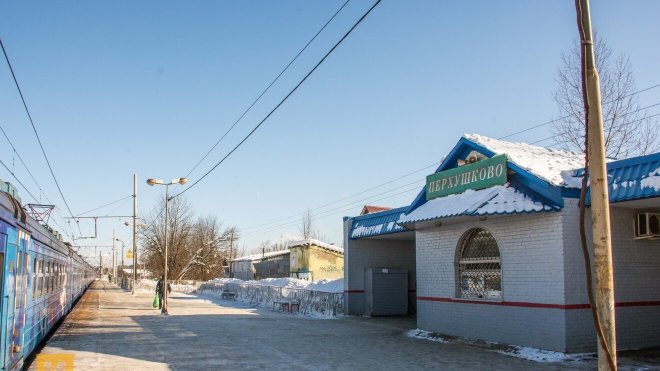
– Think for yourself. Why would I cook anything up? I have everything. Bought a six-room apartment on Povarskaya. Furnished it. Now it’s a museum. Bought a house in Zagoryanka. Furnished it. Also a museum. Started building a second house in Perkhushkovo. For myself, not for the wife: with a cinema in the basement, a billiard room on the roof and a bathhouse in the outbuilding. There’ll be a sauna – twenty square meters, and a pool – twenty by five. A new motor every month. You saw it yourself, nowhere left to park. What next? Why break your back if things run smooth?
— Smooth today, crooked tomorrow, — Zhorik launched into a lecture about the need to invest in the future. — Look here. Say they shut down the foundation, then what? Customs stays in the loop, but you, they gave you a year or two to fatten up, help the guys with epaulets out, and then they cut you loose. They’ll cancel the tax breaks and strip the foundations bare. You’ll end up just like everyone else. Fat, with a pool, but with no real rights to any of it. What’ll you do then? No sneaking through for free, there’s an article in the code for any way you try to dodge it. And it won’t be some customs clerk named Pupkin sorting you out, it’ll be some sharp young thing from state security. You’ll get packaged up by the same kind of eagles you are, except with epaulets and IDs. And rightly so. Because they’re the right guys, pulling their harness on state service for a modest cut, while you, you’re just a profiteer. They’ll nail you to the wall, some philanthropist you are!
For a second it seemed like I’d heard something similar before, but I couldn’t place where or when. Went back to watching Zhorik thrash around under the weight of Anton’s mighty arguments:
— Don’t give a damn what happens later. Not one damn, not even off a big bass funeral drum. I’ll go work as a janitor if it comes to that. All the properties are bought clean. Nobody’s taking them away. That’s mine. The cars, mine. Everything’s mine and stays with me, no matter what, forever. Understand? Let other people bang the cymbals. I’ve earned enough for the rest of my life. No point strapping myself into a new harness.
— But maybe…
— No. Out of the question. Why would I work with you? No point bringing in a third partner. Timokha and I handle everything between the two of us. Better to split profit two ways than three. You know how it is.
Zhorik didn’t give up:
— Still, though?
Anton laid it out:
— I’m not handing over my connections, find your own. If we work together, you bring me and Timokha on as founders. Our cut’s sixty-six percent of profit, and you handle the losses yourself. No question about protection, we’re better than any roof out there, bandit, cop, or security service.
Zhorik ground his teeth:
— Won’t work. Might as well deal with the cops. They only take ten percent.
Anton shrugged:
— Suit yourself. They start at ten and end up at a hundred.
Zhorik changed the subject:
— I got that the house in Zagoryanka was built for your wife. What I didn’t get was, you actually got married?
— Ah, that, — Anton waved a hand. — You know I don’t give a damn about women, but I had to show respect to my old commander, took his daughter on as a partner, so to speak. Half an hour from Sofrino to Zagoryanka. Had to build a house there, for the mother-in-law and her little tomatoes and strawberries. Perkhushkovo’s purely for myself: twenty hundredths of a hectare of English lawn, home theater in the basement, on the roof…
Zhorik waved a hand: «Already heard that one,» and got up off the couch. The conversation was over.
I got up too. Anton stayed exactly where he was sitting. As we reached the door, Anton remarked:
— If you two decide to get into imports, come back.
Zhorik, slowing his stride slightly, nodded, not quite affirmatively, more like tentatively:
— Might come back, if the terms change. Handing over two-thirds, that’s robbery.
Anton reassured him:
— For customs clearance, you don’t hand over anything, just pay the going rate. Five grand a truckload, as long as it’s not cigarettes.
— What’ve you got against cigarettes?
— I’ve got tobacco locked down tight, no interest in breeding competitors. Trade in booze instead, fat market. Good luck! You’ll need it.
— Er, seems like you don’t need anything, not even luck, — Zhorik answered with dignity. — So I’ll wish you health instead. Smoke a little less, all right?
— Off you go, off you go, look at you, playing doctor, — Anton blew a tight stream of smoke in Zhora’s direction.
We left the office and retraced our path in reverse through the empty corridors past deserted offices. On the way out, Zhorik clapped me on the shoulder:
— Don’t mope. The customs clearance problem’s solved. Now all that’s left is figuring out what booze the masses are lapping up, and then we’re golden!