July 25, 1993
Sunday
4:00 PM
We drove out into the countryside in the Taurus, which surprised me. Zhorik explained that rear-wheel drive wasn’t built for driving through muck.
First by highway, then by concrete road, and at the end by dirt track, we reached some pig farms fenced with barbed wire. In the ruts ahead of us a beige «Moskvich-kabluk» raised dust, with Karabas in it.
We stopped.
Zhorik threw open the door and let fresh air into the car. He drummed «We Will Rock You» with his foot on the floor and his palm on the wheel, got out, stamped about, slammed the door and headed for the «kabluk».
Tension crackled in the air. It felt like gangsters in leather trench coats were about to pull up and trade a crate of gold for a suitcase full of a million.
Déjà vu washed over me.
Felt like this had happened recently. Had I seen it? Or hadn’t I? Maybe it wasn’t déjà vu at all, just a mash-up of the dozens of gangster movies I’d watched?
The moment Zhorik got back behind the wheel, I pounced with a question:
— Listen, Zhora! Is it possible that I can see the future?
— Easily.
— I have this feeling, like… — I faltered, not sure how to explain the sensation.
Zhorik smirked, tore a sheet from his notebook, and drew a line on it with his pen:
— Look, time is a line. The start of the line is July first, and the end is the thirty-first.
— Got it.
— At any given moment, you can only be at one specific point on the line. Today, you can only be right here, — Zhorik pulled a needle out of his jacket lapel and stuck it through the sheet. — Right here.
— Uh-huh.
— Now here’s the trick, — Zhorik crumpled the sheet up into a paper ball: — In reality, space isn’t linear.
Zhorik stuck the needle through the ball:
— Look. The needle is you, and at any given moment you can be in different places and on different dates. And in each of them, you’re a different you.
Zhorik unfolded the ball back into a crumpled sheet and jabbed a finger at one puncture: «Here you’re a student,» then a second: «Here you’re a businessman,» and a third: «And here you’re a straight-up crook.»
I tried to picture the space, the line of time, first straight, then crumpled…
Right. Time can be deformed. And what about me myself, and my consciousness?
— A body can be in ten points at once, I get that. But what about consciousness? It has to be different in every place! Or is it one and the same?
– You’re reasoning in the right direction, greenhorn. Heard of the Ship of Theseus? In our case it works a bit differently. The boss, I think, explained to you that consciousness is not tied to the body, it floats in a field. Ahem, more precisely it occupies a record in a table. However many bodies you have – that’s how many records are in the table. There are glitches, when the body is connected to the wrong record. That’s where déjà vu comes from. But it’s rare, and within two or three seconds the organism is reconnected correctly. Clear?
— No.
— Alright, look. — Zhorik drew lines through the punctures, ten of them, matching the number of holes. — Your essence is bouncing around in ten spaces and getting projected onto this sheet. Time can’t be deformed. But you can bend space to fit the right theory and project it onto a two-dimensional sheet. Get it?
— Sort of, — I remembered lectures on theoretical physics, where ten-dimensional spaces got projected easier than boiling an egg.
— There you go, good man.
— And then what?
— There’s no «and then.» Didn’t forget that the lines symbolize the passage of time, did you? Look.
Zhorik brought his fingernail back to the corner of the sheet and traced it bottom to top along the line with two punctures:
— You’re living along this line, — his nail passed the first puncture, — and you end up in a place where you also were, but from a different line.
And here’s the second puncture, but it originally had its own line, right here, crossing it!
— And? — I was burning with impatience. The answer was somewhere close.
— At that point, you connect to yourself from another time, for a second or two. And then you keep living along your own line. — Zhorik’s fingernail slid upward.
Right! How were these spaces arranged? How many were there? How many lines could there be in my projection?
An idiotic question slipped out of me:
— So which line are you on right now?
Zhorik smirked:
– The squiggliest one.
I fell silent, remembering how I’d watched myself out in the sands, how I’d suffered in that room for a month and a half that fit into a single night.
Still made no sense.
Nothing to do for now, might as well think it over.
— What did you do before you met me?
— Nothing. Spent half my life studying the word of God, and in the two quarters left, first I broke the word, then the word broke me.
— And then?
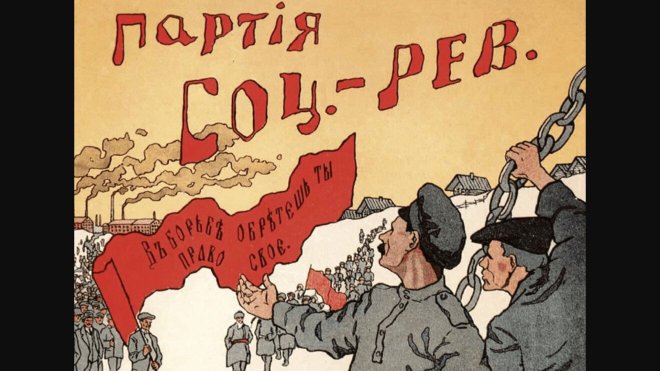
– They broke me, – Zhorik smiled: – Was a seminarian, was a Socialist Revolutionary, was a commissar, was a fellow traveler, was a fool, and then here, into a perestroika that has not ended since fifty-six.
The engine roared, the «Taurus», wheels spinning on the plowed field, lurched toward the pig farm, from behind which drove out an eggplant-colored «Moskvich-Aleko», my papa’s dream. He had driven a four-twelve for fifteen years and now dreamed of the advanced model.
Until recently, the eggplant-colored dream had seemed like a perfectly acceptable choice. Now, riding in the Taurus prompted a puzzled question: «Why not a Bucephalus?»
The Kabluk pulled up to the Moskvich, fell in behind it. The two of them pulled out onto the road, and then we rolled along in convoy: Moskvich, Kabluk, Taurus.
I kept turning it over in my head. Zhorka couldn’t have been a commissar. That lowlife, reading and following the Party charter? Not a chance, not ever!
For two hours, as we drove around the Moscow region and loaded green crates from sheds into the Kabluk, I kept thinking about the revolution, about commissars shooting gold-braided officers while, at that very same second, sitting right here behind the wheel of the Taurus...
My thoughts ran out. We drove into Moscow.