Spring–summer 1995
Another term Zhorik coined, «Clint Eastwood,» meant: «Whoever pulls the trigger first is the prosecutor.» Hearing the name of the blue-eyed cowboy, I’d head off to see Yasha, Vasilich’s — that is, Vladimir Vasilyevich’s — man, pointing him at the source of a problem that couldn’t be solved through civilized means.
Who was Yasha? A short story.
In the summer Seva, who was responsible for security, reported that his health was not what it was, his liver was not tin-plated. He can’t drink as before with the lampasy, he has saved some money and is leaving for the Czech Republic for good. He hasn’t found a candidate to replace him, but recommends approaching Vladimir Vasilyevich.
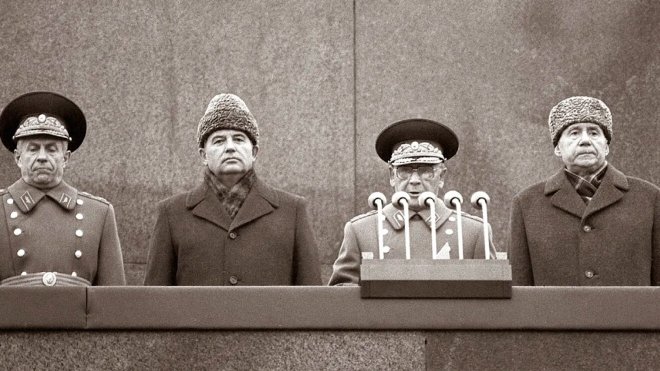
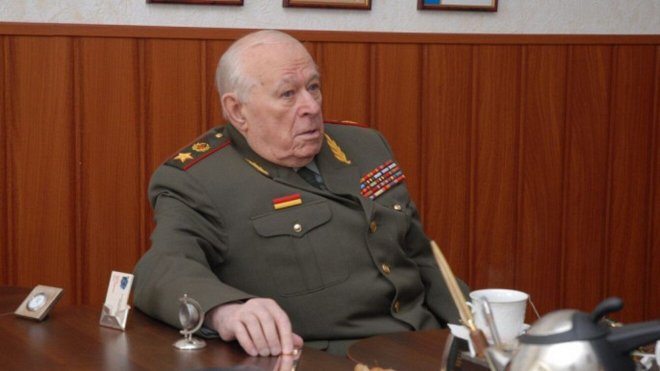
Zhorka’s driver turned out to be not a major, as I had heard it at his hiring, but a major general, removed from the SVR establishment and sent out on free bread four years ago after the reduction of the general staff, like a dozen of his fellow career officers. Sly Zhorka knew about Vasilich’s heroic past, but the two of them did not flash Vasilich’s general’s epaulets, using the scheme from detective novels in which a fixer tags along with his patron in the guise of a personal driver and takes in what is going on.
Vasilich refused to move to the official post of head of the security service: «I don’t need that. I’m not Bobkov.»
I learned Vasilich and Zhorka’s shared secret by accident, when I noticed an anomaly in the payroll: three thousand dollars every week for a Kazbek Volkov. Nobody had ever seen Kazbek — Zhorik collected the money for him. I figured he was skimming and needled him about it: the whole company’s yours, why bother with small change? Zhorik sighed and let me in on Vasilich’s secret, finishing with a firm: «Not a word to anyone!»
Nicely done! I regularly consulted Vasilich on export tricks and maneuvers. The old man knew the European markets inside and out! He handed over a couple of murky schemes off the top of his head and a Foreign Ministry contact who could supply detailed schemes for a fee.
The duo of Vasilich and Olegovich had brought the holding many millions over the years. Even a hundred grand in salary wasn’t too much to pay for that!
I went to the security room and called Vasilich aside. I outlined the task – Seva has to be replaced. Vasilich dictated a telephone number at which I could reach a man worthy of heading our security service. A veteran of special forces units, concussed in the New Year storming of Grozny, currently on leave for his wound, worth grabbing. A competent lad!
The next day, in Zhorik’s office, we interviewed a tall, broad-shouldered, lean brunet with black eyes, sharp features, and a smile that wasn’t predatory so much as belonging to a predator — like a leopard that’s already eaten its fill and is now idly watching the goats trotting by.
The moment I walked in, Zhorik explained:
— Karabas lost it after the explosion. He went back home to Rybinsk. Studying to be an icon painter, if that’s not a joke. Anyway, Karabas is done for.
I took the news with surprise. Karabas had been recovering in the ward next to mine. He’d suffered a hundred times worse than me, and it was pure luck the blast happened right across from the hospital. They brought him back. What happened after — I had no idea, he’d gone to LA for treatment. Turns out this is what he’d cooked up. Still, over the year he’d shadowed me from my apartment door and back, I’d come to see he was a man of real talent, buried deep.
My memories were cut off by loud laughter. Zhorik and Yasha, sitting on the couch working through cognac from three snifters, were braying like stallions... Ah, right. The third glass was for me. I grabbed the snifter, took a sip, and focused. Yasha was smiling, reminiscing:
Yasha recalled:
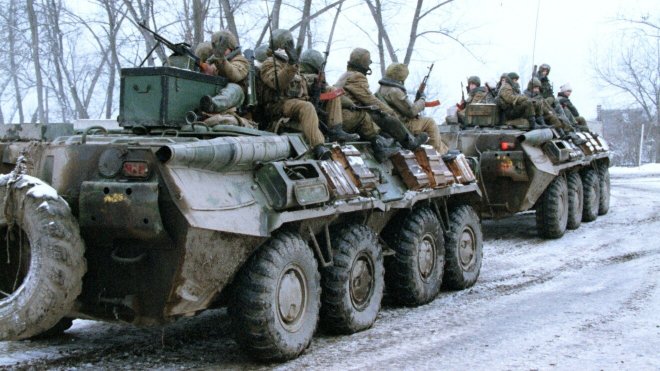
– …well yes, at heart I’m a Zionist, but I’m no kike. We had a laugh with the battalion commander, and the next day – the storm. My lads were attached to his battalion. The lads joked: while the real Jews are carving up Moscow with the Chechens, I’m storming Grozny in a BTR like a good Russian Ivan.
— Carving up what? — a tipsy Zhorik asked.
I glanced at the empty bottle. Two hundred grams knocked back, not much for him. Yakov sat across from him with a clear gaze:
— The guys said the storm was a show, a smokescreen. The Jewish mafia and the Chechen mafia had some falling-out in Moscow over money and paid to have a whole song-and-dance festival with fireworks staged, while we got tasked with grabbing and destroying some documents.
— Makes sense, — Zhorik agreed. — We settle things the same way, hand out money, throw festivals. But now you won’t be riding in an APC. We’re not the Motherland. We don’t abandon our own.
Zhorik picked up the bottle, was surprised to find it empty, and headed for the cabinet. He came back, filled his and Yasha’s glasses to the brim, and continued:
— There are two tasks. The first is impossible, but I believe in you. So. Task one — not a single hair falls from Roman Viktorovich’s head. Task two is simpler. If someone outside Proma’s perimeter doesn’t understand something, it needs explaining, so they stop getting underfoot. If that doesn’t help, take measures so the source of the misunderstanding disappears from view. From any view. Am I making myself clear?
Zhora’s gaze turned sober, magnetic, pulling you down into a well of fear. Yasha, looking Zhorik straight in the eye, held it for the proper length of time and reported with a faint smirk:
— Understood, sir. But that’s not really my line of work.
Zhorik, working his jaw between pauses, answered, barely audible:
— You don’t need to be in that line of work... What’s needed is for everyone to know — don’t get underfoot with us... How you spread that knowledge is your business... You’ll get a separate budget... Whatever figure you name, we’ll write it up, no reports required... One thing: if you ever get caught, not a word about us. The lawyers will get you off, on one condition — nobody finds out you were running around on our behalf. Officially, you’ll be listed as a junior researcher at the institute across the street.
— Why a junior researcher?
— It’s a working scheme. Within a year we’ll set you up with a candidate’s dissertation. After you defend it, you can fly off to Europe like a young scholar, or land a government post as someone promising, or stay on with a raise — we won’t shortchange you. So?
— I need to think about it.
— Think fast. Time’s tight. Can you have an answer in an hour?
Unlike in years past, I felt at peace during hard conversations like this. A growing business demanded hard decisions. If someone doesn’t understand something, you explain it, so they understand and stop getting underfoot. It’s a war of all against all.