Autumn 1996
In the fall of ninety-six, the holding got reorganized. Yura was appointed president and handed the job of dealing with the locals. Ida and Yasha were given the titles of senior vice presidents and new business cards, with no real change in their fate. For me, they created the post of Chairman of the Supervisory Board. To make chairing and supervising easier, Yasha suggested putting a useful girl named Sveta on staff as Advisor to the Chairman of the Supervisory Board. A bit cockeyed in the head, but with a battle-hardened general for a father, very effective at solving problems, and — according to unconfirmed rumors — having settled a couple of matters in our favor through serious people. Might as well put the general’s little darling on the payroll...
I met the powerful father in the parking lot. I pulled Vasilich aside and asked him point-blank what Yasha was up to. Vasilich shrugged. Confirmed that Yasha had never once seen him in his official capacity. Concluded: if there was a vacancy for a scatterbrained girl with extensive, useless connections, why not hire her. Under her father’s eye, she wouldn’t act up — either she’d do a proper job, or get fired if she started twisting her ass around. He clapped me on the shoulder: «You’ve got a lousy security chief — can’t even sort out his own staff.»
Generally Yasha is a specialist in other matters, but yes. Who Kazbek Volkov was – I had not worked out. I never suspected that «Proma» had hired a combat intelligence general as a driver on a monthly rate of twelve thousand dollars, a feast for the soul and a name day for the heart, both for Vasilich and for us.
After Zhora took off for Europe, Vasilich was listed as a free agent attached to the Balmung, now sporting diplomatic plates. He’d drive out somewhere on a pager message from Zhorik, drive off elsewhere for no particular reason, disappear for a couple of weeks. Why would he need a title?
A man of grand flight!
Last year Vasilich introduced me to friends of his, pensioners in inconspicuous posts in state structures. Once a month I met the old men out hunting or fishing, it made no difference where, so long as it was thousands of kilometers from Moscow and with no hint of electronic devices nearby. The pensioners observed confidentiality with paranoia. We wandered the woods with unloaded rifles, discussed petty matters, condemned the weather forecasts, shared tips on well-baited spots, and in passing heard out my question of the sort: «In Nizhnemukhinsk the governor is putting spokes in our wheels, though he has always been our lapdog».
A month later, out fishing, another retiree, after discussing lures, would drop off to the side: «Your lapdog got bought out by the Rassvet Holding.» A month after that, out in our stands, I’d ask the gloomy shooter next to me a question prepared by Yasha and Ida, who’d sniffed out everything there was to sniff, permissible or not:
«How do we act in Nizhnemukhinsk? We’re ready to send a billion for the governor’s election campaign, but in exchange we want to bend Rassvet over. The lawyers are working on the narrative. The prosecutor is corrupt and pawing the ground, straining for a fight. There’s an option to pinch the governor through his wife. She climbs into every contract like a woman possessed. There are plenty of unhappy people. They’ll back us.»
The gloomy shooter would either mumble: «H-hm, not sure...» or flatly forbid it: «That, absolutely not!»
Translated into plain speech, «H-hm, not sure» meant: «Look at the idiots they’ve been hiring off the classifieds. Think for yourselves. What do you think your brains are for?»
The flat prohibition, «Not that!», sounded like an invitation: «That, and only that! But if it goes sideways, I had nothing to do with it. The recordings of this conversation will confirm that.»
I’d memorize the answers and relay them to Yasha, Ida, and Yurik.
A sense of purpose crept into the holding’s development. Without arguing, we shed the plants that interested people in the federal corridors. We ran auctions through Ida and sold off enterprises the upper class wanted — usually to some offshore company whose owner sat somewhere high up. Ida would roll her eyes and stare at the ceiling. What lay behind that ceiling, Ida never said. Except, maybe: better grill your shashlik at the right dacha and appropriate property worth a hundred times more than Proma’s assets.
We didn’t reach for the upper spheres. What we didn’t need, we sold for more than it cost us; what we did need, we fought for.
A third of the plants remained. We reorganized the holding around a single production cycle. Proma pivoted into household chemicals: packaging powders and liquids, molding plastic, wrapping everything in cheerful packaging and handing it off to kiosk vendors for resale. Chain stores were closed to us — those belonged to imports, and at six thousand rubles to the dollar, only Proma’s own Trade House, which had switched to Chinese equivalents, could compete there. If you didn’t like Proma’s factory prices, we offered you the Chinese knockoff instead. Then you could decide what you wanted: sturdy, plow-reliable domestic goods, or Chinese junk at half the price.
Life settled into a routine. Not for long.
A different trouble bore down.
Pinochet’s bank was mired in retail and could not lend for equipment purchases. On a tip from the generals I set up relations with a couple of fat-bellied banks, then half a dozen more... I rushed from official meetings to unofficial ones, tried to grasp what an «overnight» is, threw figures at Yurik and after dozens of meetings took a decision on a loan... A month later I revised it... Two months later I was rushing about again...
One item in the routine never changed. Sundays I slept in at the Khryakino estate and drank wine — decent wine, actually.
For Catholic Christmas and Orthodox New Year, I flew to New York. I spent a day with lawyers and took possession of a property in Miami that had belonged to the son of the Verkhnetarakansk governor. We’d successfully offloaded the plant in Verkhnetarakansk just beforehand.
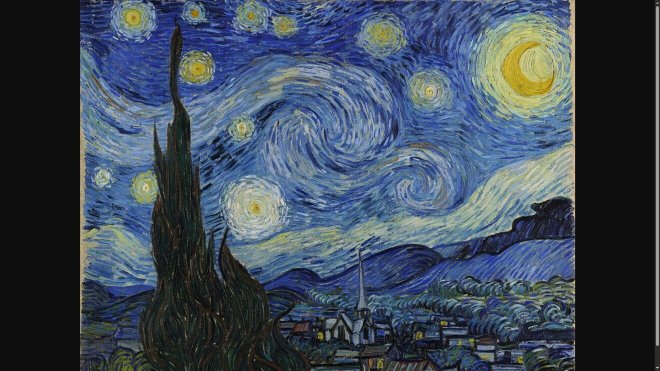
My last New York evening turned out to be free. The assistant assigned to my free time dragged me to MoMA. I gasped! To think what beauty was spoiled by the reproductions of a Soviet childhood! The bright colors of «Starry Night» lodged in my memory. The address of the freshly acquired house – Hollywood, Broward County, Florida – lodged even deeper! A mansion on the ocean shore with palms, a pool, a pier and a yacht, just as I had dreamed all my previous life.
Have to fly down there in the summer and enjoy it. That Hollywood felt like the right one.