July 1995
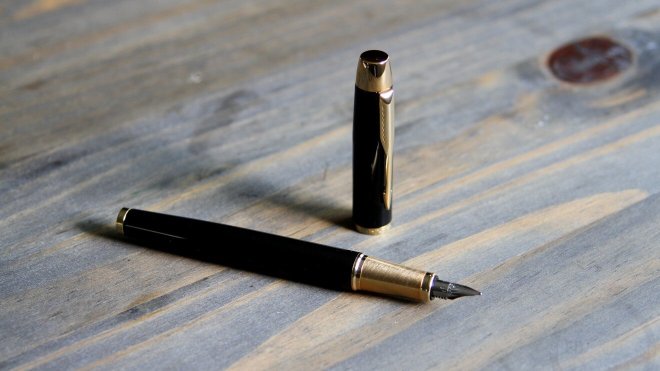
Zhorka’s office was opposite mine. I regularly watched pigeon-toed old men in jackets and ties who looked like Viktor Stepanovich. These were red directors from the provinces who had discovered a minority shareholder with money in Moscow and come to make his acquaintance. What is more, Zhorik invited the provincials to come to the White-Stone City at our expense. He rejoiced boundlessly at each arrival and smothered them in embraces: «Glad to see you, old man! Where have you been hiding? How are things?». He gave out trinkets in the form of a «Parker» fountain pen or a «Tissot» wristwatch, dragged them round the restaurants on Tverskaya, hauled them off to the fashionable club «Night Flight».
Kostya would get acquainted with the enterprise’s books, Seva would go make inquiries. Based on the results, they’d write up a memo. A short one: «Unable to identify the beneficiaries or the degree of resistance to expect.» Or a very short one: «Rehabilitation not feasible.» Sometimes they’d write a memo with attachments: «Okay. Attachments 1, 2, 3, 4, 5…»
After studying the attachments, Zhorik would give the go-ahead. I’d fly out to the plant with Karabas and a hundred thousand dollars in five sealed envelopes. After the sauna with staff happy to do anything for a little present, we’d relocate to the grand restaurant.
In confidence I would inform the director that the government had set a course for privatizing Soviet industry, that private capital had been given a free hand. In accordance with the sovereign’s intentions we had created a holding and planned to cooperate with his enterprise. We have the funds and the means to burn money buying up shares, but why? The money will go into Yelkin’s pocket and the ginger rogue’s. It makes sense to use the scheme we have worked out, namely: put the money into developing the plant and increasing profits. In a year, if Gennady Andreyevich topples Yelkin, we’ll be clean. Right now it makes sense to adapt to circumstances and stir things up in our own favor. In a year we’ll see how to act: either return the plant by law or keep it by law. It all depends on what the law turns out to be. Let’s hedge.
I’d pull papers from my briefcase and read out: «The freely tradable shares of your joint-stock company are worth nine hundred forty thousand five hundred eighty-two dollars and thirty-eight cents on the market, at yesterday’s Central Bank rate.» A laughingstock figure, really – a mere twenty-two percent, neither here nor there.
I’d set the paper aside, lean toward the director, and drop my voice half a tone, the way Zhorik had taught me, and continue:
– Here is what we’ll do: we’ll register a closed joint-stock company in the names of the three of us – me, Georgy and you – with equal shares. Our side’s task is to pour nine hundred forty-one thousand dollars into the company’s charter capital and, apropos, register a two-room apartment in Moscow in your name. Your task is to transfer the enterprise’s assets to the new company at book value. The subsequent profit we’ll divide among ourselves, no outsiders allowed. Let the outsiders buy up shares of the old joint-stock company. We know the scheme, we’re not new at this, not a mosquito could sharpen its nose on it. Here are six envelopes, this one is yours. The other five are for the governor, the mayor and the top brass, to cover the scheme. From you we need a decision, one of two.
After a short pause he’d fold down his fingers one by one:
– First option. You take all the envelopes and answer for all the future problems. Second option. You take your own envelope, and we handle the rest of the problems. No rush – think it over. We’ll leave the envelopes with you. We’ll discuss how to move forward in a week. We trust you! This envelope’s yours, the rest are at your discretion. You can return them in a week if you like.
Zhorik had taught me that whole speech. He’d also taught me the answers, told me there was nothing to fear. We’d register a ZAO with the exact same name as his enterprise. Say there’s an OAO «Krasnozemskkhim» registered in Krasnozemsk? We’d draw up a ZAO «Krasnozemskkhim» registered in Elista. The difference is the place of registration and one letter in the name, but the result speaks for itself: the plant gets a suitcase of American money for development, the director gets a Moscow apartment right away plus plenty of fat profits down the line.
I never answered the other questions. I’d shrug, as Zhorik instructed: details weren’t my department, my job was the strategic development of the business, and for everything else there were sturdy hands-on managers to whom I delegated authority. My vis-à-vis here, for instance – you wouldn’t find a sturdier one in all of Russia.
The director would be left alone with his thoughts. What did he know about us? A couple of fools show up, grab a few shares of a dead plant, drag him to Moscow, ply him with drink, show him whores, now they’re dangling money. There’s a catch somewhere, but where?
The old wolf of a red director would strain to figure out just what mischief good old Georgy Albertovich and that green kid Roman Viktorovich could possibly be up to.
«Heh-heh,» the director would chuckle to himself. «A pup, and already president of a holding company. A greenhorn like that won’t put one over on me. I’ll start by demanding a three-room apartment in central Moscow and a fifty-one-percent stake in the future company. We’ll see from there, come to terms with Georgy…»
That was the beginning of the end. Within a week, on Seva’s tips, Zhora would manage to dash off to the Prosecutor General’s Office – or rather, to a café on Stoleshnikov Lane, to have a little chat with an unassuming auntie – and a day or two later to a restaurant on Oktyabrskaya Square, to talk things over with a paunchy fellow. The little cafés by the Polytechnic Museum and on Maroseyka Street got worked in a single day. Lean men articulated crisply, named sums without preamble.
The ZAO would be registered, and the plant’s property transferred to its balance sheet. Soviet-era prices, when a Zhiguli cost five thousand rubles, wouldn’t buy you two bottles of beer these days. The apartments Chicha had seized from «Vatrushka» weren’t transferred that way. Vadik would register homeless people there as tenants, per documents claiming large families… then the homeless would be de-registered, the kids left on the books, some fiddling would go on with the housing registry office, and the flat would end up in the director’s ownership. Half a year to a year later it would turn out it had passed into temporary ownership only. The court would issue a ruling: the children couldn’t be struck from the residency register.
The ruling would come down the moment the plant passed into the ownership of a closed joint-stock company with three shareholders – me, Zhora, and the director. A couple of days later, by majority vote – two against one – amendments would be made to the ZAO’s founding documents. We didn’t bother asking the director, who held the majority stake. He should have read the charter documents more carefully, where it says in black and white, in the section «Procedure for Introducing Amendments and Additions to the Charter»:
- General provisions: Amendments and additions to this charter may be introduced only by resolution of the general meeting of the company’s participants (shareholders).
- Quorum and voting: A resolution to amend the charter requires a quorum (no less than two-thirds of shareholders present) and a qualified majority vote (no less than two-thirds of the total votes).
- Registration of amendments: Adopted amendments are subject to state registration in the manner established by law.
Nobody gives a damn how many shares you hold. What counts is the number of votes, and two votes against one always carries the day!
The director’s happiness would come to an end. He’d turn into a pathetic petitioner, loitering in the lobby of Proma Holding, waiting for Georgy Albertovich to deign to receive him.
He’d never wait long enough. A joint brigade would head out to the plant – Chicha’s fighters and the finance department’s tough guys, whom Zhorik had christened the «tonton macoutes.»
First they’d meet with the enterprise’s lawyer, who’d already received an envelope of cash from us for approving the ZAO’s founding documents. They’d kindly advise him to resign and stay out of sight. We had no use for corrupt lawyers.