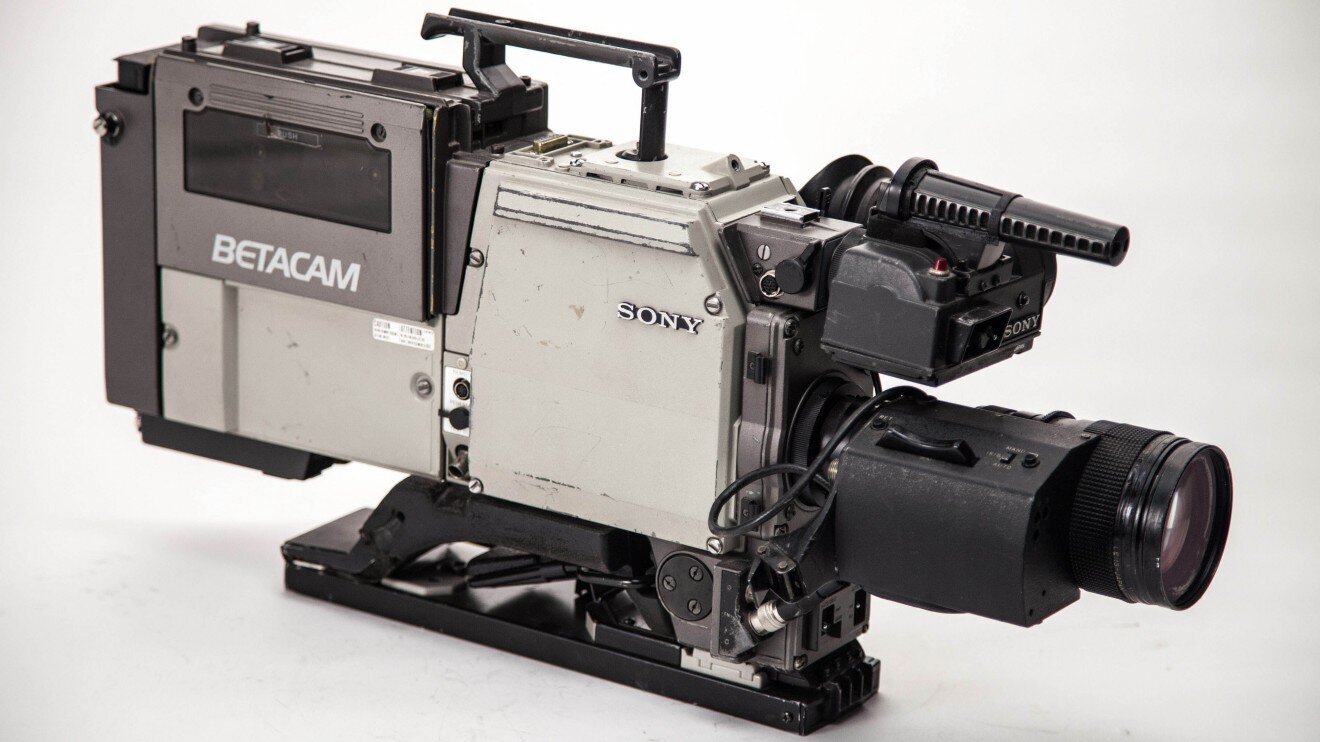
Betacam is a family of professional video-recording formats on 1/2-inch magnetic tape cassettes, developed by Sony. In the early 1990s, Betacam was considered the standard broadcast medium in television and was widely used by professionals in video production.
The Betacam format was introduced by Sony in 1982 and built on the consumer Betamax standard. The main distinction of the professional format lay in a significantly higher tape speed and the use of component recording, in which luminance and chrominance signals were recorded separately, producing markedly better picture quality.
In 1986, Sony released an improved version — Betacam SP (Superior Performance) — which used metal-particle tape instead of chromium dioxide. This achieved a horizontal resolution of up to 600 television lines, a figure previously available only with expensive studio formats. Betacam SP had four audio channels and outstanding picture quality, which made it the industry standard for most TV stations.
Betacam cassettes came in two sizes: compact S-size for use in camcorders (devices combining a camera and a video recorder), and studio L-size for editing and archival storage. The compact cassettes offered up to 30 minutes of recording, the studio ones up to 90 minutes.
In early-1990s Russia, access to Betacam equipment was considered a major advantage for producing professional video content, especially for the fledgling commercial television industry, advertising agencies, and independent video studios. Having Betacam gear meant being able to produce broadcast-quality video material fit for television transmission, opening up broad opportunities for business in television production and advertising.
Betacam equipment was never manufactured in the USSR, but imported units became widespread in television. After the collapse of the Soviet Union, access to this equipment remained limited and expensive.