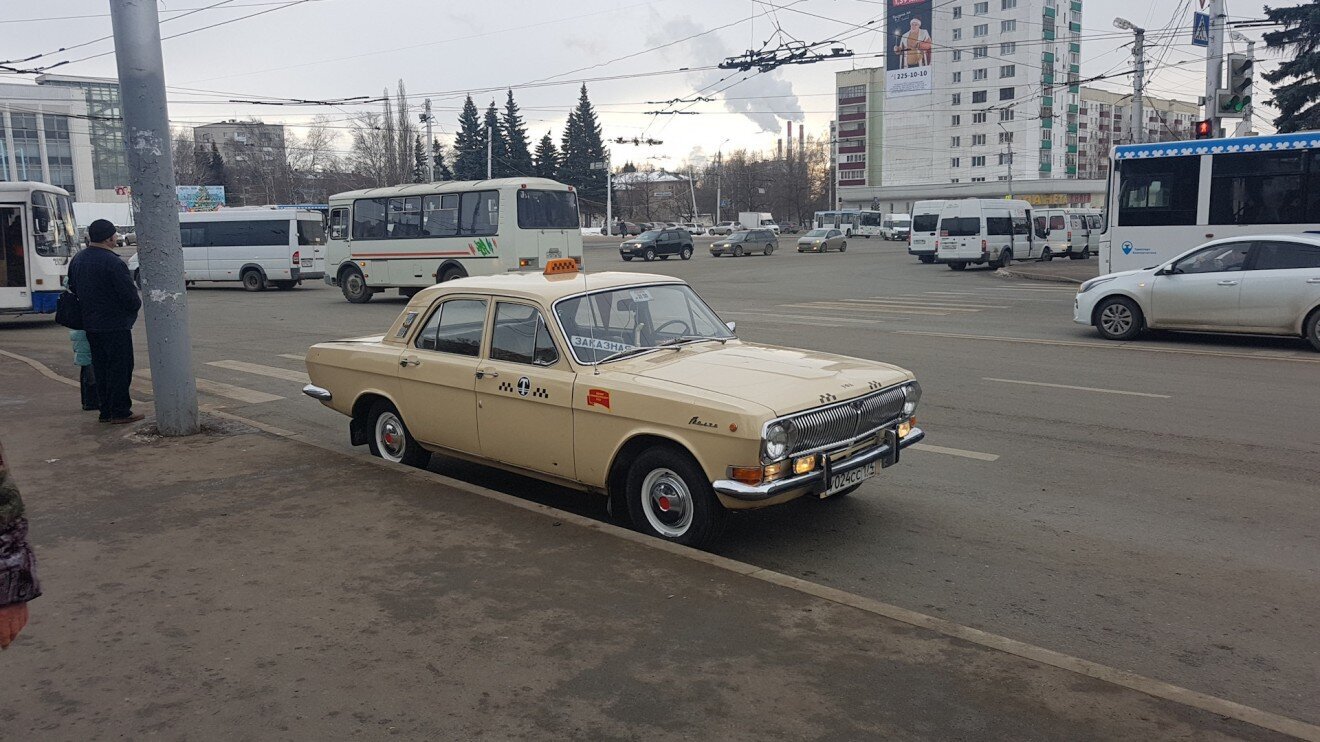
In Soviet times, the checkered taxi with its green "available" light was an important part of urban infrastructure. Taxi driving was considered not only prestigious but quite lucrative — the official salary ran to 250-300 rubles a month, significantly above the national average. Most drivers, meanwhile, also had an unofficial "off the books" income, sometimes exceeding their official quota by double.
Within the professional community of taxi drivers, a clear hierarchy took shape. Drivers developed an unofficial system for classifying each other by "specialty":
The Social Hierarchy of Taxi Drivers
- Airport men — the elite of the taxi world. They worked the airports, always in cahoots with the lot inspectors and even the traffic police on duty. Fares were negotiated by agreement, far exceeding what the meter showed. They enjoyed a stable, high income.
- Station men — those who specialized in working the railway stations. Their methods mirrored the airport men’s — negotiated fares and connections with the inspectors.
- Downtown men — taxi drivers who worked the major hotels. They picked out well-off foreign passengers and often accepted payment in hard currency, imported goods, cigarettes, and other items scarce in the USSR.
- Long-haulers — specialized in ferrying passengers to nearby towns. They packed the car full and charged each passenger separately, which added up to far more than the meter showed.
- Furniture men (also "fridge men") — worked outside furniture or appliance stores. They earned extra hauling oversized cargo, and, thanks to connections with store employees, could "help" a customer land a scarce item for a fee.
- Cabbage-stump men — drivers who delivered fruit and vegetables to city markets. They earned extra by overloading the car, having arranged it in advance with the owner of the goods.
- Postmen — a special category who delivered mail and newspapers to other cities. They were paid in special vouchers, which the taxi depot’s cash office accepted on par with cash.
- Booze-runners (also "plague-wagons") — dealt in speculative liquor sales. A criminal but highly profitable business given the era’s shortages.
- Sidewalk men (sidewalk cabbies)* — taxi drivers who worked "off the raised hand," picking up random passengers straight from the sidewalk. The lowest caste among taxi drivers, earning the least and getting by on small tips. In slang they were also called "hat-haulers."
Professional Traits
Soviet-era taxi drivers were marked by a strong sense of professional solidarity. If a conflict broke out, they could mobilize quickly to defend a colleague — at a distress signal over the radio, dozens of cars would converge, and work on the channel would stop until the situation was resolved.
Corruption and bribery flourished at the taxi depots. Drivers paid off their "partners in the system": line inspectors, mechanics who signed off on cars leaving the garage, traffic police, service technicians, and anyone else whose goodwill their work depended on.
Taxi drivers also developed a specialized slang not just for their fellow professionals, but for classifying passengers:
- Afanas (also "the boot") — a mid-ranking military officer who paid strictly by the meter (a type of passenger drivers tried to avoid).
- Dodik — usually a young man of limited means, paying for the ride with his very last coins while trying to play the big spender.
- Lokh — a naive provincial unfamiliar with life in the capital, wary of being cheated or overcharged, yet easily taken in all the same. "Suit" was a term for the ordinary working man, a rare taxi user, from whom a driver could still expect a decent tip.
- Sladkiy ("sweet one") — a passenger who generously paid above the meter, enough "for the quota and the pocket both."
- Khaldei, torgash — waiters, shop clerks — people with money by Soviet standards, regular taxi users, usually riding with the same drivers (since their shifts lined up); they tipped well, but weren’t careless with cash.
- Shveik — an enlisted soldier or a recently discharged one, could turn out to be either a "lokh" or a "suit."
- Shlyapa ("hat") — a Soviet intellectual who, leaving a driver a five-kopeck tip, acted as if he’d just performed an act of unbelievable generosity.
The professional vocabulary of taxi drivers is worth a look as well:
- Krevetka ("shrimp") — a GAZ-24 taxicab.
- Barzha ("barge") — a GAZ-2410 taxicab.
- Saray ("shed") — a taxicab with a station-wagon body.
- "Riding like a horse" — driving with no passenger, an empty run.
- Kurskaya duga ("the short arc") — the route from Kursky Station to the Square of Three Stations (Komsomolskaya Square).
- Lapsha ("noodles") — small tips, the kind typically left by "dodiks," "hats," and "afanases."
- Letuchka ("flying squad") — a line-inspection vehicle; several dozen crews worked the city daily monitoring taxi drivers on their routes, with additional oversight from volunteer crews made up of trusted depot staff.
- Ob"yavka — demanding a fare from a passenger higher than the actual cost, regardless of what the meter showed (one method of overcharging passengers).
- "Serving" a passenger:
- —"by the meter" — charging strictly according to what the meter showed;
- —"by two meters" — double the metered fare
- —"by three meters" — triple the metered fare.
- "Taking a passenger past the Mossovet" — charging exactly what the meter showed.
- Driving a passenger "standing up," "in the clear," "on the brightest" — driving with the meter switched off, the green "available" light covered with a glove or a special opaque cap; this method significantly increased the driver’s recorded empty mileage, which the depot tracked closely, so this kind of scheme was pulled off only occasionally, never as a matter of routine.
In 1993, when the events of the novel take place, the organized state taxi system had already begun to break down, and more and more independent operators were appearing, but the professional culture and hierarchy that had taken shape under the USSR still held on.
* Sidewalk cabbies — the lowest category of taxi driver, working "off the raised hand" of a passenger — that is, catching fares off the street, usually near sidewalks. The name comes from the word "bombit’" — moonlighting with one’s own car, giving people rides. Unlike the elite "airport men" or "station men," they had no fixed post and no stable income.