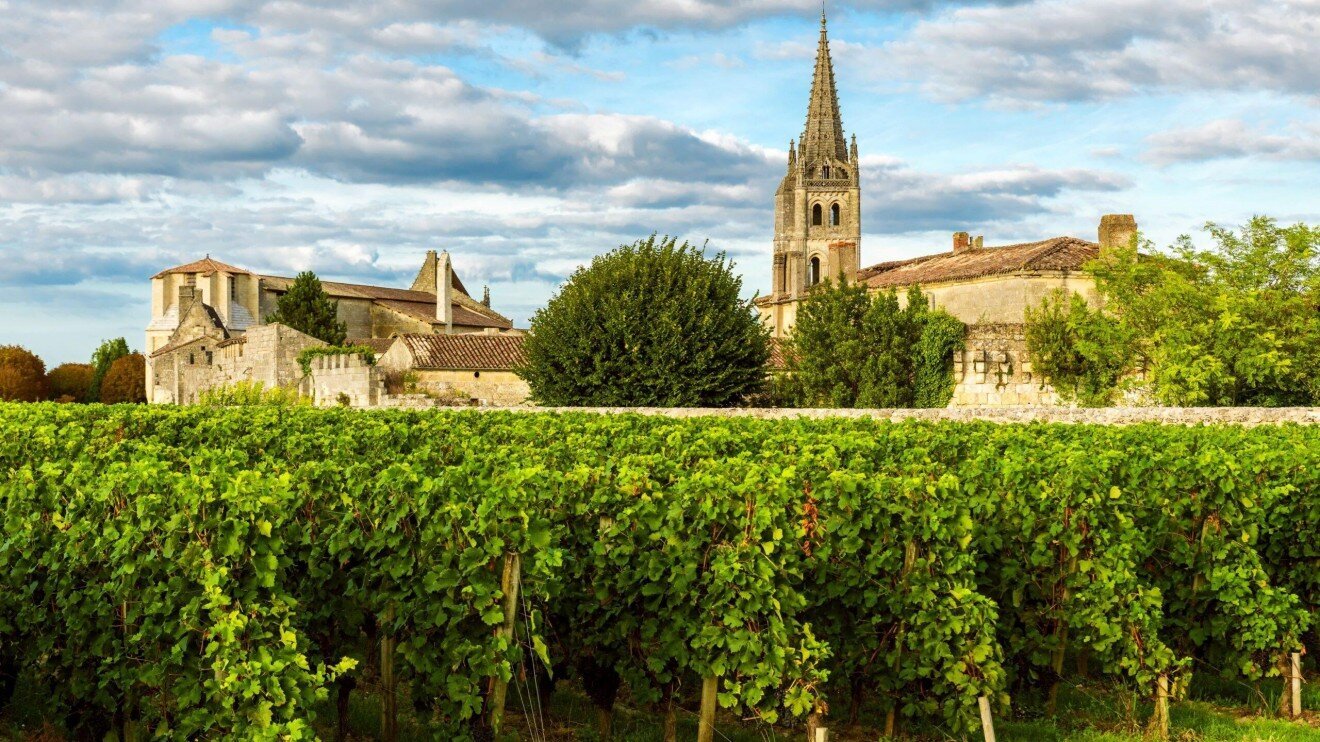
Saint-Émilion is one of the most prestigious winemaking areas of Bordeaux, located on the right bank of the Dordogne river in the Libourne region. The name of this ancient wine region comes from Saint Emilian, an eighth-century Breton monk who founded a monastery here.
Geography and terroir
The Saint-Émilion appellation covers 5,400 hectares of vineyards, roughly 6% of Bordeaux’s total vineyard area. The territory includes nine communes, the principal one bearing the same name, Saint-Émilion. The region’s uniqueness lies in the diversity of its soils, from limestone plateaus to clay-and-sand slopes, creating exceptional conditions for growing grapes.
The climate here is more continental than on Bordeaux’s left bank, with less influence from the Atlantic. That, combined with the character of the soils, makes the region ideal for growing Merlot, which forms the backbone of most local wines.
Grape varieties and wine style
Saint-Émilion wines are made mainly from three red grape varieties: Merlot (60–70% of most blends), Cabernet Franc (known locally as Bouchet), and Cabernet Sauvignon. Some producers also use small amounts of Malbec and Petit Verdot.
The style of Saint-Émilion wines differs noticeably from left-bank Bordeaux. Thanks to the predominance of Merlot, these wines have a softer, rounder character, with rich fruit and velvety tannins. Young wines can seem approachable and easy-drinking, but the best examples are capable of long aging, developing complexity and elegance over decades.
Wine classification
In 1955 Saint-Émilion introduced its own wine classification, revised every ten years. The system has three tiers:
Premier Grand Cru Classé A
The top category. Until 2012 it included only Château Ausone and Château Cheval Blanc. In 2022 Château Figeac and Château Pavie joined them.
Premier Grand Cru Classé B
The second-tier category, including roughly 14 châteaux producing exceptional wines.
Grand Cru Classé
The third tier, bringing together roughly 80 estates producing quality wines.
The 1982 and 1989 vintages
1982 – a legendary vintage
1982 is considered one of the greatest vintages in Bordeaux’s history. An exceptionally hot, dry summer created ideal ripening conditions. Wines from this year are marked by incredible concentration, depth, and aging potential. By 1997, the 1982 vintage was already showing its maturity while still retaining room for further development.
1989 – a year of elegance
1989 is also recognized as an outstanding vintage, though in a somewhat different style. Its wines are more elegant and refined than the powerful 1982s. A hot summer and favorable harvest conditions produced wines with a beautiful balance of fruit and tannic structure. By 1997 these wines were drinking beautifully.
Notes on tasting
Properly tasting Saint-Émilion wines calls for a particular approach and an understanding of their character. These wines often benefit from decanting, especially younger vintages, to unlock their full aromatic potential.
The classic aromatic notes of Saint-Émilion wines include blackcurrant, plum, violet, truffle, leather, and tobacco. With age, notes of cedar, vanilla, and spice develop.
Saint-Émilion wines are often more approachable young than Medoc wines, which makes them appealing to those who favor a softer, fruitier style of red.
Famous châteaux
Among the region’s most prestigious producers:
- Château Ausone – one of the two Category A estates, sitting atop a limestone plateau
- Château Cheval Blanc – the other Category A estate, known for its elegant wines
- Château Figeac – elevated to Category A in 2022
- Château Pavie – also elevated to Category A in 2022
- Château Canon – one of the oldest and most respected producers
Cultural significance
In 1999, the territory of Saint-Émilion was added to the UNESCO World Heritage list as «a cultural landscape displaying a long, living history of winemaking, dating back to Roman times.» The medieval town of Saint-Émilion, with its underground churches carved into the rock and its ancient wine cellars, represents a unique blend of historical heritage and a living winemaking tradition.
The market and collecting in the 1990s
In the mid-1990s, Saint-Émilion wines were enjoying a period of growing international recognition. By 1997, the 1982 and 1989 vintages were already considered classics and were actively traded on the secondary market. Many collectors and connoisseurs were starting to pay closer attention to Bordeaux’s right-bank wines, seeing them as an alternative to the pricier wines of Medoc.
Practical tasting tips
Serving temperature: 16–18°C (61–64°F)
Decanting: recommended for wines under 15 years old
Time to open up: 30–60 minutes after opening
Food pairing: red meat, game, aged cheeses
Understanding the character of Saint-Émilion wines helps place them in the hierarchy of Bordeaux wines and explains why they’ve earned recognition among wine professionals and enthusiasts around the world alike.