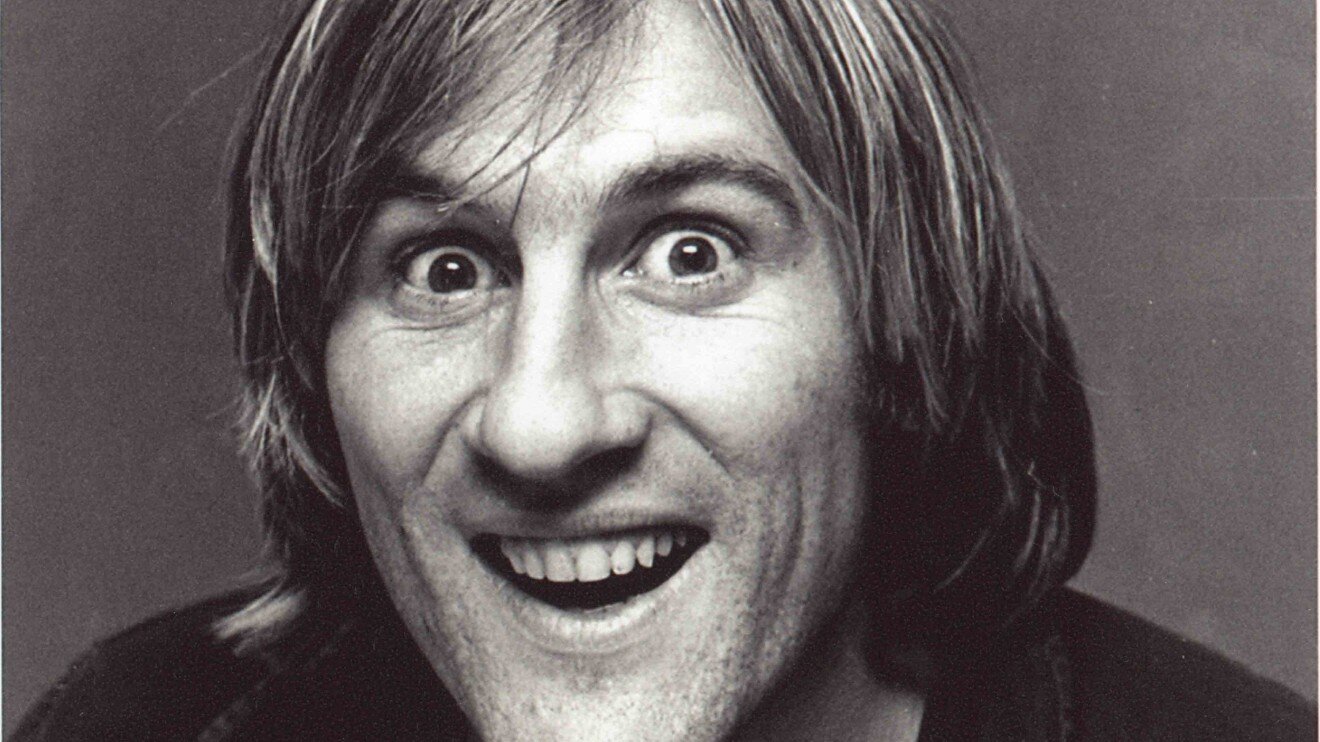
French cinema held a special place in the cultural life of the Soviet Union. Unlike American films, which were kept under ideological ban, movies from France appeared regularly on Soviet cinema screens, drawing audiences in the millions. The popularity of French film in the USSR grew out of a complex tangle of ideological, economic, and cultural factors.
France, the birthplace of cinema
The history of world cinema began in France. On December 28, 1895, at a Paris café on Boulevard des Capucines, brothers Louis and Auguste Lumière held the first public commercial film screening in history. Their invention, the Cinématographe, was a single device that could both shoot films and project them onto a large screen for a collective audience – a fundamental difference from American inventor Thomas Edison’s Kinetoscope, which was designed for individual viewing.
The Lumières’ earliest short films already laid the groundwork for the medium’s variety of genres: documentary, fiction, and newsreel. Their work included such famous titles as workers leaving a factory, a train arriving at a station, and the first-ever fiction comedy. Over three years, from 1895 to 1898, the brothers shot more than 1,800 films. The Cinématographe spread rapidly across Europe, including the Russian Empire, where the first film screening took place on May 4, 1896, in the «Aquarium» garden in St. Petersburg.
Before the First World War, France was the undisputed leader in world film production, turning out roughly 90 percent of all films made worldwide. The French companies Pathé and Gaumont dominated the market. The French were also the first to develop cinema as an art form, from Georges Méliès’s cinematic fantasies to Louis Feuillade’s adventure serials. This historical primacy of France in inventing and developing film became an important cultural fact, never forgotten either in the wider world or in the Soviet Union.
Ideological reasons for distributing French films
A counterweight to Hollywood
French cinema had historically stood in opposition to American cultural expansion. After the First World War, as Hollywood began capturing the global film market, French filmmakers fought to preserve their independence and national identity. In the interwar period, they actively defended their film industry, setting European artistic values against the American commercial model.
Soviet ideologues saw an ally in this resistance. France appeared to be a country unwilling to submit to American cultural dictates. French cinema offered an alternative to the Hollywood dream, presenting a European view of the world. That made French films ideologically more acceptable for Soviet distribution than American ones, which directly promoted the capitalist way of life.
The left-wing traditions of the French intelligentsia
France had long-standing left-wing traditions, tracing back to the Revolution of 1789, the Paris Commune of 1871, and a powerful twentieth-century labor movement. The French Communist Party, founded in December 1920 at the Socialist Party congress in Tours, became one of the most influential communist parties in Western Europe. Communist influence was especially strong during the Popular Front period of the mid-1930s and after the Second World War, when the PCF played a key role in the Resistance.
Many figures in French culture were sympathetic to communist ideas or were party members themselves, including filmmakers. The successes of French cinema in the 1930s were closely tied to the rise of mass social activism, the scope of the democratic movement, and the influence of the Communist Party. In 1943, during the German occupation, an underground Liberation Committee of French Cinema was formed, whose members included many prominent directors and actors.
Communist directors and fellow travelers
Although not every prominent French director was a Communist Party member, many shared left-wing views and sympathized with communist ideas. Jean Renoir, son of the great Impressionist painter Auguste Renoir, made films with a pronounced social conscience. His pictures from the 1930s reflected the mood of the Popular Front era. In 1943, director Louis Daquin joined the underground Liberation Committee of French Cinema, which fought against the Nazi occupation. Director Jacques Becker, also a member of the Resistance, continued making socially sharp films after the war.
The philosopher and writer Jean-Paul Sartre, though not a filmmaker himself, exerted a strong influence on postwar French culture. He was a fellow traveler of the French Communist Party, supporting the anti-colonial struggle in Algeria and the Cuban Revolution. Many French intellectuals shared his views, creating a broader atmosphere of left-wing sentiment in cultural circles.
It was precisely this left-wing orientation of a significant part of the French intelligentsia that made French cinema ideologically acceptable for Soviet distribution. Soviet purchasing commissions were more willing to acquire films by directors with progressive views, seeing them as allies in the ideological struggle.
Economic factors: the cheapness of French comedies
Competing with Hollywood in the world market
After the Second World War, French cinema faced a serious problem. Hollywood had captured the global film market, and most countries preferred to buy American product. American films were expensive, large-scale, packed with famous stars and enormous budgets. They enjoyed colossal demand worldwide, from Western Europe to Latin America.
French cinema found itself at a disadvantage. French films, especially comedies and other entertainment genres, were considered second-rate compared to Hollywood product. Major Western distributors favored American blockbusters, and French films went largely unwanted on the international market. As a result, distribution licenses for French comedies and entertainment films came very cheap – hardly anyone was buying them.
An advantage for Soviet film distribution
The Soviet Union found itself in a unique position. On one hand, ideological restrictions ruled out buying Hollywood films en masse, since they actively promoted capitalist values. On the other, Soviet movie theaters needed a varied repertoire to draw audiences. French comedies turned out to be the ideal solution.
Since other countries were buying up Hollywood en masse, French entertainment films could be acquired for a nominal price. These were quality pictures, with good actors and directors, that the Western market simply ignored. Soviet purchasing commissions took advantage of the situation, snapping up French comedies at bargain prices. The economic benefit was obvious: for the price of a single American film, one could acquire several French pictures.
In this way, ideological restrictions on screening American films paradoxically turned into an economic advantage. The USSR gained access to cheap but high-quality entertainment content from France, which filled the resulting gap perfectly.
The quality of French comedies
Advantages over Soviet comedies
French comedies weren’t just cheap – they also surpassed many Soviet entertainment films in quality. Soviet cinema excelled at drama, war films, and historical pictures, but the light-comedy genre often suffered under ideological constraints and censorship. Soviet comedies were expected to serve an educational function, mock particular vices, and promote proper values. That made many of them didactic and predictable.
French comedies were freer and more natural. They showed real people with their weaknesses, absurd situations, human relationships. French humor was built on subtle observations of human nature, elegant dialogue, and skillful acting. It was an altogether different quality of comedic filmmaking.
Soviet audiences felt the difference. French films came across as a breath of fresh air, a chance to laugh at simple human situations without moralizing or sermonizing. They showed life with its minor conflicts, amusing misunderstandings, romantic entanglements – everything Soviet cinema often lacked.
The French school of comedy
France had rich comedic traditions, reaching back to vaudeville and boulevard theater. French comic performers mastered a particular skill in physical comedy, facial expression, and movement. That tradition carried over into film, where it flourished fully.
French comedic actors became genuine stars in the USSR. Fernandel, with his distinctive looks and sparkling humor; Bourvil, with his ingenuous charm; Louis de Funès, with his explosive energy and grotesque mugging; Pierre Richard, with his elegant clumsiness – all of them were loved by Soviet audiences no less, and sometimes more, than homegrown actors. A poster reading «Starring Jean-Paul Belmondo» or «Alain Delon» guaranteed a sold-out house at Soviet cinemas.
Specific examples of French films
«Three Men and a Cradle» (1985)
This French comedy by director Coline Serreau became one of the most successful films of the 1980s. It told the story of three bachelors who suddenly find themselves guardians of an infant. This light, witty tale of male helplessness in the face of parental duty won over audiences worldwide.
The film won three César Awards in 1986 and was nominated for the Academy Award for Best Foreign Language Film. In the USSR it received wide distribution and enjoyed great popularity. Soviet audiences delighted in watching three grown men learn to change diapers and prepare baby formula. The comedy was so successful that Americans made a remake, Three Men and a Baby, with Tom Selleck in 1987.
The film’s success came from its universality: the theme of fatherhood and childhood resonates across cultures, and the French execution was light, elegant, and very funny. The picture showed modern city life, stylish interiors, easygoing relationships between people – all of it of interest to Soviet audiences.
«Les Ripoux» («Open Up, Police!») (1984)
This comedy by director Claude Zidi became a genuine hit in Soviet distribution. The film told the story of the corrupt policeman René, who teaches his young, idealistic partner François the tricks of police life. The picture wittily mocked police corruption, showing the underbelly of the law-enforcement system, but did so with such charm and humor that it played smoothly from start to finish.
The lead roles were played by the outstanding French actors Philippe Noiret and Thierry Lhermitte. Their performances were brilliant: a cynical, seasoned cop and a naive small-town officer formed a comic duo that kept audiences engaged from start to finish. In 1985 the film won three César Awards: Best Film, Best Director, and Best Editing.
Soviet audiences embraced the picture enthusiastically. First, it was very funny. Second, it offered a critical view of bourgeois society, which fit neatly with Soviet ideology. Satirizing the corrupt police of capitalist France dovetailed perfectly with the notion of a decaying West. And the film was so well-made and witty that the ideological angle didn’t get in the way – it only added interest.
The picture’s success was so great that sequels followed: Les Ripoux 2 came out in 1990, and a third installment in 2003. The franchise became one of the most popular French comedy series.
The genre range of French film in the USSR
From comedy to drama
Although French comedies were the most widely distributed genre in the USSR, French cinema wasn’t limited to entertainment alone. Soviet screens showed a range of French films: social dramas, crime thrillers, historical pictures, adaptations of literary classics.
In the 1950s and 1960s, adventure films starring Jean Marais, who played the Count of Monte Cristo, Captain Fantomas, the Musketeers, and other romantic heroes, were enormously popular. Gérard Philipe won women’s hearts with his aristocratic looks and nobility. Alain Delon and Jean-Paul Belmondo became idols of the youth thanks to crime dramas and action films.
Soviet audiences could also get acquainted with serious French cinema: films of the «New Wave» directors, social dramas, philosophical pictures. These films, however, ran in limited release and were mostly available in big cities, where specialized theaters catered to an intellectual audience.
A cultural window onto Europe
For Soviet people, French cinema served as a cultural window onto the West. Through French films, Soviet audiences got a glimpse of the European way of life, of the streets of Paris, of French fashion, of Western daily existence. That mattered especially under the Iron Curtain, when real contact with the West was severely limited.
French cinema showed a different life, different relationships between people, a different aesthetic. And unlike American films, French pictures carried no aggressive pro-capitalist propaganda. They showed ordinary people with their joys and troubles, which made them feel more natural and human to watch.
Golden ages of French cinema in the USSR
The 1950s–1960s: the Thaw
The real flowering of French film in Soviet distribution began in the second half of the 1950s, during Khrushchev’s Thaw. After the run of trophy American and German films came to an end, the Soviet purchasing commission became more liberal and more open to Western film production.
During this period, Soviet screens received French films across a range of genres. Of the top ten films at the French box office in 1958, exactly half were shown in the USSR. The purchasing commission’s work was fairly liberal at the time, allowing Soviet audiences to become acquainted with the best examples of French cinema.
The 1970s–1980s: the golden age of French comedy
The 1970s and 1980s became a true golden age for French comedy in the USSR. It was in this period that the most popular French comic actors appeared on Soviet screens: Louis de Funès, Pierre Richard, Gérard Depardieu. Their films drew tens of millions of viewers.
Soviet film-distribution statistics show striking figures. Le Guignolo, starring Jean-Paul Belmondo, drew nearly 39 million viewers in 1981. Stavisky [The Magnificent] with the same actor attracted more than 24 million viewers in 1975. Comedies with Pierre Richard regularly drew 25 to 28 million viewers. A rerelease of the comedy La Grande Vadrouille, with Louis de Funès and Bourvil, drew more than 21 million viewers in 1984, even though the film had been made back in the 1960s.
French cinema secured a firm place at the top of Soviet box-office rankings. The phrase «French comedy» became a byword for quality entertainment. Soviet audiences knew that going to a French film guaranteed a good time and a hearty laugh.
Conclusion
The popularity of French cinema in the Soviet Union grew from a unique combination of ideological, economic, and cultural factors. France, as the birthplace of cinema, as a country with strong left-wing traditions and an influential Communist Party, as a nation standing up to American cultural hegemony, was an ideologically acceptable partner for the USSR.
Economic factors played an equally important role. The cheapness of French comedies, which the Western market ignored in favor of Hollywood, allowed the USSR to fill its cinema screens with quality entertainment content at minimal cost. And French films turned out to surpass many Soviet comedies in artistic quality, acting skill, and the naturalness of their humor.
French cinema became an important part of Soviet cultural life. It served as a window onto the European world, showed a different aesthetic and different human relationships, entertained and shaped the tastes of millions of Soviet viewers. Soviet audiences’ love for French cinema survived the collapse of the USSR and continues to live on in the memory of entire generations.