"From" (from English "I am from...") is Soviet-era fartsovshchik (black-market trader) slang for a foreigner. It came from foreign tourists' typical answer to a question about where they were from: "I am from America/Germany/England," and so on. Over time the word "from" became a generic term for any foreigner in the slang of currency speculators and fartsovshchiki.
"Kalichny" (or a "kalichny from," roughly "a gimpy from") meant a shabby, poor, unimpressive foreigner, of no interest to fartsovshchiki because they had nothing valuable or no hard currency on them. In the context of the phrase "made himself look like a kalichny from," the sense is that the person deliberately made himself look like an unappealing, poor foreigner.
Other terms from fartsovshchik slang
- Fartsovshchik — a "shadow" seller of various Western-made goods in the USSR. The word's origin has several theories: from the Odessa slang "forets" (a sly operator), or from the English "for sale."
- Firma — genuine imported Western-made goods (as opposed to domestic or counterfeit ones).
- Samostrok — a knockoff of a name-brand item, an imitation of a Western good.
- Shuzy — shoes (from the English "shoes").
- Griny — US dollars, American currency (from "greenbacks").
- Kapusta ("cabbage") — money, cash.
- Inturist fartsovka — obtaining goods through contact with foreign tourists.
Fartsovka as a phenomenon arose in the USSR after the World Festival of Youth and Students in Moscow in 1957, and persisted almost until the end of the Soviet Union. The state prosecuted fartsovshchiki for "speculation," but this did not stop the black-market trade — the risk was simply built into the final price of the goods.
Fartsovshchiki had their own code of honor: passing off a samostrok (a fake) as genuine, or charging too high a markup to a regular customer, was considered unethical — though such things were permitted with one-off buyers.
In the late 1980s, when Soviet citizens gained the ability to travel abroad on "shopping tours," fartsovka gradually faded out, and after the collapse of the USSR in 1991 the phenomenon essentially disappeared.
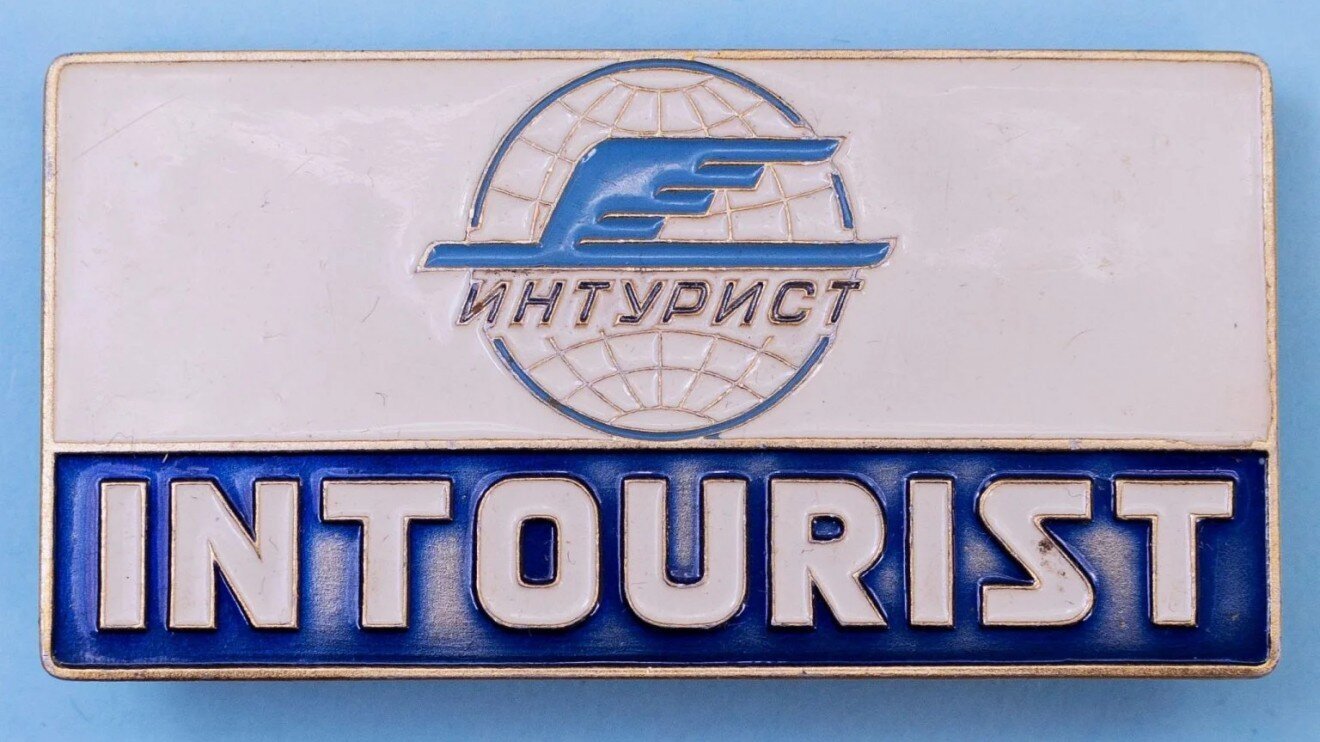
"Intourist" was the legendary Soviet and Russian tourism enterprise, officially founded on April 12, 1929, as the State Joint-Stock Company for Foreign Tourism in the USSR. By 1993, "Intourist" had more than 60 years of monopoly status in organizing foreign tourism in the country behind it, and was considered the main supplier of "froms" in the USSR.
In the early 1990s, during active privatization, the company's structure underwent major changes. After a reorganization in July 1990, the organization was renamed the Foreign Economic Joint-Stock Company for Tourism and Investment "Intourist." A controlling stake was acquired by AFK Sistema, with the Moscow City Government and GAO "Moskva" among the other major shareholders.
By 1993, "Intourist" was no longer a monopoly, but remained the largest player in Russia's emerging tourism market. The company had extensive infrastructure — a network of hotels, restaurants, and vehicle fleets. Notably, by 1990 the company already had 107 tourism enterprises with 54,000 beds.
Historically, "Intourist" operated under tight state control, performing not just economic but ideological functions. In Soviet times, the organization reported to various government bodies, including the NKVD during certain periods. By 1993, the company had become a symbol of the transition from a state monopoly to market relations in the tourism industry.
Fun fact
In Soviet times, foreign tourists could visit the USSR only through "Intourist," which strictly regulated their movements and itinerary. By 1993, these restrictions had been lifted, fundamentally changing the nature of inbound tourism.
During the Soviet era, "Intourist" served millions of foreign guests. If in 1956 the number of foreign tourists was around 500,000, by 1980 that figure had grown to 5 million. In the early 1990s, amid economic crisis and political instability, the flow of foreign tourists dropped significantly.
"Intourist" employees were known for their high level of skill, foreign-language ability, and impeccable knowledge of protocol. The company's guide-interpreters not only showed visitors the sights, but served as a kind of "ambassador" for the Soviet/Russian way of life.
By 1993, "Intourist" was actively adapting to the new market conditions, broadening its range of services and changing its approach to serving both foreign and Russian tourists. The company began developing outbound tourism, which had been strictly limited in Soviet times — in 1991 alone, 10.8 million Soviet citizens traveled abroad.
On the international stage, "Intourist" was a member of leading tourism organizations: UNWTO (the World Tourism Organization), PATA (the Pacific Asia Travel Association), ASTA (the American Society of Travel Agents), and others.
The organization's names across different periods
- 1929-1933: State Joint-Stock Company for Foreign Tourism in the USSR (GAO "Intourist")
- 1933-1939: All-Union Joint-Stock Company for Foreign Tourism in the USSR (VAO "Intourist")
- 1983-1991: State Committee for Foreign Tourism (Goskominturist) of the USSR
- 1990-2000: Foreign Economic Joint-Stock Company for Tourism and Investment (VAO) "Intourist"
The company's network of offices covered every major Russian city, as well as a number of foreign countries. In the 1990s, "Intourist" had representative offices in the United States, the United Kingdom, Poland, Canada, and Sweden.