Music in restaurants serves a psychological function. Food-service establishments typically play instrumental music, whose main purpose is to create a comfortable, relaxing atmosphere for guests. Such background music has a carefully calibrated rhythm, volume, and tone, designed to lower customers' anxiety and encourage them to linger longer.
It's worth noting that the protagonist's subjective perception of the music ("guitars rang, the bass grumbled, the hi-hat fussed about, the kick drum boomed") points to his heightened psycho-emotional state. When a person is under stress or anxious, their perception of sound can become distorted — ordinary musical elements take on exaggerated, anthropomorphic qualities. This is a classic example of the character projecting his inner unease onto external stimuli.
Musical terms and instruments
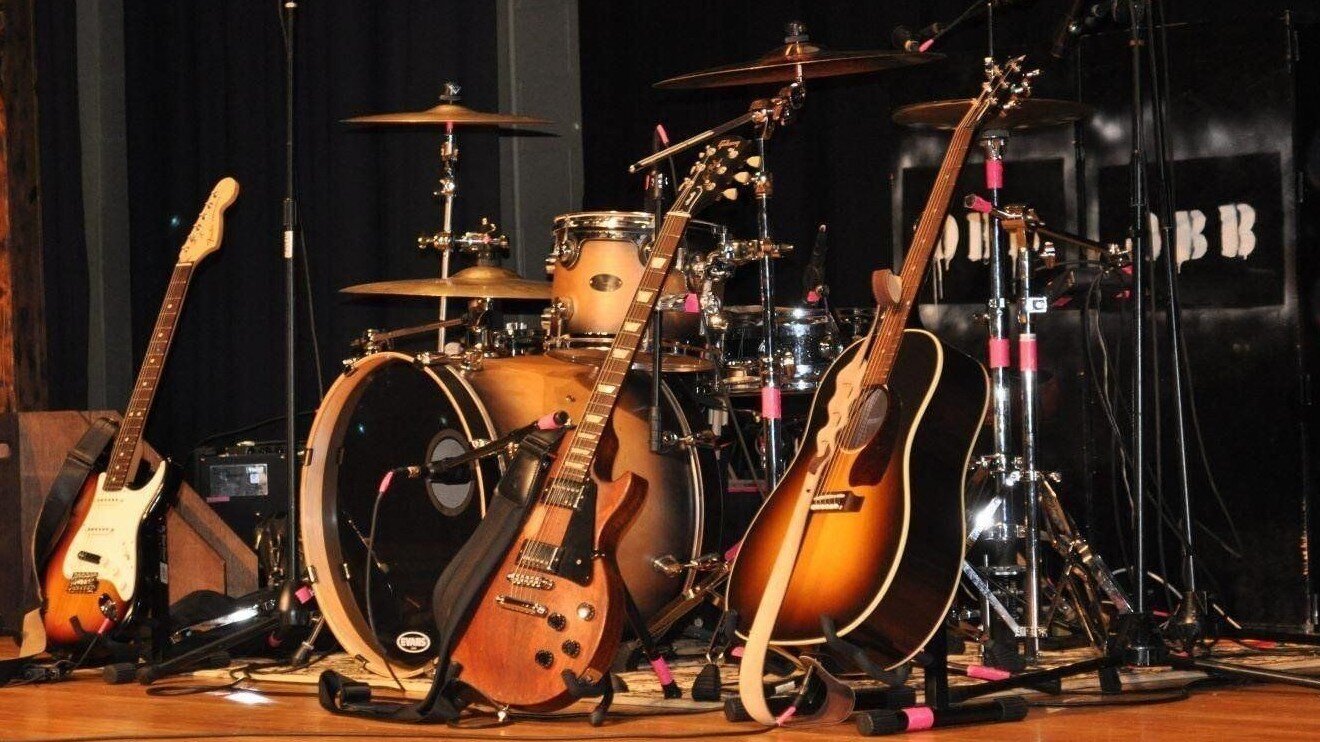
Bass — low-frequency sounds played on a bass guitar or double bass. The bass guitar is an electric stringed instrument with 4-6 strings, providing the bass line of a composition, forming its harmonic foundation and rhythmic support. The double bass is an acoustic stringed instrument, the largest of the violin family, traditionally used in jazz compositions.
Hi-hat — a component of a drum kit consisting of two cymbals mounted horizontally, one above the other, on a special stand. Controlled by a foot pedal that lets the bottom cymbal strike the top one. The hi-hat is used to keep the rhythm and produce a characteristic "hissing" sound, often used to accent the weak beats of a measure. A drummer can play the hi-hat with the pedal, with drumsticks, or both, producing a variety of sound effects.
The kick drum (bass drum) — the largest drum in a kit, positioned horizontally on the floor and controlled by a foot pedal. It produces a low, muffled sound ("boom") that forms the foundation of the rhythmic pattern. Traditionally used to accent the strong beats of a measure. Depending on the style of music, it can play single hits or complex rhythmic figures.
In the context of the scene described, these musical elements create a sonic backdrop that, on one hand, is meant to mask silence and create a comfortable atmosphere in the establishment, and on the other — through the protagonist's subjective perception — reveals his inner tension and heightened awareness of the world around him.