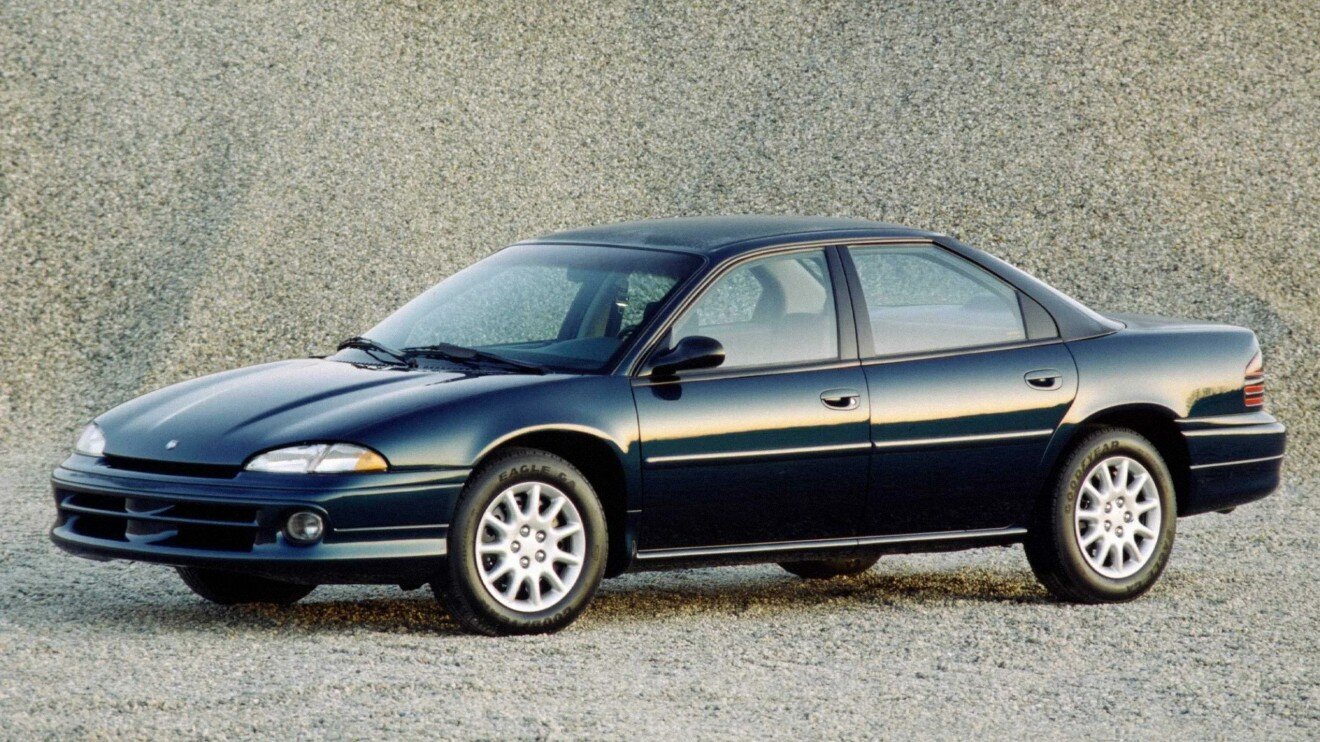
What the Dodge Intrepid Is
The Dodge Intrepid was a full-size, front-wheel-drive, four-door sedan produced by the American company Dodge from 1993 to 2004. The car was built on the LH platform, revolutionary for its time, using the "cab-forward" concept, which maximized passenger space within a relatively compact exterior footprint.
The Intrepid's design traces back to the 1987 Lamborghini Portofino concept car, which explains its stylish, modern look. Distinctive features included a long, sloping windshield, short overhangs, and wheels pushed out toward the corners of the body.
The Intrepid in early-1990s Russia
In 1993, when the novel is set, the Dodge Intrepid had only just appeared on the American market. In Russia, this car was pure exotica — expensive, prestigious, and extremely rare, affordable only to the very wealthy or those with connections in the car-import trade.
The appearance of such a car in the courtyard of a Russian apartment building in 1993 would have been an extraordinary event. This was an era when most Russians drove Zhigulis, Moskviches, and other Soviet cars, and foreign cars marked their owner as one of the "New Russians" — the emerging class of entrepreneurs and businessmen.
Technical features of the first generation (1993-1997)
The first-generation Intrepid was offered in two trims: base and the sportier ES. All cars came with driver and front-passenger airbags (a rarity at the time), air conditioning, and a four-speed automatic transmission.
The base engine was a 3.3-liter V6 producing about 160 hp; a more powerful 3.5-liter SOHC V6 with 214 hp was available as an option. Anti-lock brakes and traction control were optional.
Cultural significance
The folk nickname "Intrepidor" reflects a distinctive feature of the Russian language — adapting foreign words. Many imported cars of the era received similar nicknames: "Merin" (Mercedes), "Boomer" (BMW), "Lekhus" (Lexus).
Owning a Dodge Intrepid in 1993 Russia wasn't just about transportation — it was a symbol of status, success, and a connection to the Western way of life. It was a car for those who'd managed to adapt to the new economic realities of the post-Soviet space.