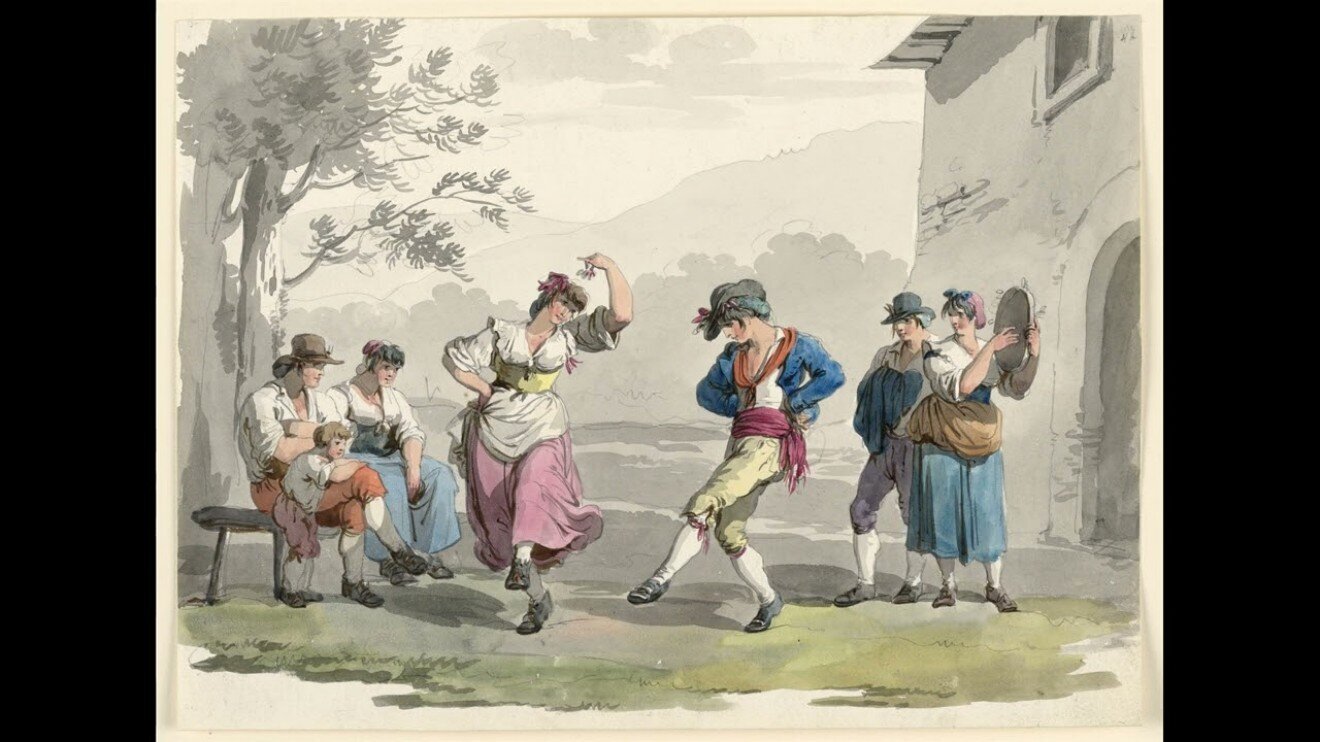
Carambole is an old French folk dance, widespread in the 17th-18th centuries among peasants and townsfolk. It's characterized by a fast tempo and a distinctive rhythmic pattern, in which the performer taps out small, accented strikes with the foot, producing a characteristic knocking sound. The name comes from the French «carambole» (rebound, ricochet), after the distinctive footwork technique.
Main features of the carambole:
- Performed in 2/4 or 6/8 time, with an emphasis on a crisp rhythm.
- Includes characteristic taps with the toe or heel of the left foot (less often the right), timed to the musical rhythm.
- The torso stays upright throughout, with the arms usually held behind the back or crossed over the chest.
The carambole was considered a cheerful, carefree dance, often performed at village festivals and town celebrations. It gradually fell out of fashion over the 19th century, though individual elements found their way into some of that era's ballroom dances. In contemporary culture, the carambole is virtually unknown outside of historical reenactments and specialized folk performances.