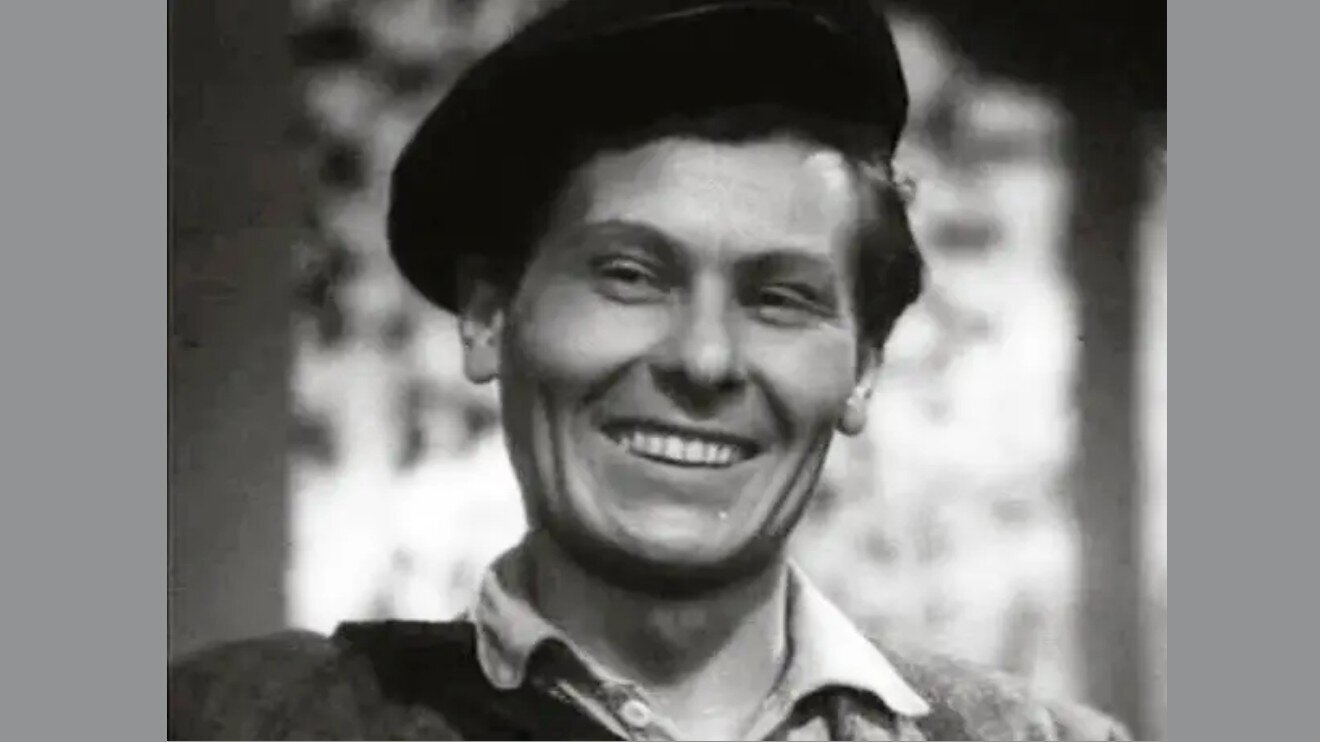
The text mentions the Soviet stage and film actor Lavrenty Yemelyanovich Masokha — one of the most vivid figures in mid-20th-century Soviet cinema, whose career became closely tied to portraying "enemies of the people" on screen.
Life and career
Lavrenty Masokha was born August 23, 1909, in the village of Plyuvaki, Kiev Governorate (now Pervomaiske, Cherkasy Oblast, Ukraine), into a peasant family. The younger brother of well-known actor Pyotr Masokha, he was drawn to the arts from a young age. Starting his working life at sixteen as a pattern-maker in a foundry, he entered the directing faculty of the N.V. Lysenko Kyiv Institute of Music and Drama at 19.
After graduating in 1931, he spent a year as an assistant director at the Kyiv Film Studio, then joined the acting troupe of the Ivan Franko Ukrainian Drama Theater, where he performed until 1940. After the Great Patriotic War, he moved to Moscow, becoming an actor at the Film Actor Studio Theater (1945-57), and from 1957, an actor at the Gorky Film Studio.
His screen typecasting
Masokha made his film debut in 1929, but real fame came with his role as Makar Lyagotin in the two-part film "The Great Life." Fate, however, dictated that the actor became typecast in villain roles. Starting with an anarchist role in "Shchors" (1939), Masokha became one of the most in-demand actors for playing fascists, traitors, and enemies of the Soviet system.
His skill at transformation and convincing performances made his screen villains memorable and believable. Masokha appeared in such notable war films as "The Tankmen," "Night Over Belgrade," "On Thin Ice," and many others, creating vivid antagonists for the Soviet heroes each time.
"Seventeen Moments of Spring"
A special place in Masokha's career belongs to his final role — SS Standartenführer Schölz, adjutant to SS Gruppenführer Müller — in the legendary TV series "Seventeen Moments of Spring" (1973). This brief but memorable role became, in a sense, the capstone of his film career.
Tragically, the actor didn't live to see the film released. Lavrenty Masokha died suddenly on June 20, 1971, in Moscow, while filming was still underway. According to contemporaries' recollections, just days before his death he'd been scolded by director Tatyana Lioznova — one of the last professional episodes of his life.
Legacy
Lavrenty Masokha was awarded the title of Honored Artist of the RSFSR in 1969. His body of work spans more than 40 film roles, from his debut in "Komsomolia" (1929) to the posthumously released "Seventeen Moments of Spring."
The character's remark, "He was half a century ahead of his time," captures Masokha's remarkable ability to create characters that stayed relevant and recognizable across generations of viewers. His skill lay in the fact that, even playing villains, he never made them flat or cartoonish — he gave them human traits, which made them more believable and, paradoxically, more memorable.
The actor is buried in Kyiv, at Baikove Cemetery. His name endures in the history of Soviet cinema as a symbol of professionalism and dedication to the actor's craft.