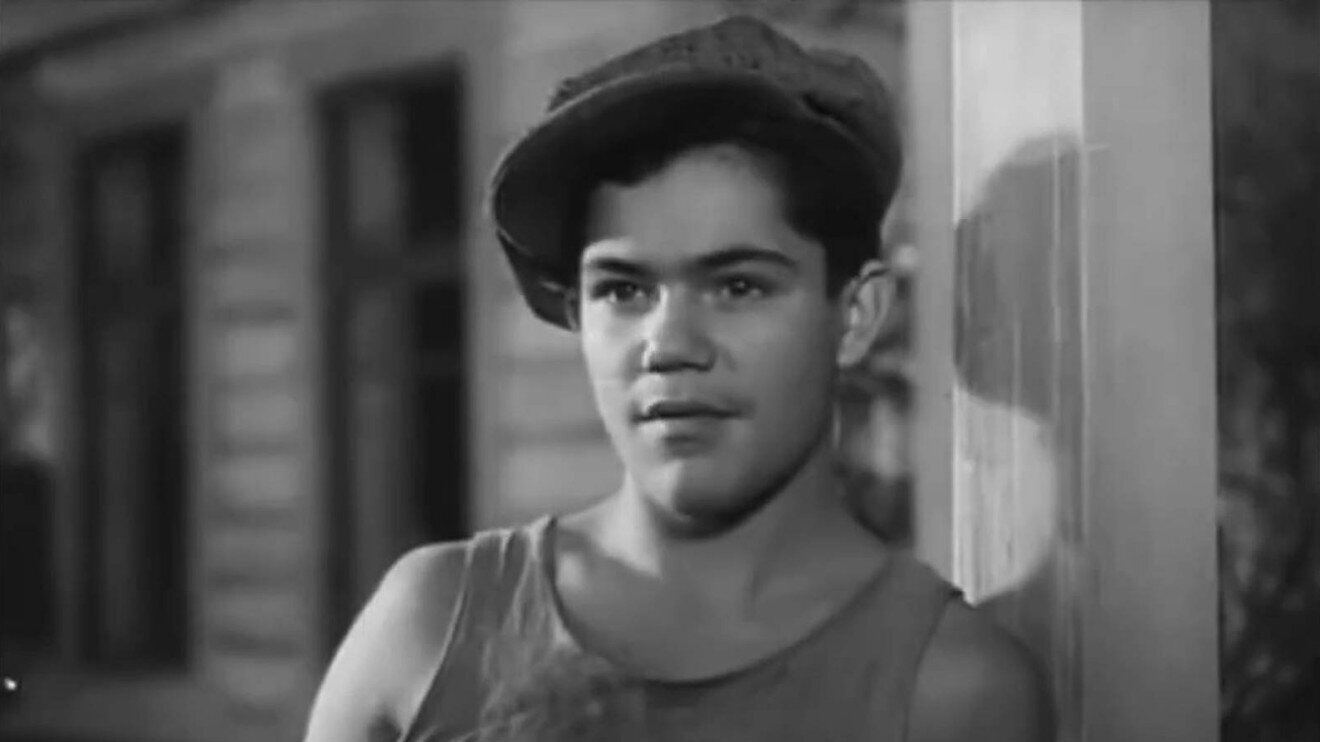
The mention of Mishka Kvakin in the text refers to Arkady Gaidar’s famous novella Timur and His Squad (1940), where the character serves as the story’s main antagonist.
Mishka Kvakin in the Original Novella
In Gaidar’s novella, Mishka Kvakin leads a gang of garden thieves and hooligans terrorizing a summer dacha community. He’s the direct opposite of the noble Timur Garayev — where Timur’s squad secretly helps the families of Red Army soldiers and the elderly, Kvakin’s gang busies itself with petty theft and vandalism.
The conflict between the two groups of teenagers drives the plot. Timur first tries to settle things peacefully, but after Kvakin’s gang kidnaps his helpers, a decisive showdown follows. The victorious Timur crew locks the captured hooligans in an empty booth in the market square, so the townspeople can see who’d been robbing their gardens.
Notably, in the end Timur lets Kvakin himself go, telling him: «There’s nothing left for them to do with you, or for you to do with them,» offering him the chance to break with his past.
Symbolic Meaning in a 1990s Context
Invoking the name Mishka Kvakin in a novel about 1993 Russia carries an obvious irony. The author draws a parallel between the petty hooligans of a children’s novella and the criminal gangs of the post-Soviet period.
The phrase «riding around like Young Pioneers with bats and brass knuckles» creates a grotesque image: where the original novella resolved its conflict through a children’s «war» between good and evil, in 1990s reality those same archetypes were embodied by armed gangsters.
Cultural Context
Timur and His Squad was one of the most popular children’s books in the USSR. Before 1986 the novella had been published 212 times, translated into 75 languages, with a total print run of more than 14 million copies. The book gave rise to a genuine social movement of «Timurites» — Young Pioneers who helped those in need.
In 2013 the novella was included on a list of «100 Books» recommended for independent reading by Russian schoolchildren, confirming its enduring place in Russian culture.
A Historical Irony
What gives the reference a particular bitterness is that Gaidar’s novella was written in 1940, on the eve of the Great Patriotic War, when the author still believed in bright ideals and the possibility of raising noble children. The Timurite movement really did help the families of soldiers at the front during the war.
By the 1990s, all that remained of those ideals were names and images, filled with an entirely different, cynical content. Mishka Kvakin went from a petty troublemaker to a symbol of organized crime in a transitional era.