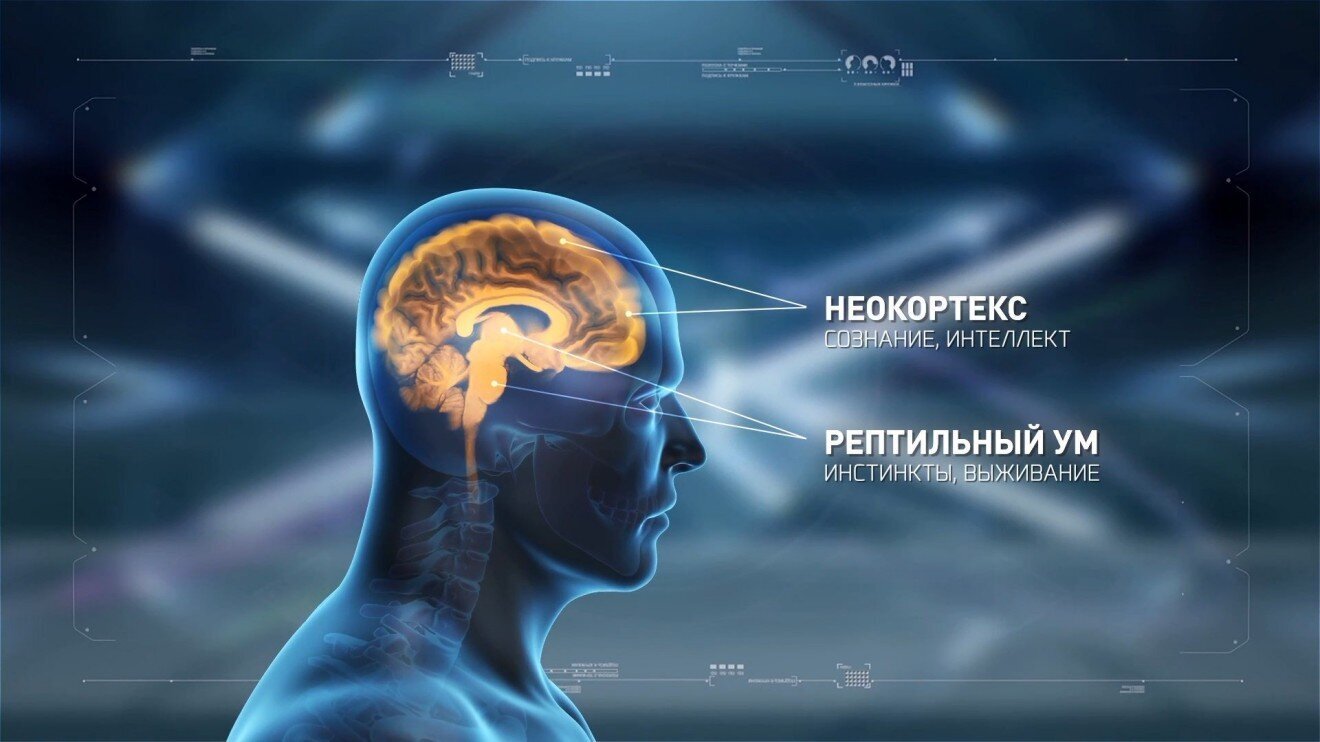
The neocortex (from Greek neos, "new," and Latin cortex, "bark, rind") is the evolutionarily youngest part of the mammalian brain's cortex, reaching its greatest development in humans. This structure sits in the outer layer of the brain's hemispheres, is only 2–4 millimeters thick, yet is responsible for all the higher nervous functions that make us human: sensory perception, voluntary movement, abstract thought, planning, self-awareness, and speech.
Structure and anatomy
The neocortex has a relatively uniform structure (hence its alternate name, "isocortex") and consists of six horizontal layers of neurons. This six-layer structure was described by neuroanatomist Korbinian Brodmann in the early 20th century. Vertically, neurons are organized into functional units called cortical columns.
The neocortex has two main types of neurons:
- Pyramidal neurons (about 80% of all cortical neurons)
- Interneurons (about 20%)
Regions and functions
The neocortex is divided into regions handling different functions:
- The occipital lobe — contains the primary visual cortex
- The temporal lobe — includes the primary auditory cortex and helps process speech
- The parietal lobe — handles the processing of sensory information
- The frontal lobe — handles planning, decision-making, and working memory
The prefrontal cortex (part of the frontal lobe) is especially well developed in humans, governing complex language processing, abstract thought, and social behavior.
Evolutionary significance
The neocortex is an evolutionary innovation of mammals, reaching its highest development in primates, and especially in humans. In humans, the neocortex makes up about 76% of brain volume, while in rats it's only about 30%.
British anthropologist Robin Dunbar found that neocortex size correlates linearly with the number of stable social relationships a species can maintain (the so-called "Dunbar's number"). For humans, that number is roughly 150 stable social connections.
Its role in cognitive processes
The neocortex plays a key role in:
- Forming and storing long-term memories
- Processing sensory information
- Conscious thought
- Regulating sleep (especially slow-wave sleep)
- Learning and cognitive function
In modern science, the neocortex is seen as the foundation of intelligence and consciousness. It's thanks to a developed neocortex that humans are capable of abstract thought, creativity, planning for the future, and self-awareness as individuals.
Under alcohol intoxication, as mentioned in the novel's text, the neocortex's functions are temporarily suppressed, disrupting higher cognitive functions — logical thought, critical judgment, self-control. This explains why the protagonist, as he sobers up, gradually regains the capacity for meaningful action.