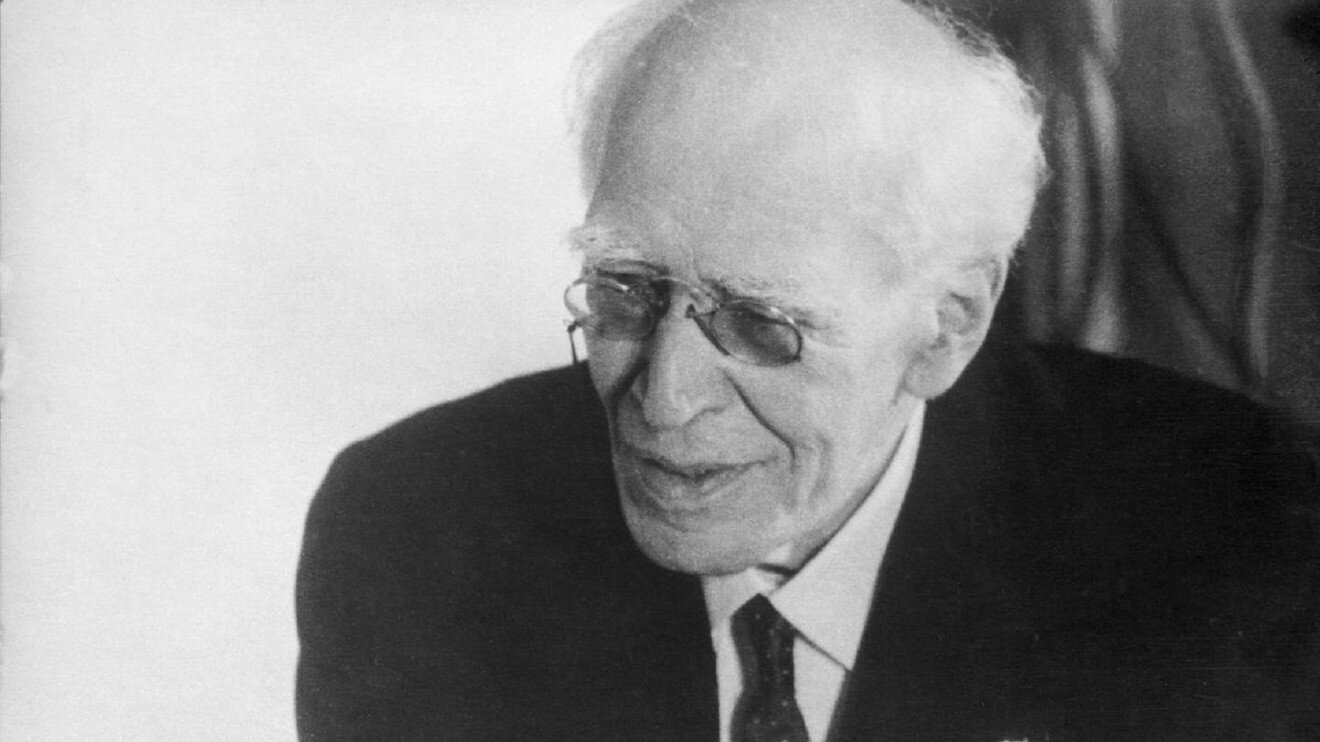
Konstantin Sergeyevich Stanislavski (1863-1938). An outstanding Russian and Soviet theater director, actor, teacher, theorist, and reformer of the theater. Creator of the famous acting system that, for more than a century, has enjoyed enormous popularity around the world.
His real surname was Alekseyev (1863–1938). Born in Moscow into a wealthy merchant family related to Savva Mamontov and the Tretyakov brothers. Interestingly, his maternal grandmother, Marie Varley, was a French actress who had performed at the Mikhailovsky Theatre in St. Petersburg.
His fascination with theater began in childhood — the Alekseyev family even had a hall specially converted for theatrical performances. Starting in 1877, the young Konstantin took his first steps on stage in the family's home "Alekseyev Circle."
The road to a professional theater
Alongside his passion for theater, from 1881 Stanislavski worked in the family business — at the gold-thread factory of the "Vladimir Alekseyev" partnership, rising from a simple bookkeeper to chairman of the board. After his father's death in 1893, he became the enterprise's de facto head, running it until its nationalization in 1918.
His stage name, "Stanislavski," arose in connection with his acting on the amateur stage — according to one account, it was taken in honor of an amateur actor Konstantin Alekseyev met at one of the performances.
In 1888, he became one of the founders of the Moscow Society of Art and Literature, where he not only acted but also directed. The young Stanislavski was deeply impressed by the touring performances of the German Meiningen Theatre Company in Russia (1885 and 1890), known for its exceptionally disciplined production culture.
The Moscow Art Theatre
The most important stage of Stanislavski's life came with the founding of the Moscow Art Theatre in 1898, together with Vladimir Nemirovich-Danchenko. The legendary meeting of the two theater reformers took place on June 18, 1897, at the "Slavyansky Bazaar" restaurant, and lasted 18 hours.
At the Moscow Art Theatre, Stanislavski proved himself an innovative director, creating a whole series of outstanding productions, among which the stagings of Anton Chekhov's plays hold a special place: "The Seagull" (1898), "Uncle Vanya" (1899), "Three Sisters" (1901), "The Cherry Orchard" (1904). It was through his work on Chekhov's plays that many of Stanislavski's directorial principles took shape.
As an actor, Stanislavski created a whole gallery of unforgettable roles on the Moscow Art Theatre stage: Astrov in "Uncle Vanya," Vershinin in "Three Sisters," Gaev in "The Cherry Orchard," Satin in Maxim Gorky's "The Lower Depths," Dr. Stockmann in Henrik Ibsen's "An Enemy of the People," and many others.
The "Stanislavski System"
"The theater should be such that the audience forgets it is in a theater."
Stanislavski's greatest contribution to world theatrical art was the system of acting technique he created, known as the "Stanislavski System." Its main principles are set out in the books "My Life in Art" (1926) and "An Actor's Work on Himself" (published posthumously in 1938).
At the heart of the system lies the principle of the "art of experiencing" — an actor should not merely depict emotions, but genuinely experience them onstage, creating the "life of the human spirit" of the role. To this end, Stanislavski developed a whole complex of exercises aimed at developing attention, imagination, emotional memory, a sense of truth, and belief in the given circumstances.
To put his system into practice, Stanislavski founded the First Studio of the Moscow Art Theatre in 1912, training a whole generation of talented actors and directors there. From 1918 he also headed the Opera Studio (now the Stanislavski and Nemirovich-Danchenko Moscow Academic Musical Theatre).
Legacy
After a severe heart attack in 1928, Stanislavski was forced to give up acting, focusing instead on directing and teaching. He devoted his final years to work on his theoretical writings.
Stanislavski's influence on world theater is hard to overstate. His system became the cornerstone of modern acting technique, further developed in the work of his students and followers around the world. In the United States, Stanislavski's ideas were developed into Lee Strasberg's "Method," which had an enormous influence on American theater and film.
Stanislavski died on August 7, 1938, and was buried at Novodevichy Cemetery in Moscow. In 1936 he became the first person in history to hold the honorary title "People's Artist of the USSR," and in 1937 he was awarded the Order of Lenin.
In the theatrical culture of Russia and the world today, Stanislavski's name has become a symbol of high professionalism and devotion to art. His phrase "I don't believe it!," addressed to actors who had not reached genuine truth onstage, has entered everyday speech as a catchphrase.