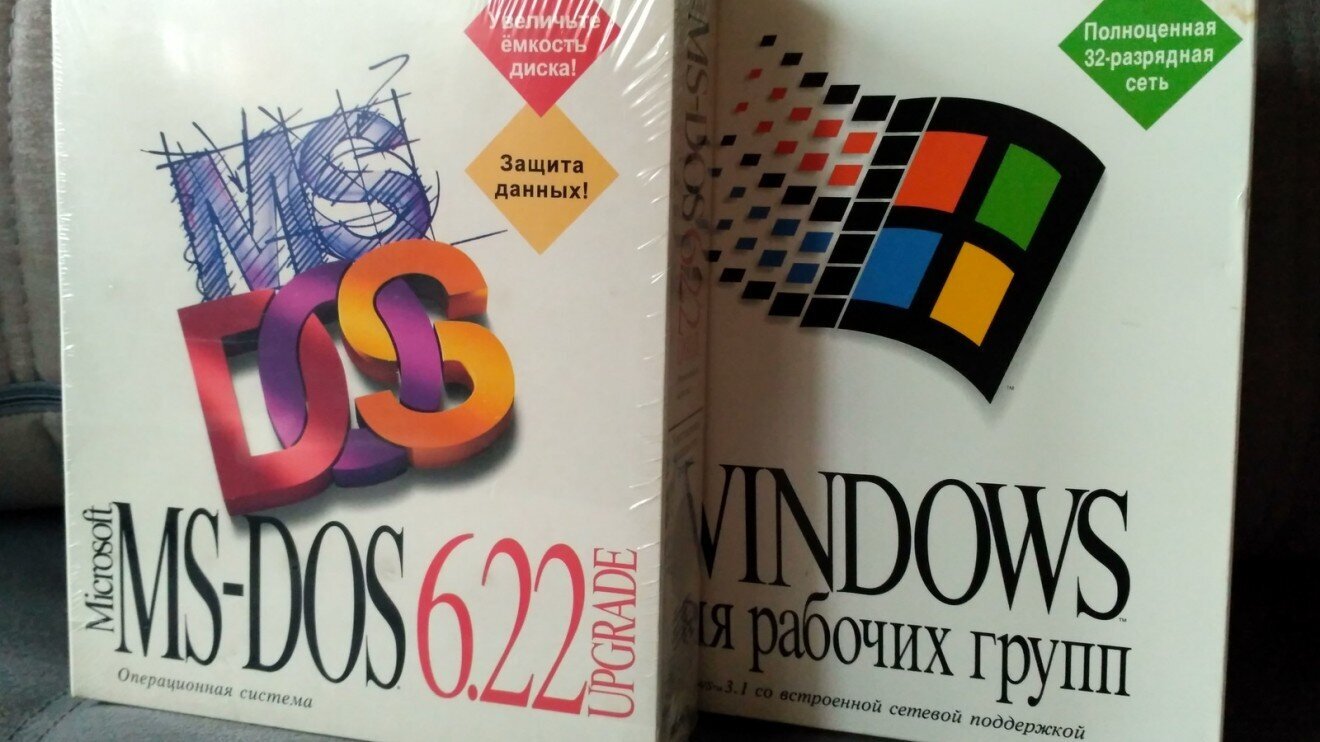
The novel mentions system administrator Sergei's contemptuous attitude toward Microsoft's products, which he calls "rattles from Windowz" (a mocking Russian play on "Windows"). This reflects the genuine sentiments of many technical specialists of the time.
The state of Windows in 1993
By 1993, Microsoft Windows was at a pivotal stage in its development. The current version was Windows 3.1, released in April 1992, which became the first truly successful version of Microsoft's graphical shell. It was in Windows 3.1 that critical bugs from previous versions were fixed, TrueType font support was added, and OLE (Object Linking and Embedding) technology was introduced.
Of particular importance was Windows for Workgroups 3.11, released in November 1993 — the first system in the family with built-in support for local area networks. This version was an important step on the road to a full-fledged networked operating system.
Interestingly, Windows for Workgroups 3.11 became a testing ground for technologies later used in Windows 95. It dropped support for the Intel 80286 processor and standard mode operation.
The attitude of technical specialists
The contemptuous nicknames "Windowz" and "Microsloth" (instead of Microsoft) were widespread among system administrators and programmers in the early 1990s. This owed to several factors:
- System instability: Windows 3.x frequently "hung" and required a restart, especially when running complex software
- Limited multitasking: The system used cooperative multitasking, meaning one "hung" program could freeze the entire system
- High system requirements: Comfortable use required at least 4 MB of RAM, which was expensive by the standards of the time
- Competition from UNIX: Professionals often preferred UNIX systems, considering them more reliable and higher-performing for server tasks
Microsoft as a company in 1993
1993 was a landmark year for Microsoft Corporation. The company was actively expanding on several fronts:
Key products
- The release of Windows NT 3.1, the first professional OS
- The launch of the Encarta encyclopedia
- The development of the Microsoft Office suite
Financial results
By 1993, Microsoft's revenue had grown significantly compared to the start of the 1990s, when the company first crossed the $1 billion mark (1990).
Oracle Database as an alternative
Sergei's choice in favor of Oracle Database was well-founded for 1993. Oracle was one of the leading database management systems for professional use, especially at large organizations. Unlike Microsoft's desktop "rattles," Oracle offered:
Advantages of Oracle in 1993
- High reliability and performance
- Support for large volumes of data
- Sophisticated administration tools
- Scalability for enterprise use
Historical perspective
The irony is that the skepticism of technical specialists in 1993 was largely justified — but only temporarily. Just two years later, Microsoft released Windows 95, which radically changed the operating-system market. This system became the family's first true OS (rather than a shell running on top of DOS), with a modern interface, support for long file names, and Plug and Play technology.
It is curious that many of those who called Windows "Windowz" in 1993 later became active users of Microsoft's products, acknowledging the qualitative leap in the development of the company's operating systems.