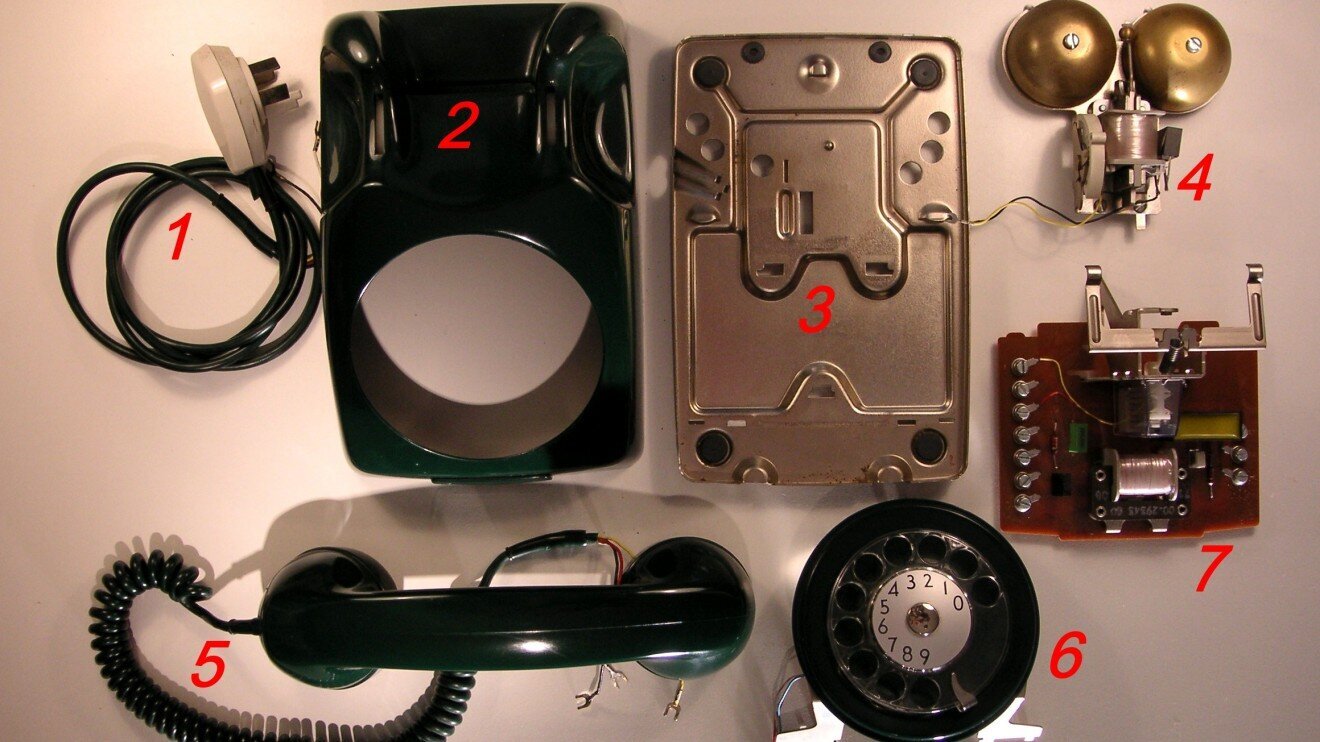
The buzzer was an electromechanical device in Soviet-era telephones designed to give an audible alert for incoming calls. Despite the term «buzzer» being commonly used in everyday speech, the technically correct name for this device is «electromechanical bell».
The first electromagnetic bells were developed back in the late 19th century. In the USSR, mass production of telephones with such devices began in the 1930s. The electromechanical bell consisted of two metal cups (gongs) with a movable striker between them. When the incoming AC ringing current arrived, the electromagnet pulled the armature with the attached striker, which struck the gongs alternately, producing the characteristic ringing sound.
In telephones of the 1950s-80s (the TA-68, TAN-80, and other models), the bell was usually housed in the lower part of the case. A classic Soviet bell ran on alternating current at 15-20 Hz and 15-110 V.
Interestingly, the term «buzzer» technically refers to a different device — a generator of a continuous, monotone tone used to test a communication line. In everyday usage, though, the word «buzzer» became firmly attached to the telephone bell itself.
In the late 1980s, electromechanical bells in telephones began gradually being replaced by electronic alert devices — piezoelectric or dynamic speakers, capable of playing various melodies instead of a monotone ring.