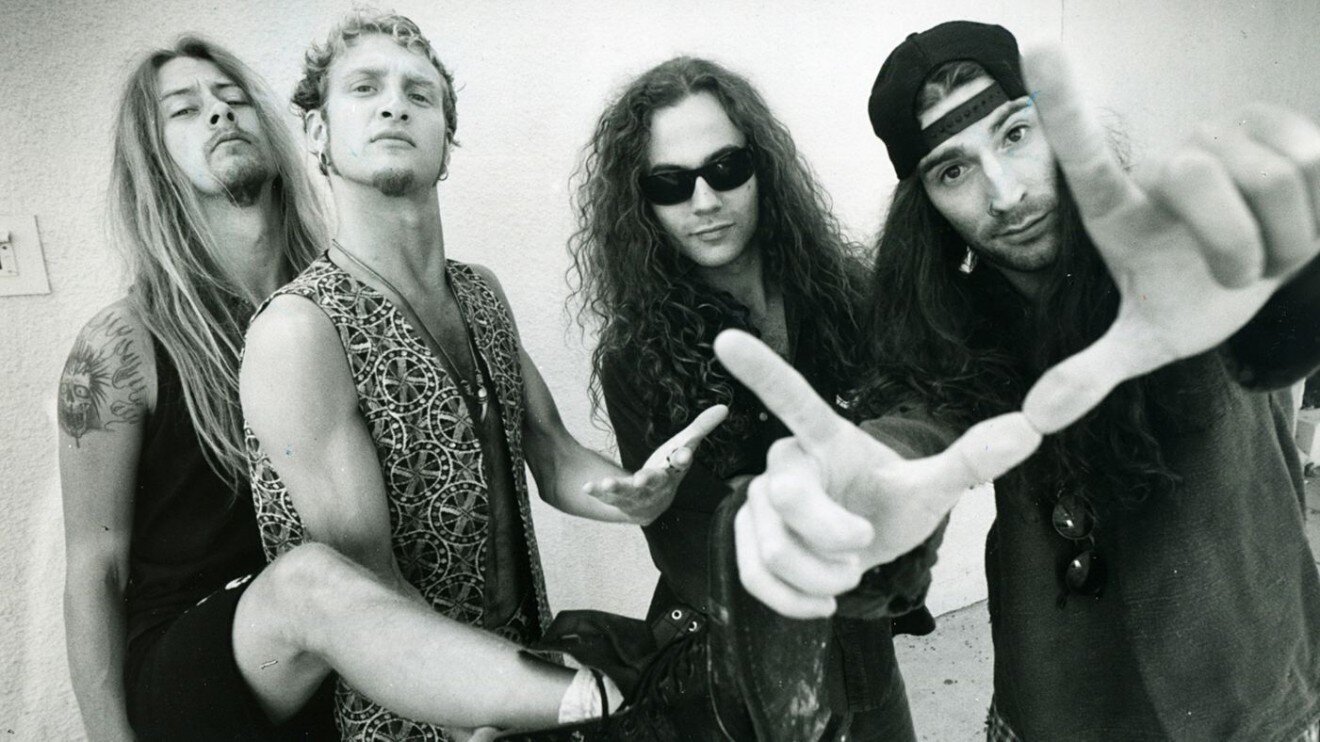
Alice in Chains (often shortened to AiC) is an American rock band formed in Seattle in 1987, one of the defining acts of the early-1990s grunge movement. By 1993, when the events of the novel take place, the band was at the height of its popularity and creative output, one of the most influential and commercially successful groups in alternative metal.
Formation and Early Years (1987-1989)
Alice in Chains began with a meeting between the band's two central figures — vocalist Layne Staley and guitarist Jerry Cantrell — at a party in Seattle in August 1987. Before that, Staley had played in a local glam-metal band called Alice N' Chains, whose name became the seed for the future band's own.
Interestingly, the name "Alice in Chains" arose from a conversation between members of Alice N' Chains and Russ Klatt, singer of the band Slaughter Haus 5, about backstage passes. One of the passes read "Welcome to Wonderland," which led to a discussion of "Alice in Wonderland," until Klatt suggested: "What about Alice in Chains? Put her in shackles and all that." The band was initially called Alice N' Chains, to avoid negative associations with female bondage.
After Alice N' Chains broke up, Staley invited Cantrell to live with him at the Music Bank rehearsal studio, where they began working on new material. Drummer Sean Kinney and bassist Mike Starr soon joined. The band tried out various names, including Diamond Lie and even the provocative "Fuck," before finally settling on Alice in Chains.
Breakthrough: "Facelift" (1990)
The band's first major success came with the debut album "Facelift," released August 21, 1990. Cantrell described the album as meant to capture Seattle's "dark aura" and "oppressive atmosphere." At first the album saw no commercial success, selling fewer than 40,000 copies in its first six months, until MTV added the video for "Man in the Box" to daytime rotation.
"Man in the Box" became the band's breakout single, reaching number 18 on the mainstream rock charts. The song was marked by heavy guitar riffs and Staley's distinctive vocal style, which would later become the band's trademark. In the six weeks following the single's success, "Facelift" sold 400,000 copies in the US.
"Facelift" became the first album from the Seattle grunge scene to go RIAA gold, certified September 11, 1991, for sales over 500,000 copies. Critics praised the record: AllMusic's Steve Huey called it "one of the most important records in building an audience for grunge and alternative rock among hard rock and heavy metal listeners."
An Acoustic Detour: "Sap" (1992)
In early 1992 the band planned to record demos for their next album, but instead created five acoustic tracks. Drummer Sean Kinney said he'd had a dream about "making an EP called Sap," and the band decided "not to tempt fate."
The "Sap" EP was released February 4, 1992, and went gold within two weeks. The release coincided with a period when Nirvana's "Nevermind" sat atop the Billboard 200, fueling the rising popularity of Seattle bands and the term "grunge music."
A notable feature of "Sap" was its guest vocalists: Ann Wilson of Heart joined Staley and Cantrell on the choruses of "Brother" and "Am I Inside," while Mark Arm of Mudhoney and Chris Cornell of Soundgarden split vocal duties on "Right Turn," credited on the album to "Alice Mudgarden."
A Masterpiece of Darkness: "Dirt" (1992)
The band's second studio album, "Dirt," released September 29, 1992, marked their creative and commercial peak. It reached number six on the Billboard 200 and was certified five-times platinum, becoming the band's best-selling record.
Most of the material for "Dirt" was written on the road, and the album turned out significantly darker than "Facelift." Six of its thirteen songs deal with addiction, reflecting the band members' own struggles. Cantrell explained: "We fight our everyday demons through music. All the poison that builds up during the day, we purge it when we play."
The album produced five singles that reached the Billboard Mainstream Rock top 30: "Would?," "Rooster," "Them Bones," "Angry Chair," and "Down in a Hole." "Would?" was written for the soundtrack of Cameron Crowe's 1992 film "Singles," in which the band also made a cameo appearance as a "bar band."
Critic Chris Gill of Guitar World called "Dirt" "huge and ominous, yet also eerie and intimate," "sublimely dark and viciously honest." Steve Huey called the album "a major artistic statement and about as close to a genuine masterpiece as they've made."
Sound and Style
Alice in Chains stood apart from other grunge bands with a sound deeply rooted in heavy metal. The band was known for its distinctive vocal approach, which often paired harmonized vocals between Staley and Cantrell. This created a unique atmosphere, combining metal's aggression with grunge's melodicism and experimentalism.
Cantrell's guitar work was marked by heavy, often dissonant riffs and the use of alternate tunings. His playing blended classic heavy-metal influences with more contemporary alternative approaches. Mike Starr's basslines (before 1993) provided a powerful rhythmic foundation, while Sean Kinney's drumming was precise and dynamic.
Layne Staley's voice became one of the most recognizable in alternative rock, capable of ranging from melodic and emotional to aggressive and pained, perfectly conveying the themes of alienation, addiction, and inner struggle that ran through the band's lyrics.
Lyrical Themes
Alice in Chains's lyrics frequently touched on addiction, depression, death, and social alienation. These themes weren't a simple nod to a fashionable "grunge gloom" — they grew out of real, lived experience, especially Layne Staley's, who battled heroin addiction openly.
Songs like "Man in the Box" criticized censorship and social pressure, "Rooster" was written for Cantrell's father, a Vietnam veteran, and "Down in a Hole" explored themes of depression and self-destruction. Despite the darkness of the subject matter, Cantrell stressed that their music always carried an element of survival and triumph over the darker sides of human existence.
Lineup Changes (1993)
After "Dirt" was released, bassist Mike Starr left the band. The official reason cited was "differences in priorities" — the band wanted to keep touring and doing press intensively, while Starr was ready to go home. Starr later claimed he was fired over drug problems.
Starr was replaced by Mike Inez, formerly of Ozzy Osbourne's band. Inez met Alice in Chains during Ozzy's "No More Tours" tour and became friends with the band. His first show with Alice in Chains took place January 27, 1993, at Camden Underworld in London.
In April 1993 the band recorded two songs with Inez — "What the Hell Have I" and "A Little Bitter" — for the soundtrack to "Last Action Hero." In the summer of 1993, Alice in Chains took part in the Lollapalooza alternative music festival, which turned out to be their last major tour with Layne Staley as an active participant.
Cultural Standing by 1993
By 1993, Alice in Chains were firmly established as one of the "big four" of Seattle grunge, alongside Nirvana, Pearl Jam, and Soundgarden. The band had sold over 30 million records worldwide and more than 20 million in the US. They had 18 songs reach the Billboard Mainstream Rock top 10 and five number-one hits.
The band's influence extended well beyond the music scene. Alice in Chains helped shape the aesthetic and outlook of Generation X, giving voice to the alienation and disorientation common among young people in the early 1990s. Their music became the soundtrack for many going through personal crises or seeking an alternative to mainstream pop culture.
The band also had a significant impact on the development of alternative metal as a genre. Their ability to fuse metal's heaviness with the melodicism and experimentalism of alternative rock opened new possibilities for many later bands.
Visual Style and Aesthetic
Alice in Chains's visual image matched their musical style. The band members often appeared in plain, unadorned clothing — jeans, T-shirts, flannel shirts — consistent with the broader grunge aesthetic. This anti-glamour approach stood in stark contrast to the glitz of 1980s heavy metal and underscored the authenticity and "street" quality of their music.
The band's album covers, especially "Dirt," reflected the dark atmosphere of their music. The use of dark tones, abstract imagery, and symbolism tied to death and decay created a visual language that complemented the band's musical message.
Musicianship
Despite belonging to a movement often associated with simplicity and rawness of sound, Alice in Chains displayed a high level of technical skill. Jerry Cantrell was recognized as one of the finest guitarists of his generation, capable of both heavy riffs and complex solos and atmospheric passages.
The rhythm section of Sean Kinney and Mike Inez provided a powerful and precise foundation for the guitar and vocal work. Their playing was marked not just by technical precision but by an ability to build atmosphere and sustain emotional tension in the songs.
Place in Rock History
Alice in Chains occupy a unique place in the history of rock music as a band that helped define the sound of the 1990s. They were part of a musical revolution that shifted focus from the technical showmanship and spectacle of the 1980s toward emotional depth and authenticity.
The band earned recognition from critics and fellow musicians alike. VH1 ranked them 34th on its list of the "100 Greatest Artists of Hard Rock," and Hit Parader named them the 15th greatest live band. They received eleven Grammy nominations, a testament to their influence on the music industry.
Social Context
Alice in Chains's music reflected the social and cultural shifts of the early 1990s. The collapse of the Soviet Union, America's economic troubles, and changes in youth culture all found their way into the band's work. Their songs spoke to a generation disillusioned with the promises of the 1980s and searching for new forms of self-expression.
The candor with which the band addressed addiction and mental-health struggles helped break down the taboo surrounding these subjects. Their music became a form of therapy not only for the band members themselves but for many listeners going through similar struggles.
Production and Recording
Alice in Chains worked with a number of outstanding producers, including Dave Jerden, who produced "Facelift" and helped shape the band's signature sound. The band was also deeply involved in production itself, with Jerry Cantrell frequently serving as co-producer.
Their studio work was marked by close attention to detail and sonic experimentation. They used a range of recording techniques to build the atmosphere of their songs, including layered vocal tracking and unconventional microphone placement.
By 1993, Alice in Chains was a mature, creatively developed band operating at the height of its powers. Its influence on the music and culture of the 1990s was enormous, and it remained one of the most important alternative-rock bands of its time. For a character in a novel set in 1993, listening to Alice in Chains meant tapping into one of the era's most significant musical phenomena — a band that not only defined the sound of the time but expressed its spirit.