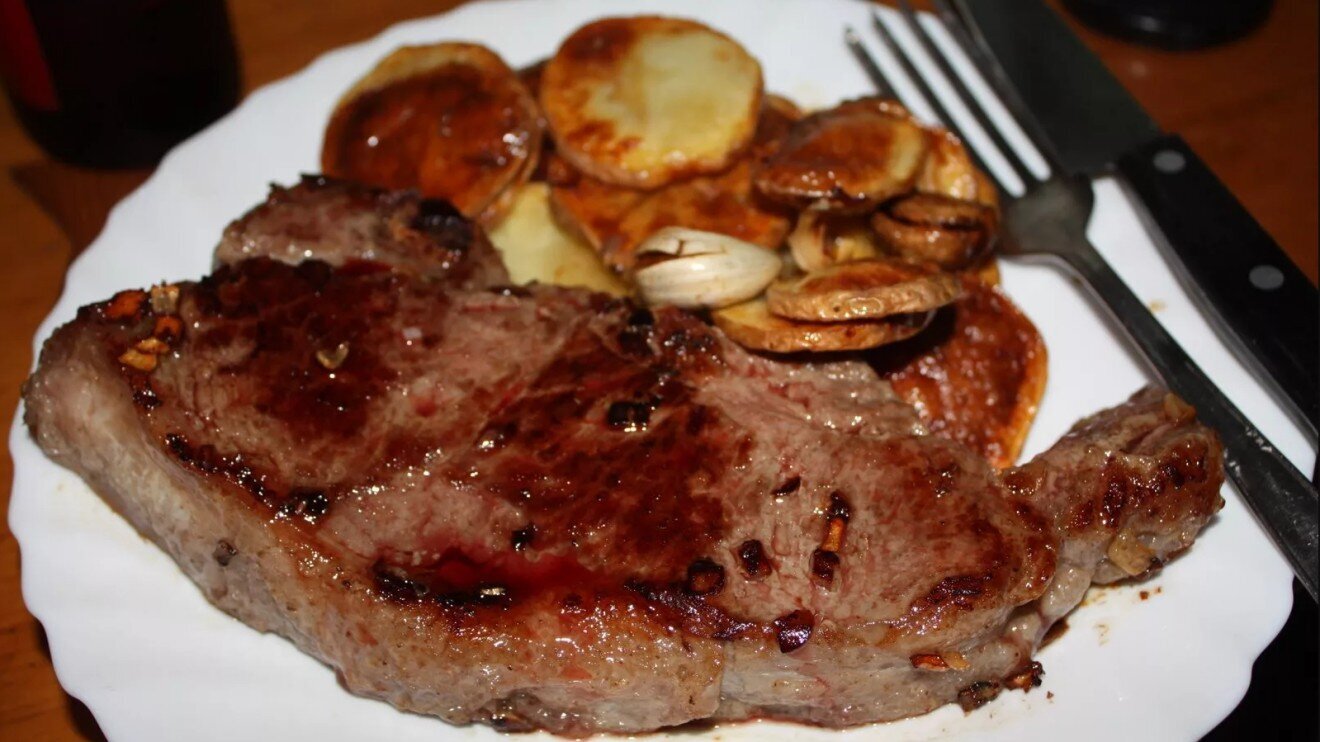
Entrecôte was a popular meat dish of Soviet cuisine — a cut of beef taken from the rib section of the carcass along with a small rib bone. In its classic form, it was a cut of meat 1.5-2 cm thick with a characteristic strip of fat that gave the meat particular juiciness and flavor when fried.
Unlike entrecôte, langet was made from thinly sliced beef tenderloin (the fillet), about 1 cm thick. Langet was always cut across the muscle fibers, which made it especially tender even with quick cooking. The dish was highly prized in Soviet restaurant culture for its refinement and delicate flavor.
Interestingly, Soviet public catering had no steaks in the modern sense of the word. Several reasons explain this:
- There was no culture of eating steak cooked to varying degrees of doneness. In the Soviet culinary tradition, meat was cooked mainly until fully done
- Technological limitations — preparing a real steak requires special equipment (a high-temperature grill), rarely found in the kitchens of Soviet catering establishments
- The way carcasses were butchered in Soviet meat processing didn't allow for the special cuts needed for steaks (ribeye, striploin, T-bone, and so on)
- There was no practice of dry-aging meat, necessary for producing high-quality steaks
In the early 1990s, the period described in the novel, entrecôte remained one of the most prestigious meat dishes on restaurant and café menus, often served with fried potatoes and considered an excellent accompaniment to vodka (as hinted at by the phrase "went down nicely with the white stuff").