Auftragstaktik (German for "mission-type tactics") is a tactical concept known as "the principle of independent decision-making based on a received mission." It is a cornerstone of German operational doctrine, forged from the combat experience of 19th-century European wars.
The core of the concept lies in decentralizing command — transferring authority from senior levels of command to junior ones, which are directly on the scene and better able to assess the operational situation. Subordinates at every level are given the freedom to interpret the current situation and act according to leadership's overall goals, rather than following every letter of an order literally.
German makes an important distinction between two terms: Befehl (a specific, unambiguous order requiring literal execution) and Auftrag (a broader assignment or directive, in carrying out which following the spirit matters more than the letter). It is this second approach that Auftragstaktik is built on.
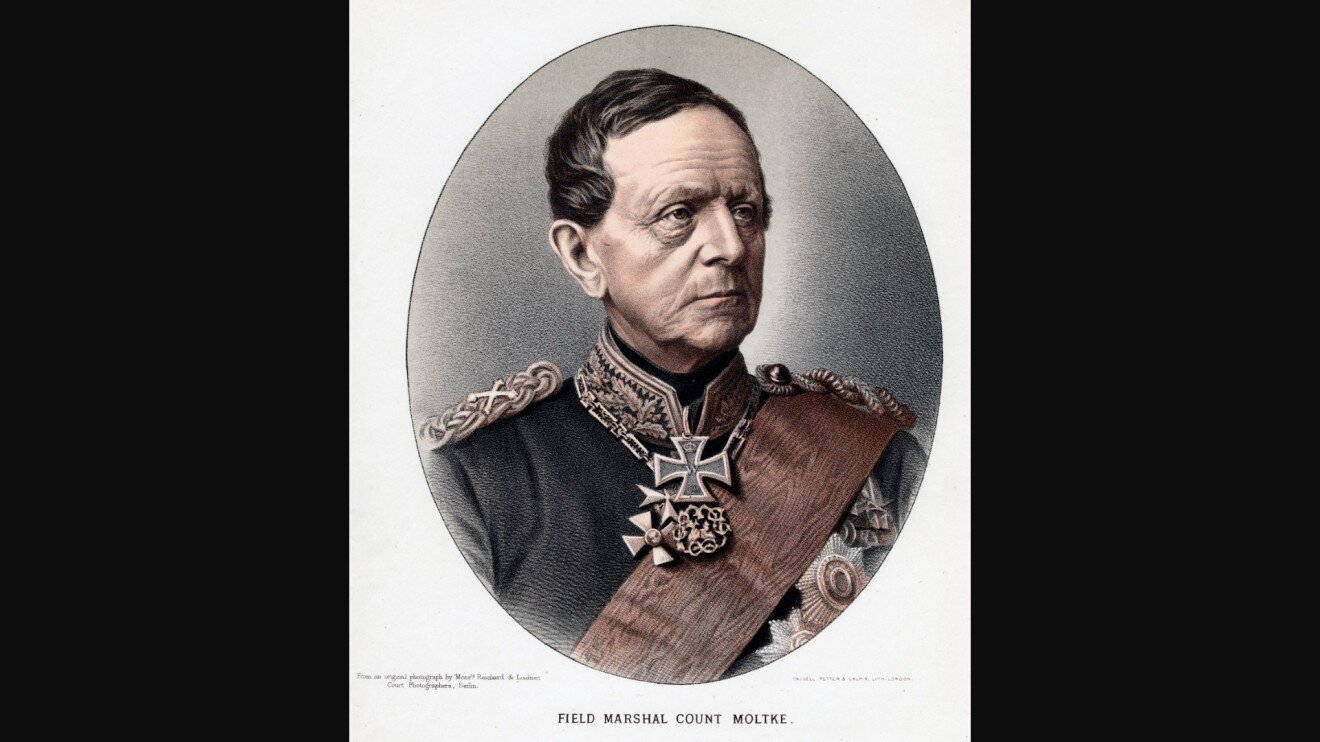
This management philosophy was formulated by the chief of the Prussian General Staff, Helmuth von Moltke, as "the initiative-taking actions of subordinate officers, carried out in the interests of higher command, without detailed instructions from above." In his view, leadership's main duty was to channel subordinates' initiative in the right direction.
A vivid illustration of this idea comes from a remark by the Prussian commander Friedrich Karl. When one of his officers excused a tactical error by saying he was following his superior's order, the prince replied: "His Majesty made you a major because he believed you would know when NOT to obey his orders."
The advantages attributed to Auftragstaktik include stimulating subordinates' creative potential and initiative, boosting morale, and strengthening the moral character of personnel. This approach significantly speeds up decision-making and increases adaptability under rapidly changing combat conditions.
Interestingly, elements of this concept can be traced through the military history of various countries. The Russian military historian Colonel A.E. Savinkin noted that the ideas of Auftragstaktik were anticipated by Field Marshal A.V. Suvorov, who "not only trained his subordinates toward independence, but firmly forbade them from checking in with senior commanders," and allowed his own orders to be broken if the situation demanded it.
In modern conditions, the principles of Auftragstaktik are especially relevant given the high speed of combat operations, the need for lightning-fast responses to a changing situation, and the widespread use of electronic warfare.
Historical figures
Helmuth von Moltke (1800-1891)
A Prussian field marshal, military theorist, and reformer, considered one of the greatest strategists of the 19th century. It was he who formulated the core principles of Auftragstaktik. For thirty years (1857–1888) he led the Prussian, and later German, General Staff. Under his leadership, the Prussian army won decisive victories in the Austro-Prussian (1866) and Franco-Prussian (1870–1871) wars. Moltke developed a new system of command, based on decentralized management and the initiative of junior commanders. His famous remark: "A favorable situation will never be exploited if commanders wait for orders. Everyone, from the highest commander to the youngest soldier, must always keep in mind that inaction and passivity are worse than choosing the wrong action."
Otto von Bismarck (1815-1898)
The first chancellor of the German Empire, who unified Germany through "blood and iron." An outstanding diplomat and statesman, nicknamed the "Iron Chancellor." Though Bismarck was not a military strategist, he worked closely with Prussia's military leadership and supported military reform, including the principles of Auftragstaktik. Bismarck understood the importance of flexible, effective military command for achieving political goals. His political strategy often relied on the successes of the Prussian army, reformed by Moltke and von Roon.
Albrecht von Roon (1803-1879)
A Prussian field marshal and statesman, Prussia's Minister of War (1859–1873). Together with Moltke, he carried out a fundamental military reform that turned the Prussian army into Europe's most powerful military force. Von Roon reorganized the conscription system, rearmed the army, modernized the artillery, and introduced new methods of officer training. He championed the professionalization of the officer corps and believed officers should receive comprehensive military education. Von Roon's reforms created the organizational foundation necessary for putting the principles of Auftragstaktik into practice.