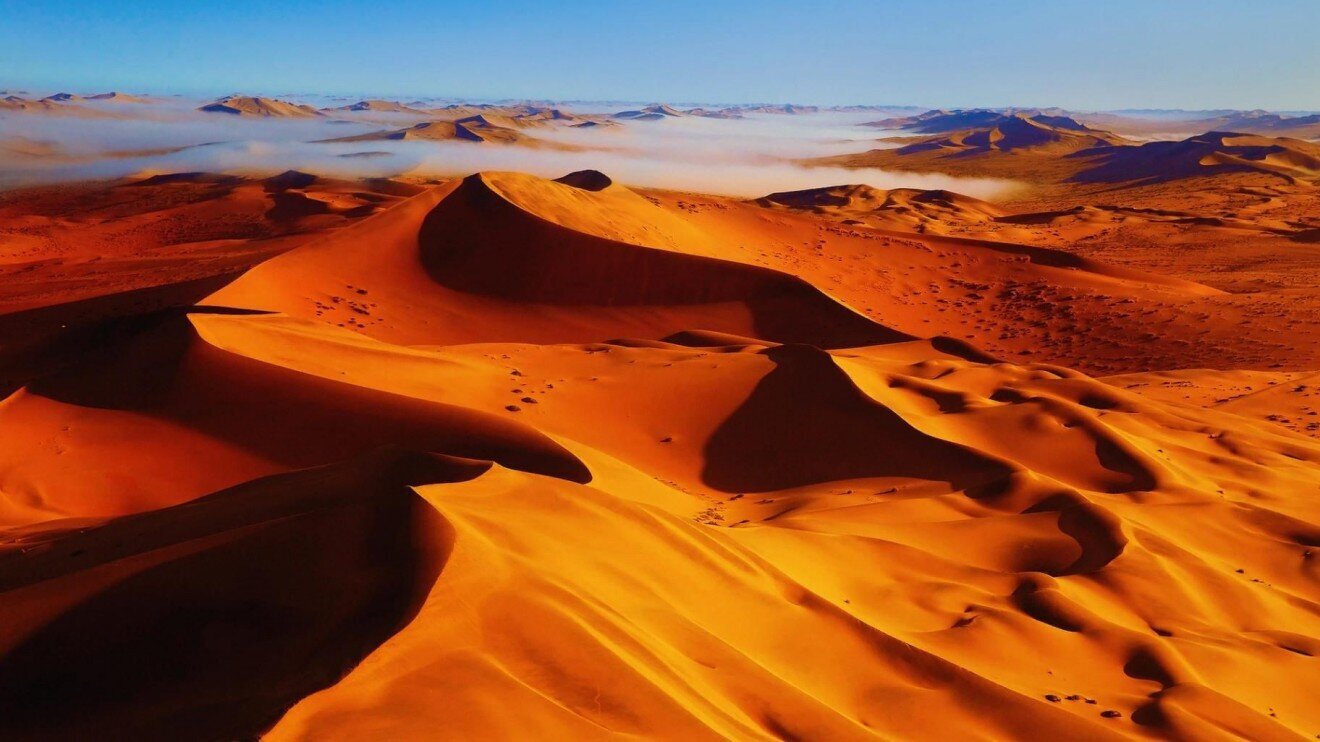
A barkhan is a crescent-shaped sand dune formed by wind action in desert and semi-desert regions. Barkhans are one of the characteristic landforms of deserts and a vivid example of the interaction between wind and sand. They can range widely in size, from small sand ridges just a few meters high to giant dunes over a hundred meters tall.
Distinctive features of barkhans
A barkhan has a recognizable shape: its convex side faces into the wind, and two "horns" point in the direction the wind is blowing. These horns usually stretch toward more stable areas with lower wind speeds. The shape and structure of barkhans allow wind to carry sand from the windward side to the leeward side, gradually shifting the dune's position.
The main parts of a barkhan:
- The windward side — a gentle slope, along which sand moves under the force of the wind.
- The leeward side — a steep slope, where sand cascades down, creating a "wind shadow."
- The horns — narrow, elongated stretches that extend out from the main body of the dune.
Conditions for barkhan formation
Forming a barkhan requires a combination of the following factors:
- A constant wind direction. Barkhans form in places where the wind blows steadily, without changing direction.
- Sandy material. The presence of fine-grained sand that's easily carried by the wind.
- An absence of vegetation. Vegetation impedes the movement of sand, which prevents barkhans from forming.
- A dry climate. Moisture impedes the movement of sand particles.
The movement of barkhans
Barkhans "live," constantly migrating under the force of the wind. Their speed depends on wind strength and dune size: smaller barkhans can move faster than larger ones. On average, barkhans migrate anywhere from a few meters to tens of meters per year.
The significance of barkhans
Barkhans aren't just a unique geographical feature — they also have practical value:
- They serve as indicators of wind direction in desert regions.
- Studying barkhans helps scientists understand processes of erosion and sand migration.
- Barkhans have become a symbol of the desert landscape and inspire researchers and travelers alike.
Barkhans on other planets
Interestingly, barkhans aren't unique to Earth. Similar structures have been found on Mars and on Titan (a moon of Saturn). This points to similar processes of fine-grained material being moved by wind under low-gravity conditions.
In summary: a barkhan is more than just a sand dune — it's evidence of nature's powerful force reshaping the landscape through wind. These unique formations help us better understand the dynamics of natural processes, both on Earth and beyond it.