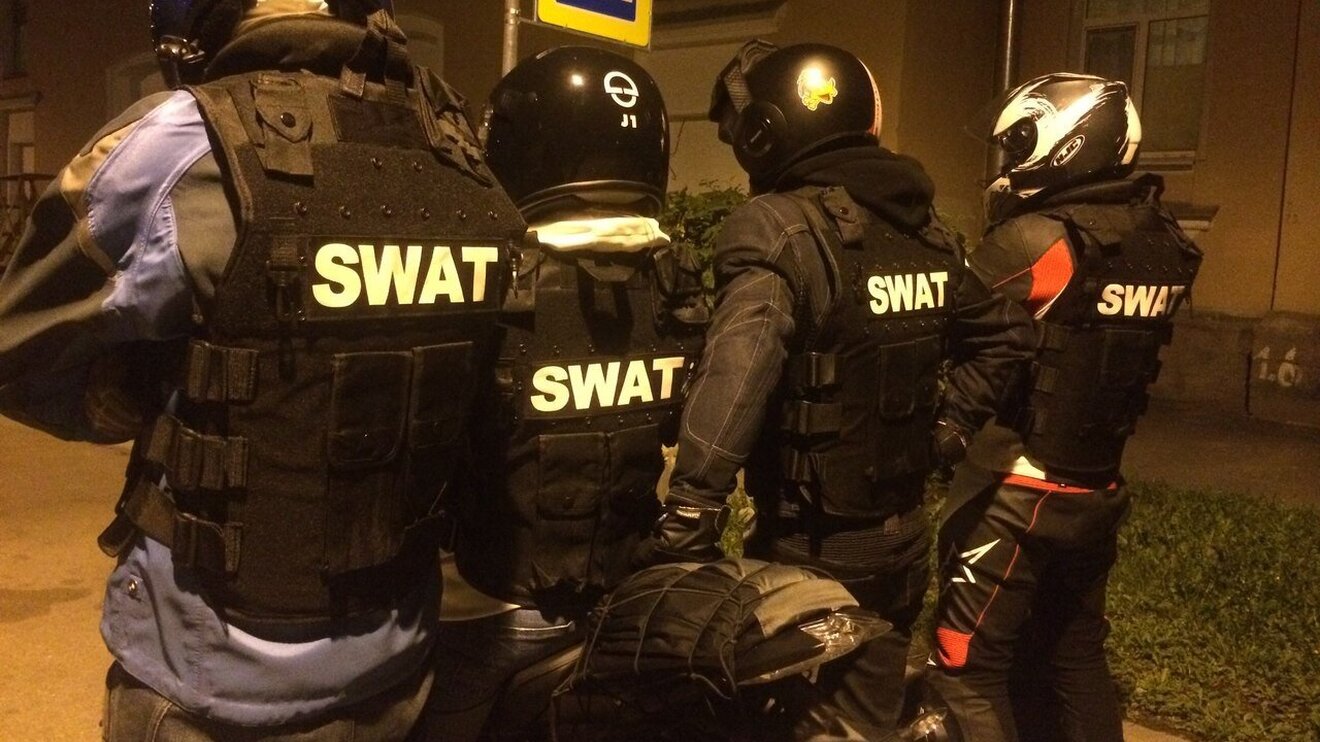
SWAT (Special Weapons And Tactics) is a special police unit designed to handle complex and dangerous tasks that ordinary police officers can’t manage. These teams were created to fight terrorism, rescue hostages, run operations against organized crime, and carry out other missions requiring a high level of training and specialized equipment.
The History of SWAT
SWAT units appeared in the US in the 1960s, when law enforcement faced new threats, such as:
- Mass riots.
- A surge in organized crime.
- Hostage-taking incidents.
The first SWAT unit was formed in Los Angeles in 1967. It was a response to the rise of street gangs, armed criminals, and political groups such as the Black Panthers and the Symbionese Liberation Army.
One especially famous operation was the standoff with members of the «Manson Family» cult and participants in mass protests, where police had to use assault tactics and specialized equipment.
SWAT’s Main Tasks
SWAT is deployed in cases where regular police units aren’t sufficiently trained or armed for the mission. Its main tasks include:
- Hostage rescue.
- When people are held by terrorists or criminals.
- Counterterrorism operations.
- Preventing terrorist attacks and neutralizing terrorists.
- Apprehending especially dangerous criminals.
- Arresting armed individuals or those who pose a threat.
- Building assaults.
- In cases of armed conflict inside buildings or when criminals are barricaded.
- Riot control.
- Handling protests that turn violent.
- Protecting high-profile individuals.
- Guarding VIPs and securing important events.
SWAT Equipment
SWAT units have access to the most advanced equipment, letting them handle highly complex tasks. Standard equipment includes:
-
Weapons
- Assault rifles (such as the M4).
- Sniper rifles.
- Shotguns.
- Pistols.
- Flashbang grenades.
-
Gear
- High-grade body armor.
- Helmets with visors.
- Ballistic shields for entries.
- Night-vision equipment.
- Tactical communications (radios and headsets).
-
Transport
- Armored vehicles.
- Helicopters for surveillance and rapid deployment.
Selection and Training
Getting into SWAT isn’t easy. Officers who want to join the unit go through a rigorous selection process, including:
- Physical fitness testing.
- Stress-resistance testing.
- Marksmanship and weapons-handling skills.
- Tactical thinking.
SWAT training is constantly updated to account for new threats. Officers, for example, train to storm buildings, handle hostage situations, and run operations in urban environments.
SWAT Around the World
Although SWAT originated in the US, the idea of specialized police units caught on in other countries. SWAT equivalents exist almost everywhere:
- In Russia, these are the OMON and SOBR units.
- In the UK — CTSFO (Counter Terrorist Specialist Firearms Officers).
- In Germany — GSG 9.
- In France — RAID.
Examples of Famous Operations
-
Hostage rescue at a school (San Bernardino, 1974).
- One of SWAT’s first successful operations was rescuing children taken by armed criminals.
-
The standoff with the Black Panthers (1970s).
- SWAT units were used to neutralize armed activists occupying buildings.
-
The events at Waco (1993).
- The assault on the ranch where members of a religious sect were holed up became one of the most controversial episodes.
Conclusion
SWAT is an example of how law enforcement adapts to new challenges and threats. These units save lives in the most difficult situations, stepping in where ordinary police are powerless. Though the work often carries real risk, it remains indispensable in the fight against crime and terrorism.