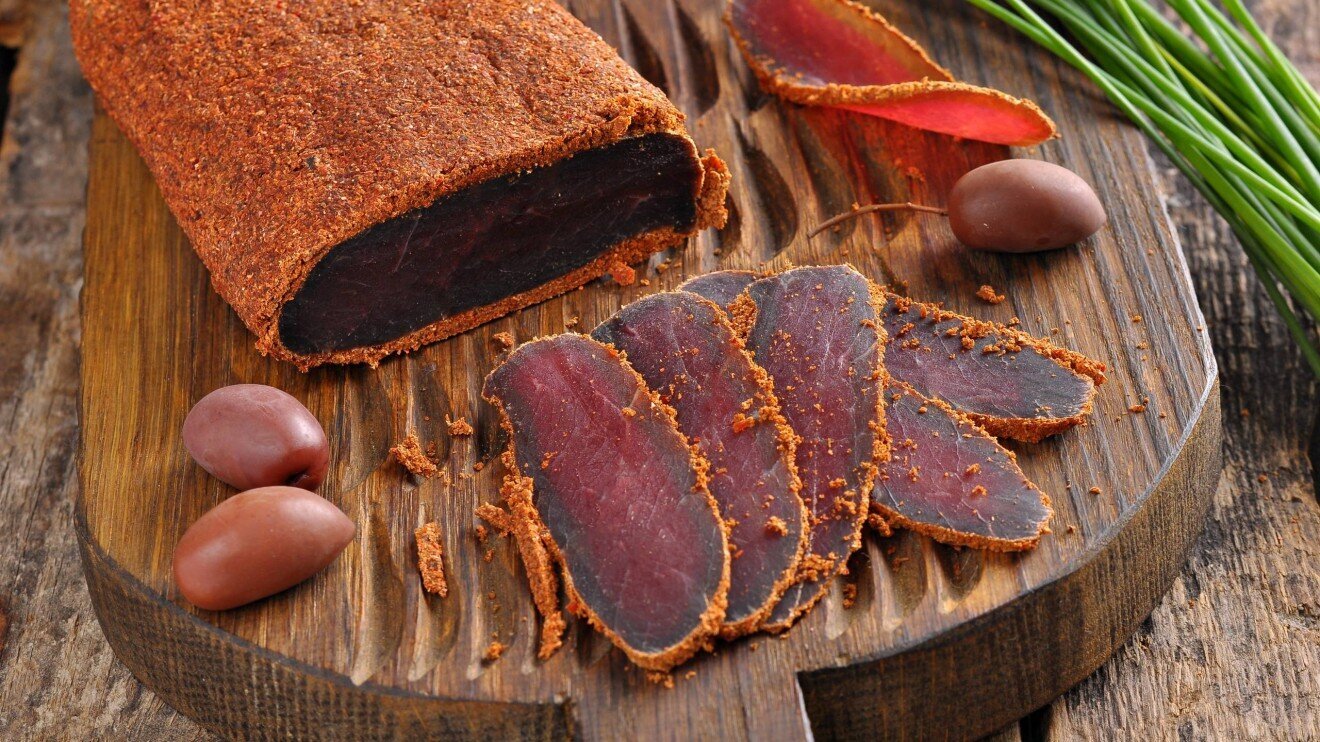
Basturma is a traditional delicacy, an air-dried, cured meat popular across the Middle East, the Caucasus, and the Mediterranean. The dish is prized for its rich flavor and distinctive aroma, achieved through the use of spices and a particular preparation method.
Origins and History
The word «basturma» comes from the Turkish bastırma et, meaning «pressed meat.» The dish’s history spans many centuries, reaching back to the Ottoman Empire. Basturma was valued for how well it kept, which made it an ideal food for soldiers and merchants traveling long distances.
Armenian and Turkish cuisines are traditionally associated with basturma, though similar dishes exist in other cultures. Italian bresaola or American pastrami follow comparable principles of preparation, though they differ in the details.
How Basturma Is Made
Making basturma takes several weeks and calls for patience, but the result is worth the effort. Here are the main stages:
1. Choosing the Meat
Beef, especially tenderloin, is most often used for basturma. But in some regions, lamb, goat, or even camel meat is used instead.
2. Salting and Pressing
The meat is rubbed with coarse salt and left for several days to draw out moisture. It’s then rinsed, wrapped in cloth, and placed under a press to remove any remaining liquid.
3. Coating in Spices
Basturma’s defining feature is a special spice blend called «chaman.» It typically includes:
- Ground fenugreek (the main component);
- Paprika;
- Garlic;
- Black and red pepper;
- Other aromatic herbs, to taste.
The meat is coated evenly with this mixture, then hung up again to dry.
4. Curing
The meat is air-dried outdoors for 2-4 weeks, depending on the climate. It’s important that the meat cures in the shade with good air circulation.
Culinary Uses
Basturma is usually sliced thin and served as an appetizer, paired with cheese, olives, bread, or wine. It’s also used in other dishes, such as omelets, salads, or baked goods.
Nutritional Value
Basturma is rich in protein, B vitamins, iron, and zinc. It contains little fat if made from lean meat. However, because of its high salt content, it should be eaten in moderation.
Conclusion
Basturma is more than just food. It’s part of the cultural heritage of many peoples, a way of preserving traditions and techniques of preparation. Its rich taste and aroma make it an essential part of a festive table, and the process of making it a genuine art form.