After the collapse of the Eastern Bloc in 1989–1991, industrial enterprises across Central and Eastern Europe found themselves at the center of a massive privatization process. Western companies acquiring factories and plants in the former socialist countries faced the need for drastic modernization of production capacity. This gave rise to a huge secondary market for industrial equipment, a significant share of which found its way to Russia.
Privatizing Industry in the Former Eastern Bloc
The process of transferring state property into private hands had its own particulars in each Eastern European country. Hungary emphasized attracting foreign capital — the plan called for roughly 25% of property to end up in the hands of foreign investors. A similar approach had been used in Latin America, where mostly large state companies were sold off.
Czechoslovakia chose the path of voucher privatization — a complex system distributing shares of major enterprises among citizens through special investment funds. Poland, despite becoming a «regional pioneer in inventing vouchers,» ultimately abandoned mass voucher privatization, focusing instead on individual enterprise sales.
Western Investment and Technological Retooling
Western companies acquiring production assets in the former socialist countries were driven primarily by considerations of economic efficiency. Existing Soviet and Eastern European equipment often fell short of modern standards for productivity, quality, and energy efficiency.
Steel mills in Poland, Czechia, and Hungary received investment from giants like ArcelorMittal, which acquired numerous plants across the region. Chemical plants came under the control of BASF, Bayer, and other Western conglomerates. The Czech auto industry was almost entirely restructured after Volkswagen bought Škoda Auto.
The Fate of the Old Equipment
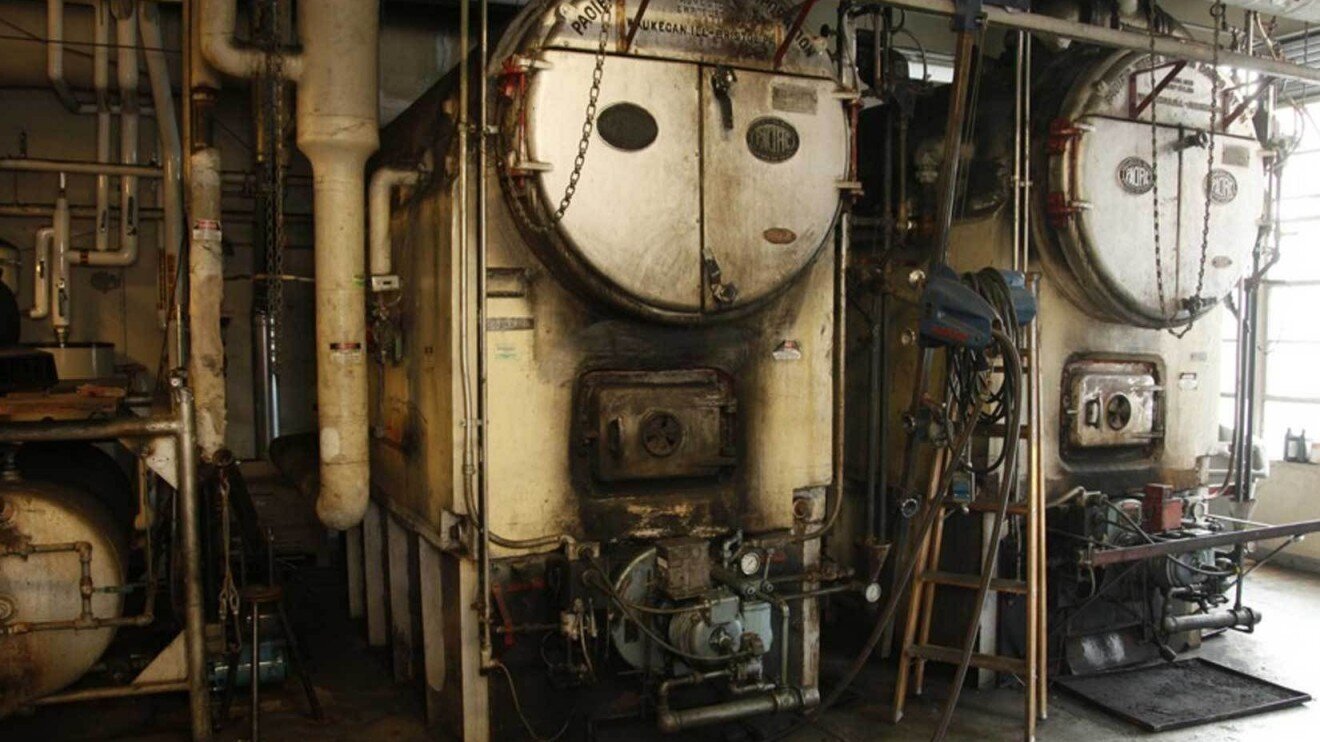
Replacing equipment created a problem: what to do with the huge volumes of decommissioned industrial capacity. Machine tools, presses, foundry equipment, chemical reactors — all of it needed removing from the plants. Simple disposal would have been extremely costly, so owners looked for ways to sell it off instead.
Soviet and Eastern European industrial equipment had a number of characteristic traits: sturdy construction, ease of maintenance, but relatively low precision and energy efficiency compared to Western equivalents. Even so, for many applications, this equipment remained perfectly functional.
The Russian Market as the Main Buyer
1990s Russia was an ideal market for secondhand industrial equipment from the former Eastern Bloc. Russian entrepreneurs faced several factors that made such equipment attractive:
First, limited financial resources. New Western equipment cost many times more than secondhand equipment from Eastern Europe. Second, technical compatibility — Soviet standards, used across the socialist bloc, were close to Russian ones, simplifying integration. Third, the availability of skilled workers who already knew how to operate this kind of machinery.
Trade Mechanisms and Logistics
Trade in secondhand industrial equipment ran through specialized intermediary firms, which bought up machinery from plants in Poland, Czechia, Hungary, and elsewhere, then sold it on in Russia. These companies often had a mixed ownership structure — Western investors provided connections to sellers, while Russian partners brought knowledge of the local market.
Delivery logistics involved dismantling equipment at the original plant, transport (mostly by truck and rail), customs clearance, and delivery to its destination in Russia. This market was especially active in border regions — Kaliningrad, Pskov, and Smolensk oblasts.
Sector-Specific Demand
The greatest demand in Russia was for equipment used in textiles, machine building, and food processing. Textile looms from Czechia and Poland let Russian entrepreneurs quickly set up production competitive with imports from Turkey and China.
Metalworking machinery — lathes, milling machines, grinders — from Eastern European machine-building plants were actively purchased by small Russian enterprises. Food-processing equipment — dairy production lines, bakery equipment, meat-processing complexes — also found buyers among Russian entrepreneurs developing local production.
Price Factors and Economic Efficiency
Secondhand equipment from the former Eastern Bloc typically cost 15–30% of the price of comparable new Western equipment. Payback periods for such equipment among Russian enterprises ran 2 to 4 years, depending on the sector and specific operating conditions.
An additional draw was the relative ease of sourcing spare parts and consumables. Many components could be manufactured at Russian plants or purchased from the same Eastern European suppliers for far less than genuine Western parts.
Regional Supply Patterns
From Poland, Russia mostly imported mining equipment, woodworking machinery, and textile machinery. Polish coal mines, shut down as the economy restructured, became a source of mining equipment for Russian enterprises.
Czechia specialized in supplying precision machine-building equipment and machine tools. Czech factories had traditionally produced quality metalworking machinery, which held significant value even secondhand.
Hungary was the main supplier of food-processing and chemical equipment. Hungarian food companies, coming under the control of Western conglomerates like Danone and Nestlé, sold off their old equipment, which then found use in Russian dairy plants and confectionery factories.
Quality and Technical Condition of the Equipment
The technical condition of the equipment being supplied varied widely. The best equipment came from plants that had kept up with regular maintenance and scheduled repairs. The worst came from plants that had struggled financially in the final years of the socialist system.
Buyers developed their own methods for assessing technical condition. Typically, technical specialists were sent to inspect a prospective purchase, performing a visual inspection, checking the functionality of key components and assemblies, and assessing the degree of wear.
Legal and Customs Aspects
Importing secondhand industrial equipment was governed by special customs procedures. Equipment above a certain age qualified for preferential duty rates, further encouraging this market. But confirmation of technical condition and compliance with environmental standards was required.
The paperwork involved included equipment technical passports, condition certificates, compliance certificates, and environmental assessments. These documents often had to be translated and notarized, adding extra cost and delay.
Impact on Russian Industry
The mass influx of secondhand equipment from the former Eastern Bloc had a dual effect on the development of Russian industry. On one hand, it let many entrepreneurs set up production quickly and relatively cheaply, creating jobs and starting output.
On the other hand, reliance on secondhand equipment slowed the technological modernization of Russian industry. Enterprises built around old Eastern European machinery often turned out uncompetitive over the long run.
The Market’s Evolution
By the late 1990s, the market for secondhand industrial equipment from the former Eastern Bloc had begun to shrink. Most of the equipment had already been dismantled and sold, and the new Western owners of Eastern European plants had largely completed their technical retooling.
At the same time, an improving economic situation in Russia let Russian entrepreneurs turn more often to buying new equipment or more modern secondhand machinery of Western manufacture. The focus gradually shifted from simply replacing Soviet equipment to raising the technological level of production overall.
The market for secondhand industrial equipment from the former socialist bloc became an important element of industrial transformation in the 1990s, giving Russian entrepreneurs access to relatively modern machinery at affordable prices. This process reflected broader trends in the restructuring of economic ties across the post-communist space, and the formation of new trade relationships between Russia and the countries of Central and Eastern Europe.