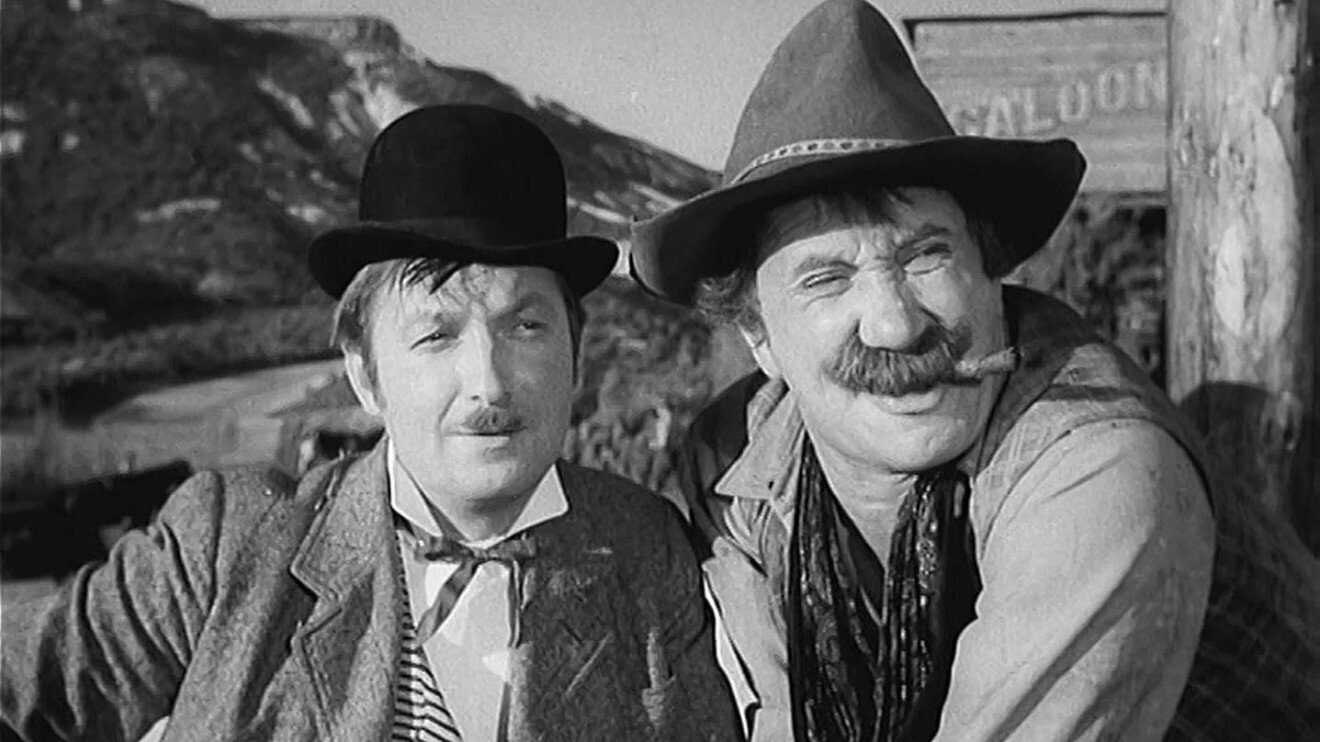
Zhora's mention of Bill Driscoll is a reference to O. Henry's famous short story «The Ransom of Red Chief» (1907), which was enormously popular in the USSR and Russia.
Literary context
Bill Driscoll is one of the two protagonists of O. Henry's story — a small-time con man who, together with his partner Sam Howard, decides to kidnap the ten-year-old son of a wealthy townsman for a two-thousand-dollar ransom. But their "victim" — a spoiled boy named Johnny — turns out to be a nightmare for the kidnappers.
Johnny, who calls himself "Red Chief," turns the hapless kidnappers' lives into hell: he demands scalps, tries to roast Bill over a fire, keeps them up all night, and generally behaves like a little savage. Bill Driscoll in particular bears the brunt of it — the boy singles him out as his primary "target."
The irony of the situation
In the end, the kidnappers are so worn down by their "victim" that they're ready to pay the boy's parents extra just to take him back. The story is built on a comic reversal of roles: instead of the child suffering in captivity, it's the child who terrorizes the adult criminals.
Zhora's mention of Bill Driscoll, in the context of incompetent kidnappers ("these damn kidnappers"), is clearly ironic. He's implying that today's crooks are no better than O. Henry's literary characters — just as inept and shortsighted.
Cultural context of the 1990s
In early-1990s Russia, O. Henry's stories were well known thanks to numerous translations and adaptations. The Soviet film «Businessmen» (1962), starring Georgy Vitsin and Alexei Smirnov, introduced this story to millions of viewers. So Zhora's reference would have been understood by most readers of the time.
Symbolic meaning
The comparison to O. Henry's characters also underscores a continuity of criminal "traditions": in every era there have been hapless adventurers who overestimated their own abilities and underestimated the difficulty of their scheme. Zhora apparently sees today's criminals as heirs to a proud tradition of literary incompetence.
The reference also adds a comic touch to the text and shows off the character's literary erudition — typical of educated people of the era, even those caught up in criminal entanglements.