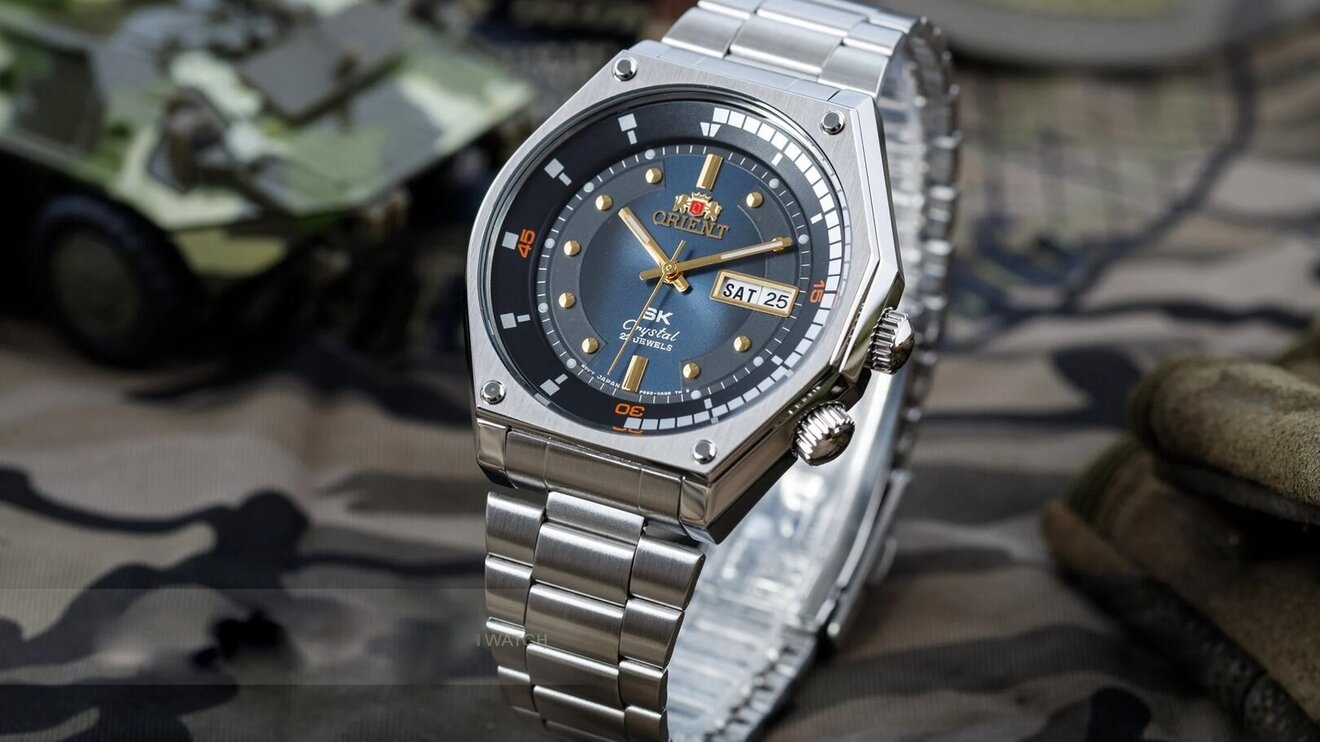
Orient (Japanese: オリエント) is a Japanese watchmaker founded in Tokyo in 1950 by Shogoro Yoshida. The company's history traces back to 1901, when Yoshida opened his first shop in Tokyo's Ueno district, selling imported watches.
By the mid-twentieth century, Orient ranked among the «big three» Japanese watchmakers alongside Citizen and Seiko. Unlike its competitors, though, who switched to mass-producing quartz watches in the 1970s, Orient focused on refining mechanical watches.
The name «Orient» comes from the Latin for «East,» which carried through into the Russian version of the brand name. The company built a wide reputation on the quality and reliability of its products. Orient watches became especially popular in the USSR, and later in Russia, where they were imported starting in the 1970s.
By the early 1990s, Orient was producing more than two million wristwatches a year. Many models featured automatic winding, durability, and water resistance. Orient watches were considered prestigious and well-made, often brought back from abroad or bought at specialty shops.
Since 2001 Orient has operated under Seiko Epson's control, which by 2009 had acquired 100 percent of the company's shares. Despite the change of ownership, Orient has kept its reputation as a maker of reliable mechanical watches, holding its own niche on the international market.
In 1990s Russia, foreign-made watches, especially Japanese ones, were a symbol of prosperity and status. The Orient watch mentioned in the novel is a telling detail, reflecting both the economic realities of the time and certain social markers within post-Soviet society.