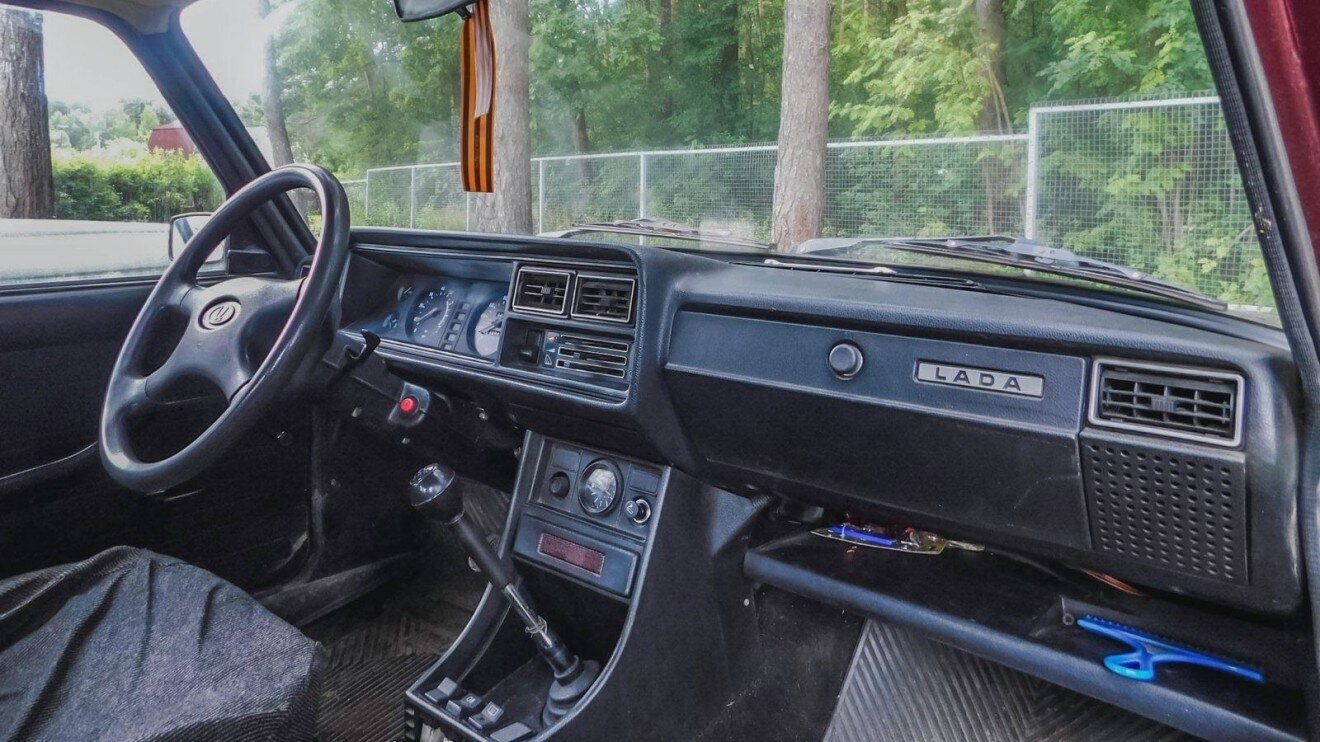
The VAZ-2104 "Zhiguli" is a Soviet and Russian rear-wheel-drive Group III small-class station wagon, which became one of the most mass-produced and long-lived members of the "classic" Zhiguli family. The model was produced from July 2, 1984, to September 17, 2012, making it the longest-produced station wagon of the Soviet era.
The history of the model's creation and development
Serial production of the VAZ-2104, popularly nicknamed the "chetvyorka" ("four"), began at the Volga Automobile Plant in the second half of 1984. The new station wagon replaced the outdated VAZ-2102 ("dvoika," or "two"), which had been in production since the early 1970s and no longer met the standards of the mid-1980s.
The VAZ-2102 continued to be produced alongside the new model for a while, but by April 1986 the old wagon had been fully replaced on the assembly line by the more modern "chetvyorka." The new model inherited several design solutions from its predecessor, relating to the rear of the car.
In developing the VAZ-2104, engineers followed an important principle of the Soviet auto industry at the time: creating a new model with minimal production costs and maximum consumer benefit. The already-established VAZ-2105 was therefore used as its basis. After lengthening the roof, special stampings were added to the body to reinforce structural rigidity.
Design features
Body and exterior
The wagon's body allowed a long roof rack to be mounted, though engineers advised against overloading it, since the wagon body's calculated rigidity was significantly lower than that of the sedan. The rear hatch opened upward, and was fitted with a feature entirely new at the time — a heated rear window and a rear wiper. Until 1994, these features were used only on cars intended for export, later becoming standard on every vehicle.
One design quirk of the model was the rear hatch's tendency to attract road dirt and dust, drawn into the low-pressure zone behind the car at high speeds. This was addressed by fitting the fifth door with an upper deflector, channeling cleaner air from the roof into the low-pressure zone.
Cabin and cargo area
The new model's interior was borrowed from the base VAZ-2105, except for the rear seat. The folding rear seat let the cargo area expand from 375 to 1,340 liters, making it possible to carry oversized loads. The car's maximum payload was increased to 455 kilograms.
In its base trim, the interior finish was fairly simple, including a standard instrument panel with the minimum necessary gauges, seat and interior upholstery with standard removable headrests made of artificial leather, and rubber floor mats.
For those wanting more comfort, an upgraded trim level was offered, with seat upholstery in napped knit fabric, molded door panels, napped floor mats, an instrument panel with an additional center console and an expanded set of function buttons and gauges, and a distinctive steering wheel.
Technical specifications and quirks
Since the front of the car was identical to the sedan models, the standard heater struggled more to warm the wagon's larger cabin volume in cold weather. The rear of the car often fogged up in cold conditions, due to the absence of standard rear ventilation outlets for expelling cabin air, which also made it harder to close the doors with the windows shut.
Compared to the VAZ-2105 and 2107, which shared the same engines, the "chetvyorka" had a somewhat lower top speed (around 137 km/h versus 142 km/h), owing to a different final-drive ratio — 4.44 on early versions, versus 4.3 on the sedan.
Its 43-liter fuel tank (versus 39 liters on the sedans) was mounted horizontally under the cargo floor, with no additional protection, creating a risk of damage when driving over rough terrain.
Key VAZ-2104 variants
Base versions
VAZ-2104 — the base model, with the 1.3-liter VAZ-2105 carbureted engine and a 4-speed gearbox. This version formed the foundation for the entire wagon family.
VAZ-21041 — a variant with the 1.2-liter VAZ-2101 engine and a 4-speed gearbox. This version was intended for export to countries with tax breaks for small-displacement engines, but was never put into serial production.
VAZ-21043 — one of the most common variants, with the 1.5-liter VAZ-2103 carbureted engine and a 4- or 5-speed gearbox. It was produced from 1984 to 2009.
Export and special versions
VAZ-21044 — an export model with the 1.7-liter VAZ-21213 engine, single-point fuel injection, and a 5-speed gearbox. This version was produced by AvtoVAZ from 1994 to 2003, with most units shipped abroad.
VAZ-21046 and VAZ-21047 — right-hand-drive variants for export to countries that drive on the left. The VAZ-21046 was fitted with a 1.3-liter engine, while the VAZ-21047 had a more powerful 1.5-liter engine with a 5-speed gearbox.
The VAZ-21047: a "Four" with a "Seven's" Interior
A special place in the VAZ-2104 lineup belongs to the VAZ-21047 variant — a wagon with the interior and trim elements of the VAZ-2107. This version embodied the concept of a "luxury" wagon within the classic Zhiguli family.
VAZ-21047 specifications
The VAZ-21047 was fitted with the 1.5-liter VAZ-2103 engine, producing 77 horsepower, with a carbureted fuel system and a 5-speed gearbox. The car had right-hand drive, since it was primarily intended for export to countries that drive on the left.
Interior and equipment features
The main distinguishing feature of the VAZ-21047 was an interior borrowed entirely from the VAZ-2107 — the most prestigious model in the classic Zhiguli lineup. This included:
- The VAZ-2107's instrument panel, with its distinctive design and expanded set of gauges
- Higher-quality interior finishing, using upgraded materials
- Anatomically shaped front seats, providing better support for driver and passenger
- Improved sound insulation and overall comfort
- Electrical equipment from the VAZ-2107, including additional features and an improved lighting system
Production and distribution
The VAZ-21047 was produced in small batches, aimed primarily at foreign buyers who valued the combination of a wagon's practicality with a higher level of comfort. On the domestic Soviet market, such cars were rare, and considered especially prestigious.
In the late 1990s, an "upgraded" VAZ-21043-20 variant was produced, also fitted with interior and electrical components from the VAZ-2107, a five-speed gearbox, and roof rails. This version became a more affordable domestic-market alternative to the export-oriented VAZ-21047.
Diesel variants
The VAZ-21045D: the first serial diesel
The VAZ-2104 became the first Soviet mass-production car with a diesel engine. The VAZ-21045D variant was fitted with the naturally aspirated 1.5-liter VAZ-341 diesel engine, producing 53 horsepower, built on the VAZ-2103 cylinder block, with maximum parts commonality with the serial gasoline engines.
The diesel cars were built at a specially designated section of AvtoVAZ from 1998 to 2004. Outwardly, the diesel "chetvyorka" differed only by a corresponding badge on the trunk lid, and an exhaust pipe bent right and down. These cars also had reinforced front suspension springs.
Despite its very low fuel consumption, buyers approached the diesel car with understandable wariness, given its unfamiliar design and the reliability problems of early units. Its main buyers were small-business owners, who valued fuel economy over strong performance.
The VAZ-21048 turbodiesel
A VAZ-21048 variant with the 1.8-liter VAZ-343 turbodiesel engine, producing 75 horsepower, was also developed, but this variant never got past the prototype stage and never reached serial production.
Later variants and updates
The shift to fuel injection
Over the model's evolution, gradual changes were made to its equipment and trim. In 2004, VAZ-21043 variants were switched to fuel injection, though some carbureted models continued to be produced until 2006.
Fuel-injected variants appeared:
- VAZ-21041i — with the 1.6-liter VAZ-21067 engine, a 5-speed gearbox, the VAZ-2107's interior and electrical system, and front seats from the Izh-2126
- VAZ-21041 VF — with a VAZ-2107-style radiator grille design, a 1.5-liter fuel-injected engine, and the same interior and seats from the Izh-2126
The Izhevsk production period
When wagon production was moved to Izhevsk, the cars began receiving seats from the Izh-2126 "Oda." The latest cars received hoods, radiator grilles, and bumpers from the VAZ-2107, giving them a more modern appearance.
Outwardly, the "chetvyorka" changed little over the years, but the 1.5-liter, 77-horsepower engine became the standard, while versions with smaller-displacement engines were gradually discontinued. All the later "chetvyorki" received the "seven's" instrument panel and a new steering wheel, unified across the whole Zhiguli lineup.
Exports and international versions
Like other models in the Zhiguli family, the VAZ-2104 was actively exported to many countries around the world. The car offered a roomy, relatively modern station wagon at a low price, ensuring demand in international markets.
In some European countries, "chetvyorki" were converted into commercial delivery vans. Particularly interesting were the Canadian cars, sold in the second half of the 1980s under the name Lada Signet. The Signet Wagon "chetvyorki" were fitted with fashionable wheels, decorative moldings were glued onto the body, and some units even got roof rails. An automatic transmission was even offered as an option — a luxury Soviet buyers of the time could only dream of.
No less exotic variants were built in Yugoslavia, which was actively modifying Soviet cars in the late 1980s. There, the "chetvyorka" was turned into an ambulance with an extended rear overhang, and even a hearse for funeral services.
Production totals and legacy
The VAZ-2104 was produced until September 17, 2012, remaining on the assembly line for 28 years — nearly reaching its thirtieth anniversary. In total, around 1.14 million cars were built across its various versions. In the end, the "chetvyorka" became the longest-produced and most mass-produced station wagon ever built in the USSR.
The VAZ-2104 holds a special place in the history of the domestic auto industry, as a car that successfully combined the practicality of a wagon with relative comfort and an affordable price. This is especially true of the VAZ-21047 variant, with its VAZ-2107 interior, which became the benchmark for a "luxury" wagon within the classic Zhiguli family.
For many Soviet and Russian families, the VAZ-2104 became an indispensable companion for dacha life, long road trips, and everyday use. Its spacious cabin, large cargo area, and relative reliability made this model one of the most popular in its class, over nearly three decades of production.