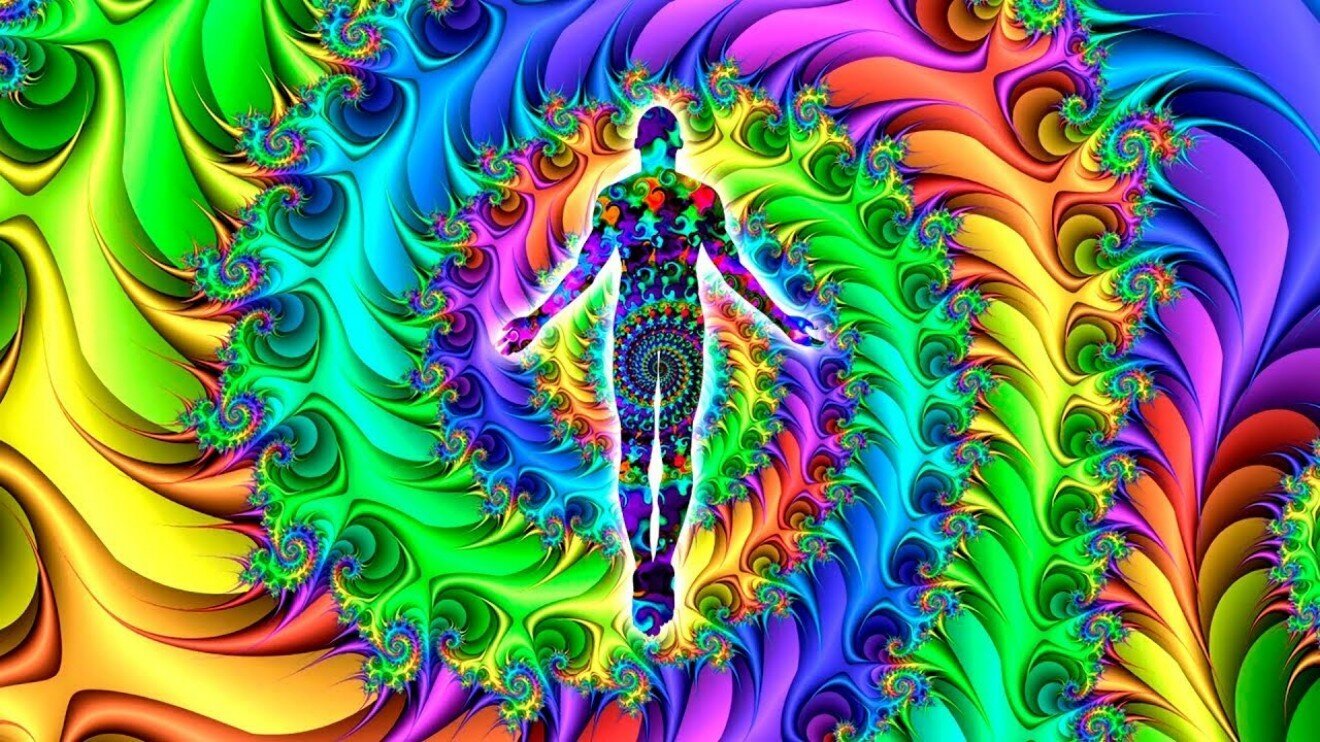
When Roman Peskov describes the world as "the seventh element of euphoria," he inadvertently gestures toward an ancient philosophical tradition of seeking the fundamental building blocks of existence, and toward the modern scientific understanding of the mechanisms of pleasure and happiness.
Euphoria: From Antiquity to Neuroscience
The term "euphoria" comes from the ancient Greek εὖ (eu), "well," and φέρω (pherō), "to bear," literally meaning "to bear well" or "to carry good." Ancient philosophers understood it as a state of harmony between soul and body, when a person could "carry" their existence with ease and joy.
In a medical context, euphoria was first described in an English dictionary of 1706 as "the beneficial effect of a medicine, when a patient feels relief or freedom from pain." This definition highlights an important aspect of euphoria: freedom from suffering as a path to a higher pleasure.
Historical Background
In 1884, Sigmund Freud, in his essay "Über Coca," described his own use of cocaine as producing "the normal euphoria of a healthy person," and around 1890, the German psychiatrist Carl Wernicke lectured on "abnormal euphoria" in patients with manic disorders.
The Neurobiology of Euphoria: Pleasure Centers
Modern neuroscience explains the mechanics of euphoria through the concept of "pleasure centers" — specialized hubs in the brain that are functionally interconnected. Activating one center stimulates the others, while suppressing one weakens the effect of activating the rest.
A key finding is that simultaneous activation of every pleasure center in the brain’s reward system is necessary to produce a sense of intense euphoria. This explains why such different stimuli — from physical exercise to psychoactive substances — can produce similar euphoric states.
Types of Euphoria and How They’re Reached
1. Exercise-Induced Euphoria
The "runner’s high" or "rower’s high" is a state produced by intense physical exertion. Medical research points to three main endogenous compounds behind it:
- Phenylethylamine — an endogenous stimulant
- β-endorphin — an endogenous opioid
- Anandamide — an endogenous cannabinoid
2. Musical Euphoria
Euphoria can arise from listening to, performing, or creating music. Neuroimaging studies show the brain’s reward system plays a central role in the pleasure derived from music. Emotionally stirring music significantly boosts dopamine transmission along dopaminergic pathways.
Interestingly, about 5% of people experience "musical anhedonia" — an inability to feel pleasure from music despite understanding the emotions it’s meant to convey.
3. Substance-Induced Euphoria
Alcohol, mentioned in the novel’s text, is a depressant capable of producing euphoria in moderate doses. Its mechanism is complex, acting on several neurotransmitter systems at once.
A classification of euphoriants
- Psychedelics (LSD, psilocybin)
- Stimulants (amphetamine, cocaine, nicotine)
- Depressants (alcohol, GHB, ketamine)
- Opioids (morphine, heroin, fentanyl)
- Cannabinoids (THC, synthetic cannabinoids)
Six Elements Before Euphoria: A Philosophical Reading
Although the novel never spells out which six elements come before euphoria as the seventh, one can speculate, drawing on classical philosophical and alchemical tradition alongside modern psychology of emotion:
1. Earth (Stability)
The foundation of existence, material grounding. In the context of euphoria, this means physical health, basic needs met, a sense of security. Without this foundation, higher states of consciousness are out of reach.
2. Water (Emotion)
The capacity to feel, emotional openness. Water as a symbol of fluidity, adaptation, depth of experience. Euphoria is impossible without a developed emotional life.
3. Air (Intellect)
Mental clarity, the capacity for understanding and awareness. Air as a symbol of thought, communication, connection to higher planes of being. True euphoria requires understanding what’s happening.
4. Fire (Passion)
Energy, drive, life force. Fire as a symbol of transformation, creativity, the will to live. Euphoria is always an intense, "hot" state.
5. Ether (Spirituality)
The fifth element of classical philosophy — a subtle substance linking the material and the spiritual. The capacity for transcendence, for moving beyond ordinary perception.
6. Time (The Moment)
A particular relationship to time — the ability to "stop the moment," to enter a state of "here and now." Euphoria is always experienced in the present, outside the usual flow of time.
Euphoria as Transcendent Experience
The hero’s description of "losing control over his body, time, and space" matches the phenomenology of euphoric states precisely. This isn’t simply a pleasant sensation, but a qualitatively different state of consciousness, marked by:
- Dissolving the boundaries of the self — losing a clear sense of one’s own body
- Distorted perception of time — time may seem to stop, or, conversely, to race
- Altered spatial perception — the surrounding world may seem brighter, more vivid, more significant
- A sense of unity with the world — the experience of cosmic connectedness
An Important Caution
Euphoria induced by psychoactive substances can carry serious health risks and often leads to dependence. Natural routes to euphoric states — exercise, music, meditation — are safer and more sustainable.
Clinical Aspects of Euphoria
In a medical context, euphoria can be either a normal or a pathological state. It occurs in:
Psychiatric Disorders
- Manic states — in bipolar disorder, euphoria can alternate with deep depression
- Hypomania — a milder form of mania, often experienced as a pleasant state of heightened activity
Neurological Conditions
- Epilepsy — euphoria can occur during the aura preceding a seizure
- Multiple sclerosis — euphoria sometimes develops as the disease progresses
- Migraine — some people experience euphoria during the prodromal phase
Euphoria in Literature and Art
Using euphoria as a literary device has deep roots. States of altered consciousness, ecstasy, and divine intoxication have been described from ancient mystical texts to modern literature. In the context of a novel set in 1990s Russia, euphoria can symbolize:
- An attempt to escape reality — during turbulent historical periods
- A search for transcendent experience — amid social uncertainty
- A moment of insight — a sudden understanding of deeper truths
- Catharsis — purification through intense experience
Modern Research on Euphoria
The 21st century has brought a new understanding of euphoria as a complex neurochemical process. Key findings include:
The Role of Dopamine
Dopamine plays a central role in generating euphoric states. Research shows that manipulating the dopamine system can regulate the experience of pleasure in both directions.
Endogenous Opioids
The body’s own "drugs" — endorphins, enkephalins, dynorphins — play a key role in generating natural euphoric states.
The Cannabinoid System
The discovery of the endogenous cannabinoid system revealed that the human body naturally produces substances analogous to cannabis’s active compounds.
Euphoria and Creativity
The link between euphoric states and creative work has been studied for centuries. Many great works of art were created under altered states of consciousness. But it’s worth understanding that:
- Euphoria can stimulate the creative process, but it doesn’t replace professional skill
- The most productive approach combines inspiration with discipline
- Dependence on external stimulants of euphoria can destroy creative potential
An Interesting Detail
A global drug survey found that, among 22,000 participant reports, MDMA, LSD, and psilocybin mushrooms scored highest on the "net pleasure index" among all recreational substances.
Conclusion: Euphoria as a Metaphor for Knowing
Describing the world as "the seventh element of euphoria" in the novel can be read as a metaphor for the fullness of knowledge and experience. If the first six elements represent various dimensions of human experience — from the material to the spiritual — then euphoria, as the seventh element, symbolizes synthesis: the moment when every dimension of being merges into a single, unified experience.
It’s the state in which, as the hero puts it, control over the familiar coordinates of existence — body, time, space — slips away, opening onto another dimension of reality. In this context, euphoria becomes not simply a pleasant sensation but a way of knowing the world, an alternative to rational thought.
Modern science confirms that euphoric states really can grant access to different modes of consciousness, activate creative thinking, and foster insight. But it’s worth remembering that true wisdom lies not in escaping reality, but in the ability to integrate the experience of altered states of consciousness into everyday life, using them as a tool for personal growth and creative development.
This material was prepared based on current scientific research in neuroscience, psychology, and philosophy of mind. All medical information is provided for informational purposes only.