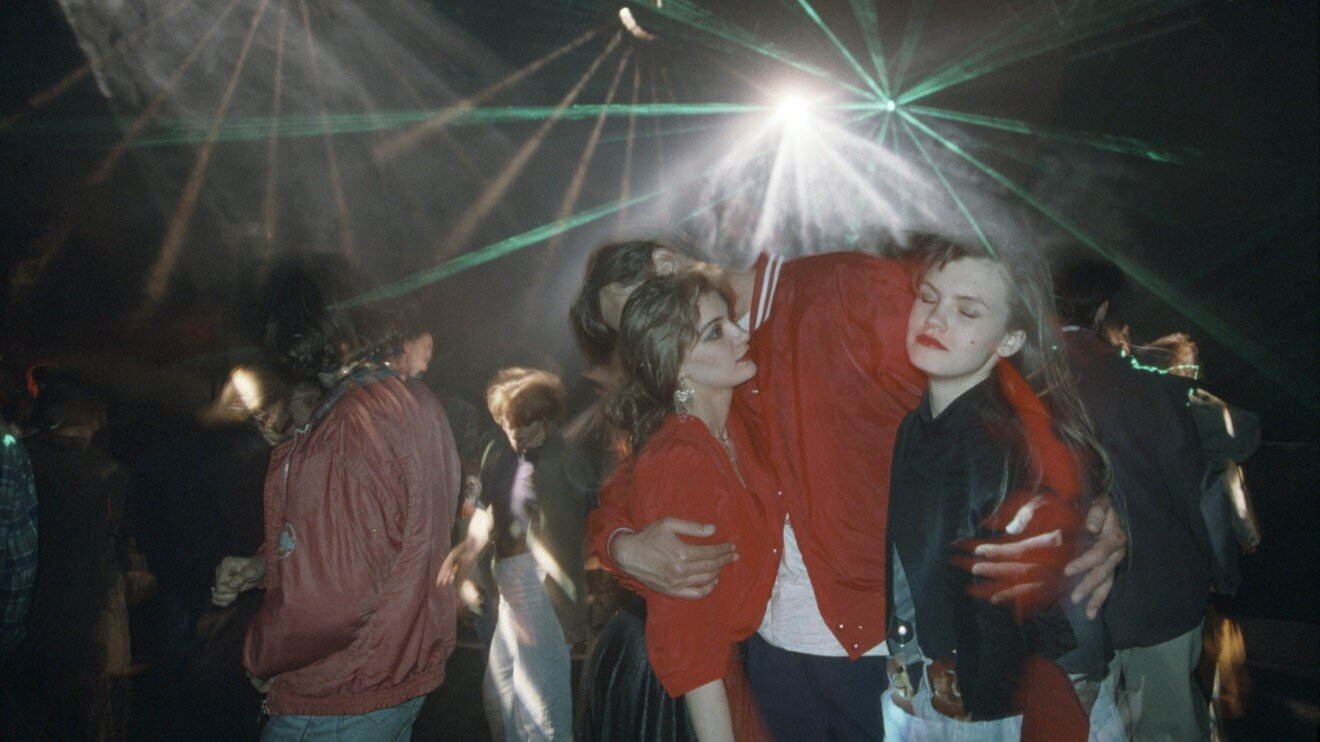
The «Hermitage» club was one of the most iconic and influential nightspots in early-1990s Moscow, a symbol of the cultural revolution and freedom of self-expression of the post-Soviet era.
Founding History
The club was created by an artist known as Sveta Vickers, in partnership with a well-known artist and traveler. The idea arose because so many people would gather at Vickers’s apartment that it physically couldn’t hold them all. The club was originally located in the Hermitage Garden in central Moscow, from which it took its name.
The first «Hermitage» existed for just one summer, in 1992, but within a couple of months it had become so popular that the international press wrote about it, including a detailed illustrated report in a major American newspaper.
The Second «Hermitage» — 1993
In 1993 the club moved into the former premises of a restaurant called «Rusalka,» continuing its life in a new format. This was the venue’s heyday, when it finally took shape as a full-blown cultural phenomenon.
The interior of the second «Hermitage» had a bohemian atmosphere: Vickers’s own paintings hung on the walls, while the hall held huge colored lanterns brought over from the Hermitage Garden.
Concept and Atmosphere
The main feature of the «Hermitage» was its lack of any concept — any kind of music was played, and everyone was let in regardless of what they wore or their social standing. As the founder herself recalled: «We let everyone in — in sneakers, barefoot, whatever.» The club didn’t even have a sign — it «was made by people, for people.»
The crowd was strikingly diverse: physicists and priests, actors and gangsters could end up at the same table, alongside creative intellectuals and businesspeople. It was a place where different social strata mixed, which was revolutionary for the time.
The Musical Program
In 1993, all the major names of Moscow’s alternative rock scene played at the «Hermitage.» Both domestic and foreign artists performed there.
The club was one of the first places in Moscow to play house music — a genre of electronic music new to Russia at the time. DJs experimented with different styles, from techno to trance.
Cultural Events
The «Hermitage» wasn’t just a club, but a genuine cultural center. It hosted:
- Moscow’s first Halloween celebrations
- Brazilian carnivals with costumed performances
- An international tattoo convention
- Trance parties and open-air raves
- The first electronic open-airs in central Moscow
Features of the Venue
The club stood out for how democratic and simple its setup was. There wasn’t even a cash register — takings went into a box that used to hold bottles. There was no real kitchen to speak of — sausages and canned peas were warmed up in a microwave.
The club ran Moscow’s first genuine DJ school, and it was completely free. This helped foster the growth of electronic music culture in Russia.
Staff and Atmosphere
The staff at the «Hermitage» were part of its unique atmosphere. Especially memorable was a cleaning lady who was a former circus performer — she dressed up, danced while cleaning, blew soap bubbles, and chatted with visitors, creating an unforgettable, homey atmosphere.
Cultural Significance
The «Hermitage» of 1993 was a unique phenomenon — a place where a new post-Soviet culture was being born. Here, for the first time in Russia, representatives of different creative movements, social strata, and age groups came together. The club became a symbol of cultural freedom and experimentation, a forerunner of all of Moscow’s later club culture.