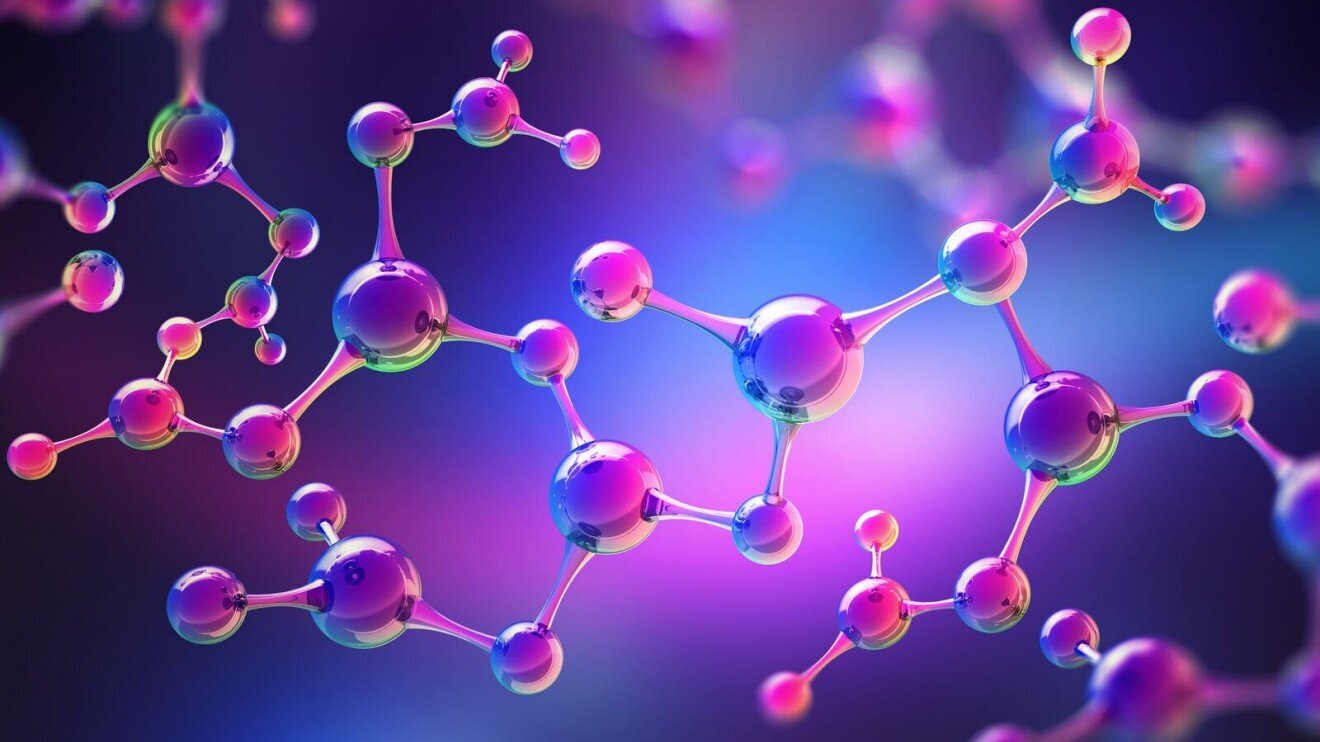
A colloid is a distinct state of matter, a dispersed system in which particles of one substance (the dispersed phase) are distributed throughout another substance (the dispersion medium). These particles typically range from 1 to 1,000 nanometers in size — small enough not to settle under gravity, but too large to pass through semipermeable membranes.
The History of Colloid Discovery
The term «colloid» (from the Greek kólla, «glue») was introduced in 1861 by the Scottish chemist Thomas Graham. Studying the diffusion of substances through membranes, Graham found that certain substances, such as starch, gelatin, and glue, did not pass through membranes, unlike crystalline substances such as salt or sugar. He named these non-passing substances colloids, in contrast to crystalloids.
Humanity had, in practice, made use of colloids long before their scientific description. Ancient civilizations produced colloidal solutions of dyes, inks, glues, and cosmetics without understanding their physical and chemical nature.
Types of Colloids
Depending on the physical state of the dispersed phase and dispersion medium, several types of colloids are distinguished:
- Sols — solid particles in a liquid (e.g., blood, paint)
- Emulsions — liquid particles in a liquid (e.g., milk, mayonnaise)
- Foams — gas bubbles in a liquid (e.g., whipped cream)
- Aerosols — solid or liquid particles in a gas (e.g., fog, smoke)
- Gels — a liquid enclosed within a solid matrix (e.g., jelly, silica gel)
Colloids in Everyday Life
Colloids surround us everywhere and play an essential role in our lives:
At home
- Soap and detergents — colloidal solutions capable of removing dirt
- Cosmetics — creams, lotions, shampoos, and gels all have a colloidal structure
- Food products — milk, butter, mayonnaise, yogurt, ketchup, jams, jellies
- Beverages — pulpy juices, certain alcoholic drinks
In nature
- Blood — a complex colloidal system in which plasma is the dispersion medium
- Soil — a colloidal system that determines its fertility
- Fog and clouds — aerosols in which water droplets are distributed through air
- River water — often contains colloidal clay particles
In industry
- Paints and varnishes — colloidal suspensions of pigments
- Adhesives — colloidal solutions of polymers
- Paper — a colloidal system of cellulose
- Ceramics and cement — production involves colloidal stages
- Pharmaceuticals — many medications are produced as colloidal systems for better absorption
Key Properties of Colloids
Colloids have a number of unique properties:
- The Tyndall effect — the scattering of light by colloidal particles, which makes a beam of light visible passing through a colloidal solution
- Brownian motion — the random movement of colloidal particles caused by collisions with molecules of the dispersion medium
- Electrokinetic phenomena — the movement of colloidal particles in an electric field
- Adsorption — the ability of colloidal particles to attract molecules of other substances to their surface
- Coagulation — the clumping of colloidal particles into larger aggregates
Modern Applications of Colloids
Today, colloids find application in some of the most advanced areas of science and technology:
- Nanotechnology — the creation of colloidal quantum dots used in electronics and medicine
- Medicine — targeted drug delivery via colloidal carriers, colloidal silver as an antiseptic
- Environmental science — purifying wastewater and industrial emissions using colloidal sorbents
- Food industry — stabilizers, emulsifiers, and thickeners based on colloidal systems
- 3D printing — the use of colloidal suspensions as a printing material
Colloids are a striking example of how the microscopic structure of matter determines its macroscopic properties. Understanding colloidal systems has significantly expanded humanity’s technological capabilities and remains a vibrant area of contemporary science.