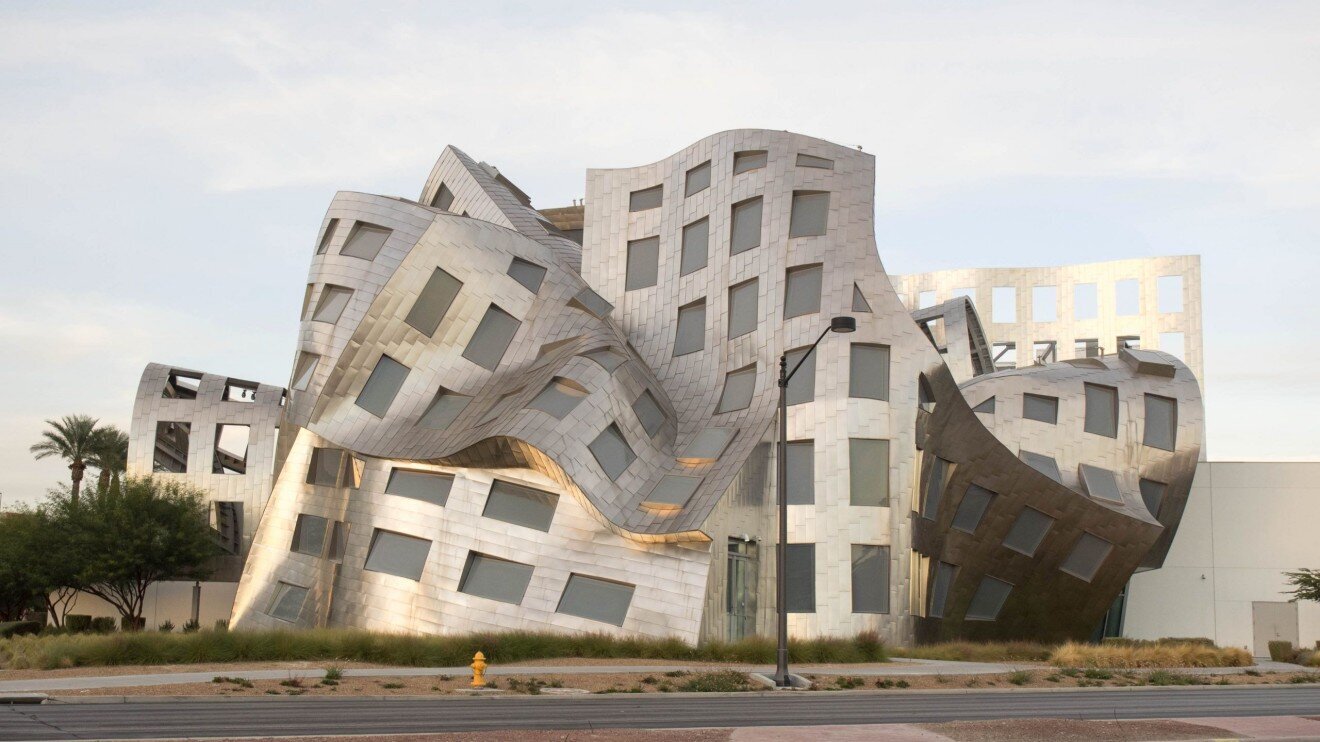
Deconstruction is a concept of modern philosophy and art, meaning understanding achieved through breaking down a stereotype or placing it in a new context. The term derives from Latin roots: de- ("back, undoing") and constructio ("construction"). The concept of deconstruction proceeds from the premise that meaning is constructed in the process of reading, and that a familiar representation either lacks depth or has been imposed by the repressive authority of the author. A provocation is therefore needed, one that sets thought in motion and frees the hidden meanings of a text not controlled by its author.
The philosophical foundations of deconstruction
Jacques Derrida and the theory of deconstruction
The concept of deconstruction was developed by the French philosopher Jacques Derrida, though it traces back to Martin Heidegger's concept of destruction — a rejection of the tradition of interpretation, aimed at uncovering the concealment of meaning. The concept of deconstruction was reinforced with psychoanalytic, Zen Buddhist, and Marxist allusions.
Derrida presents the concept of deconstruction in his programmatic work "Of Grammatology," published in 1967. The philosopher himself emphasized: "Deconstruction — in the final analysis — is neither a method nor a theoretical procedure. In its possibility, as much as in the experience of impossibility that has always shaped it, it is never foreign to the event — simply the arrival of what happens."
The critique of logocentrism
Derrida criticizes traditional European philosophy for its logocentrism — structuring thought around a central element (in this case, the word or sound), and excluding from the realm of the knowable those elements that turn out to be non-thought, unthinkable. Logocentrism assumes the self-sufficiency of any given unit of meaning, while Derrida asserts that signs always refer to other signs, existing only within a system of mutual relations, and denies their stability and universality.
Binary oppositions and their overcoming
Logocentrism gives rise to binary oppositions (formal-logical, mythological, dialectical) that form the basis of European thought and lend it a hierarchical character, since one term of the pair inevitably prevails: good and evil, rationality and emotion, male and female, presence and absence. The task of deconstruction is to analyze such an opposition and equalize the rights of both components. At the next stage, the problem is examined at a level where what matters is not the opposition itself, but the possibility or impossibility of its very existence.
One of the fallacies of logocentrism as a metaphysics of presence is positioning the present above the past. This thesis rests largely on Heidegger's work "Being and Time," which examines the connection between the phenomenon of "presence," history, and historiography.
The mechanism of deconstruction
Deconstruction is a mechanical breaking-down into component parts, and an analysis of their origin, aimed at understanding how the whole works. In the case of a text, this means uncovering contradictions between logic and rhetoric, between the meaning contained in the text and what the mediating language forces it to signify. It is a kind of play of text against meaning, and an examination of how independent language is from the meaning it carries.
In his work, Derrida operates with a series of terms he himself introduced: presence, logocentrism, metaphysics, trace, différance, writing, supplement. Derrida applies the concept of deconstruction to his own text as well.
Key concepts
For Derrida, what matters is not the final picture but the process of the work itself: it matters to him that the viscous mass of the mediating language, in which a person flounders, does not solidify, and he tries to shatter it with cracks, to dismember and re-dismember it. Hence the deliberate paradoxical quality of his terminology: "trace" (of no one knows what), "writing" prior to language (because spoken speech does not reach through the thickness of mediators, and written language becomes more important); hence too his demonstratively unconventional style, straining to say in language something that negates language.
The steps of deconstruction
- Differentiation — identifying a binary opposition between a main concept and its opposite. For example, the distinction between the transcendental and the empirical in Kant's "Critique of Pure Reason."
- Inversion — a reversal, replacing the main concept with its opposite.
The development of the concept of deconstruction
Its significance for postmodernism
The theory of deconstruction is extremely important under the conditions of postmodernity, in which the very concept of the text changes, and language turns from a tool into an independent agent. The deconstructivist approach involves shifting focus from a text's manifest content to the mediating language, and identifying unlikely details, marginalia, that reveal, or "betray," the text.
In a broader sense, deconstruction is associated with a critical rethinking of literary, philosophical, historical, and other canons. In Europe, deconstruction arose as a reaction to structuralism, and formed the basis for many poststructuralist approaches.
Defamiliarization as a precursor
One method for breaking down a stereotype can be seen in the literary device of defamiliarization (ostranenie) — a term introduced by Viktor Shklovsky as early as 1916, intended to pull the reader "out of the automatism of perception."
Deconstructivism in literary criticism
The spread of the ideas
Deconstructivism (deconstructive criticism) is the literary-critical "practice" of poststructuralism, functioning as a theory of literature. The term "deconstructivism" is often used as a synonym for poststructuralism. Deconstructivism takes its name from the basic principle of textual analysis practiced by Jacques Derrida — deconstruction, the sense of which, in the broadest terms, lies in revealing a text's internal inconsistency, in uncovering within it hidden "residual meanings," unnoticed not only by the reader but by the author, inherited from the discursive practices of the past and fixed in language in the form of stereotyped thought patterns.
The history of its emergence
The principles of deconstructivist criticism were first formulated in the works of the French poststructuralists Jacques Derrida, Michel Foucault, and Julia Kristeva. It was in France, too, that the first attempts at deconstructivist analysis appeared, in Kristeva's book "Semeiotike: Research toward a Semanalysis" (1969) and Roland Barthes's "S/Z" (1970). The idea of a text's independence from its author, his biography, and his intentions is developed by Barthes in his 1967 essay "The Death of the Author."
It was in the United States, however, that deconstructivism gained importance as one of the most influential trends in contemporary literary criticism. It took shape there over the course of the 1970s, through an active reworking of French poststructuralist ideas from the standpoint of the national traditions of American literary scholarship, with its principle of close reading of the text.
The Yale school
The Yale school is the most influential and authoritative trend within American deconstructivism, finally taking shape in 1979 with the appearance of the collection of essays by Jacques Derrida, Paul de Man, Harold Bloom, Geoffrey Hartman, and J. Hillis Miller, "Deconstruction and Criticism," which came to be known as the "Yale Manifesto."
The school developed Derrida's ideas: the denial that any single correct interpretation of a literary text is possible, and the inevitable fallibility of any reading. Paul de Man — the most authoritative representative of American deconstructivism — proceeded from the thesis of the rhetorical nature of literary language, which, he argued, inevitably predetermines the allegorical form of any "fictionalized utterance."
J. Hillis Miller asserts that all linguistic signs are rhetorical figures, and words are metaphors. In his view, language is figurative from the outset, and "the notion of a literal or referential use of language is an illusion, arising from a forgetting of language's metaphorical 'roots.'" Miller's main object of criticism is the concept of the referentiality of language — that is, its capacity to adequately depict and reproduce reality.
Other trends within deconstructivism
The hermeneutic trend
Hermeneutic deconstructivists set themselves the task of positively rethinking Heidegger's "destructive hermeneutics," and, on this basis, "deconstructing" the dominant mental structures that exercise "hegemonic control" over human consciousness on behalf of various academic disciplines. The main representative of this trend, William Spanos, formulated the concept of a "continuum of being," close to the "genealogical cultural criticism" of the left deconstructivists.
Left deconstructivism
The left deconstructivists are characterized by their rejection of the apolitical, ahistorical mode of the Yale school, with its exclusive confinement to literature, without any reaching-out to any cultural context. While remaining within the postulate of literature's intertextuality, they examine the literary text within the broader context of "general cultural discourse," including within it religious, political, and economic discourses.
An influential group among the American left deconstructivists consists of proponents of the neo-Marxist approach: Michael Ryan, Fredric Jameson, Frank Lentricchia. For them, deconstructivist analysis of literature is merely part of the broader field of so-called "cultural studies."
Feminist criticism
Feminist criticism (Gayatri Spivak, Barbara Johnson, Shoshana Felman) represents a distinctive rethinking of the postulates of Derrida and Jacques Lacan. Derrida's concept of logocentrism was here reinterpreted as a reflection of a purely male, patriarchal principle, and given the name "phallologocentrism," or "phallocentrism."
Feminists defend the thesis of the "intuitive," "feminine" nature of writing (that is, of literature), which does not submit to the laws of male logic; they criticize the stereotypes of the "male mentality" that has dominated, and continues to dominate, literature; and they assert women's special, privileged role in shaping the structure of human consciousness.
Deconstruction in other fields
Legal studies
Theorists of critical legal studies (Roberto Mangabeira Unger, Robert Gordon, and others) view the hierarchy existing in society as the main source of legal logic and form. They assert that law is inseparable from politics, and cannot be neutral. To demonstrate the indeterminacy of existing legal doctrines and legislation, these scholars often apply such methods as linguistic structuralism or philosophical deconstruction.
Historiography
The deconstructivist approach radically changed historiography, introducing into it an element of postmodernism. Alun Munslow, in "Deconstructing History" (1997), examines the new problems and questions facing postmodernist historiography.
Deconstructivism in architecture
The emergence of the movement
Deconstructivism is a movement in contemporary architecture based on applying the concept of deconstruction, developed by the French philosopher Jacques Derrida, to building practice. Another source of inspiration for deconstructivists was early Soviet Constructivism of the 1920s. Deconstructivist projects are characterized by visual complexity, unexpectedly broken and deliberately destructive forms, and a pointedly aggressive intrusion into the urban environment.
As an independent movement, deconstructivism took shape in the late 1980s (in the work of Peter Eisenman and Daniel Libeskind). The theoretical backdrop for the movement was Derrida's reasoning (in "Of Grammatology") about the possibility of an architecture that comes into conflict with, "debunks," and abolishes itself. These ideas were further developed in the periodicals of Rem Koolhaas.
Key projects
The Vitra Fire Station by Zaha Hadid (1993) and the Guggenheim Museum in Bilbao by Frank Gehry (1997) are considered manifestos of deconstructivism. Architectural deconstructivism is linked to the "Deconstructivist Architecture" exhibition at MoMA (New York) in 1988, which was itself oriented toward reinterpreting modernism, particularly the ideas of Russian Constructivism.
Characteristic features
Deconstructivist architecture is characterized by:
- Departure from classical forms
- Visual complexity and asymmetry
- Broken and deliberately destructive forms
- A pointedly aggressive intrusion into the cityscape
- A reinterpretation of modernist ideas
Deconstructivism in fashion
The formation of the movement
As a phenomenon in fashion, deconstructivism took shape in the 1980s-90s. It formed and developed as part of a broader intellectual movement connected to the philosophy of deconstructivism and the work of Jacques Derrida. The architectural tradition also influenced the development of fashion deconstruction.
In fashion, the term "deconstructivism" took shape in the second half of the 1980s and early 1990s. The principles of this movement were outlined in 1985 in Harold Koda's article "Rei Kawakubo and the Aesthetic of Poverty." It is thought that the term "deconstructivism," as applied to fashion, came into use after the 1988 architecture exhibition at the Museum of Modern Art in New York.
Basic principles
The formal markers of deconstructivism in clothing can be considered to include disintegrating or unfinished forms, an exposed garment structure, and an asymmetrical construction of the outfit. Deconstructivism involved exposing elements of the cut within the outward appearance of the garment. It became one of the trends that established the possibility of unconventional solutions in clothing.
Techniques and methods
Deconstruction in fashion involved the use of specific cutting and sewing techniques. Their point was to bring the internal elements of a garment into visibility. Among the formal markers of fashion deconstruction are:
- Seams left exposed on the outside
- Cut-off hems
- An asymmetrical construction of the outfit
- Exposed or roughly finished structural elements
- Unfinished edges
- Hypertrophied forms and the use of oversized proportions ("oversize")
- Torn or slashed sections
- An illusion of incompleteness
Main representatives
The main representatives of deconstructivism in fashion are usually named as Martin Margiela, Yohji Yamamoto, Rei Kawakubo, Karl Lagerfeld, Ann Demeulemeester, and Dries Van Noten — predominantly representatives of the Belgian and Japanese design schools.
Intellectual fashion
Deconstructivism arose as a reaction to Continental philosophy, and can be seen as one of the attempts to present fashion as an intellectual movement. Designers and critics emphasized the alternative character of fashion deconstruction, in contrast to commercial or runway fashion. Deconstructivism oriented itself not so much toward the mechanisms and rules of the fashion industry as toward philosophy and architecture.
The idea of resistance embedded within deconstruction implied an aspiration to see fashion as an intellectual sphere. Deconstructivism in fashion was a statement not only against a particular style, but against a frivolous attitude toward fashion in general. The construction of the outfit was presented as the intellectual side of clothing. Deconstructivism implied changing the very principle of the garment, and saw in clothing an analytical precedent and a form of aesthetic resistance.
Its connection to philosophy and architecture
Deconstructivism in fashion is usually correlated with deconstruction as a philosophical movement — above all, with the work of Jacques Derrida. Fashion deconstructivism is presented as a rethinking of the philosophical method formed by representatives of the European and Yale schools. Classical philosophical deconstructivism held that ideas of structure as the only possible form of thought and language were false. Fashion deconstruction likewise implies that it is a mistake to represent the fashion system as a whole, and the outfit in particular, as a structure.
The emergence of deconstructivism in fashion is linked to the architectural tradition. The starting point is usually considered to be the "Deconstructivist Architecture" exhibition, held in 1988 at the Museum of Modern Art in New York. Like architecture, the outfit was an address to form. Fashion deconstruction drew on architectural principles, in particular the violation of standard notions of form, construction, and structure.
Deconstruction in popular culture
As applied to popular culture, the term "deconstruction" has come to mean revisionism — a rethinking of traditional or established plots and tropes. This is a vivid manifestation of postmodern culture, which operates with ready-made forms and artistic styles, drawing on eternal plots and themes — and, through the prism of irony and self-irony, shows their artificiality and inapplicability to contemporary reality.
Deconstruction is understood as taking apart a trope in order to understand its meaning better. Often this means uncovering the contradictions inevitable within a trope's archetypal structure, and demonstrating its untenability in another situation or in real life. The simplest and most common way of applying deconstruction to tropes in works of popular culture is to pose the question: "What consequences would this trope have in reality? What circumstances would give rise to it?"
Genre deconstruction is singled out separately, when a whole set of tropes, plot devices, and character types characteristic of a specific genre is subjected to critical and/or ironic assessment. Often (though not always) deconstruction of the source work carries a dark, even cynical, character. Parody can be regarded as a form of deconstruction.
Conclusion
Deconstruction and deconstructivism represent a complex and multifaceted phenomenon of contemporary culture, spanning philosophy, literature, architecture, fashion, and popular culture. From the philosophical works of Jacques Derrida to the architectural projects of Zaha Hadid and Frank Gehry, from the literary criticism of the Yale school to the fashion collections of Martin Margiela and Rei Kawakubo — deconstruction manifests itself as a method of critically rethinking established forms, structures, and stereotypes.
What unites all manifestations of deconstruction is the aspiration to uncover hidden contradictions, break down hierarchies, question the obvious, and show the relativity of any semantic or formal structure. Deconstruction offers no ready-made answers, but opens up a space for multiple interpretations, for the play of meanings, for the constant rethinking of cultural codes and practices.
Ultimately, deconstruction is not a method of destruction for destruction's sake, but a way of understanding more deeply how texts, buildings, garments, and ideas are put together — and how they can be rethought and transformed.