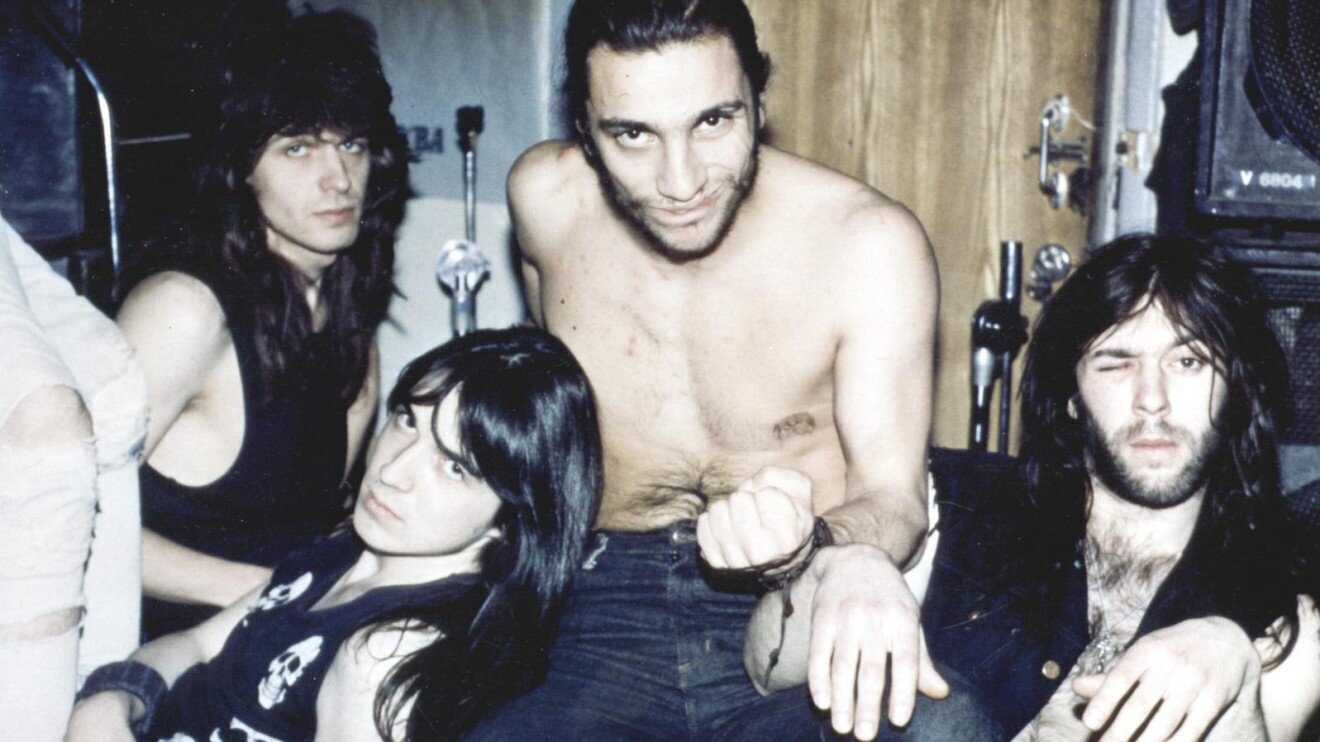
The song "The Day's Over and You're Still Alive," mentioned in the novel, is one of the best-known compositions by the legendary Russian heavy metal band Cherny Obelisk (Black Obelisk), which became a genuine soundtrack to the "wild nineties."
The making of the song and the album "One More Day"
The song appeared on the album One More Day, released on vinyl by the Alien Records label on July 20, 1992. This album marked a turning point in the band's work — the material was originally recorded in 1991 with English lyrics, for a demo called "One More Day" aimed at Western labels. When the band got the chance to release a vinyl record, however, the tracks were reworked and re-recorded with Russian lyrics.
The album "One More Day" was a radical departure from the band's earlier recordings. Influenced by Metallica's self-titled 1991 album, frontman Anatoly Krupnov decided to slow the songs down. Alongside the metal riffs, the music gained "clean" funk-inflected guitar parts, and the overall sound became lighter and more rhythmic.
Anatoly Krupnov: the band's creator and soul
Anatoly Germanovich Krupnov (1965-1997) was a Soviet and Russian musician, a virtuoso bassist, vocalist, composer, and poet. He was the founder and lifelong frontman of the band Cherny Obelisk, formed in August 1986. Krupnov trained musically on the violin, taught himself guitar, and went on to become one of the country's finest bass players.
The band Cherny Obelisk was named after one of Krupnov's favorite books — Erich Maria Remarque's novel "The Black Obelisk." Over the 1980s, the group achieved cult status thanks to its striking theatrical performances, complete with mystical props, pyrotechnic effects, and Krupnov's signature call: "Cherny Obelisk salutes its fans!"
The song's meaning in the context of its era
The lyrics of "The Day's Over and You're Still Alive" became a genuine anthem of survival in the chaotic Russia of the early 1990s:
"At the start of the day, as always, no matter what,
Forgetting fatigue, sickness, and inborn laziness,
Try to direct all your strength toward one thing:
Staying alive, having made it through this day"
These lines captured the feelings of millions of people during the collapse of the USSR and the emergence of a new Russia with precision. Krupnov described the album's mood as "cheerful rage" — and it was exactly this combination of cynicism and love of life that defined the spirit of the age.
Unlike the band's earlier work, with its gothic symbolism, the lyrics on "One More Day" were marked by "the harsh specificity of the surrounding reality." The song spoke to the idea that, amid universal chaos, the main task was simply to survive, to get through one more day.
Popularity and influence
By 1993, when the novel is set, Cherny Obelisk was at the peak of its popularity. The band played stadium concerts, headlined the major "Monsters of Rock USSR" festivals, and opened for acts like Accept and Faith No More.
"The Day's Over and You're Still Alive" became one of the era's unofficial anthems. It played on the radio, in garages, on construction sites, in workshops — everywhere people of the new Russia worked and survived. It's no accident that the novel's author placed this song in a scene involving the stripping-down of a stolen car — the song perfectly captured both the criminal lawlessness and the love of life of those years.
A music video was made for the song, including footage from a Moscow concert during the "Monsters of Rock Through the Ruins of the Evil Empire" tour, along with scenes shot at one of Moscow's factories. Tragically, Anatoly Krupnov died of a heart attack on February 27, 1997, before reaching the age of 32, but the music he created remained forever the soundtrack of an entire generation.