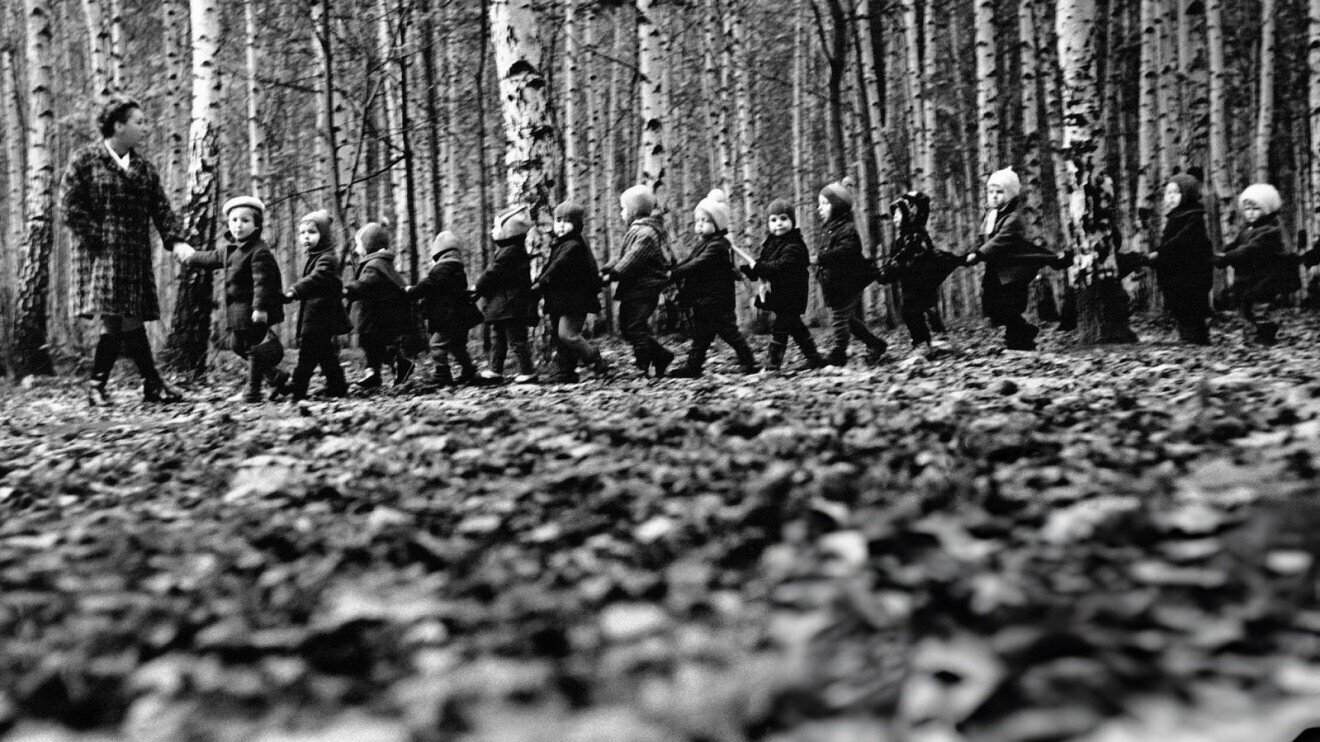
The mention of the "children of Hamelin" in the text refers to one of the most famous medieval legends — the story of the Pied Piper of Hamelin (German: Rattenfänger von Hameln).
The essence of the legend
According to a legend that presumably arose in the 13th century, a tragic story took place in the town of Hamelin (in modern Lower Saxony, Germany). The town was overrun by rats it couldn't get rid of. The desperate town council offered a reward to anyone who could solve the problem.
On June 26, 1284 (a date recorded with surprising precision for a medieval legend), a mysterious musician in colorful clothing arrived in town. He promised to rid Hamelin of its rats in exchange for gold. With the authorities' agreement secured, the piper played his magic pipe, and all the rats followed him to the Weser River, where they drowned.
But when the musician returned for his promised reward, the council refused to pay. The betrayed piper then returned to the town dressed as a hunter, in a red hat, and played his pipe once more. This time, all the town's children followed him — 130 boys and girls. The piper led them out of the town, and the children vanished forever.
Historical basis
What makes the Hamelin legend unique is that it's the only one of its kind, among stories of magical musicians, to give a precise date for the event. What's more, historical chronicles of the time genuinely contain records of children vanishing on precisely June 26, 1284. For the people of Hamelin, that date became a fixed point in time — they dated events "from the departure of our children."
Scholars have proposed various theories about the real events that might underlie the legend: the Children's Crusade of 1212, a plague epidemic, military conflicts, or a mass emigration of young people in search of a better life.
Metaphorical meaning in the text
In the context of a novel about 1994 Russia, the comparison to the "children of Hamelin" takes on special meaning. As in the medieval legend, there's a swindler here (Kiryukha) who lures trusting people in with promises of profit, takes their money, and then disappears, leaving them with nothing.
The alcohol vendors who believed in the advertising campaign for "Popov" vodka are likened to the naive children of the German fairy tale — they "put down a deposit and waited for the boom," but instead of the promised success, got "oops." Kiryukha, like the treacherous piper, vanished "chasing a dream to Los Angeles with all the zeroes."
Symbolism of the 1990s
This allusion captures the atmosphere of mid-1990s Russia particularly well, a time when countless people fell victim to various financial scams and pyramid schemes. Promises of quick riches, like the piper's magic music, lured in trusting citizens, who ultimately lost their savings while the schemes' organizers vanished with the money.
The legend of the Pied Piper of Hamelin has repeatedly served as inspiration for writers and poets, including the Brothers Grimm, Robert Browning, Johann Wolfgang von Goethe, and Marina Tsvetaeva. In modern literature, it continues to serve as a powerful metaphor for deception, betrayed trust, and the tragic consequences of naivety.