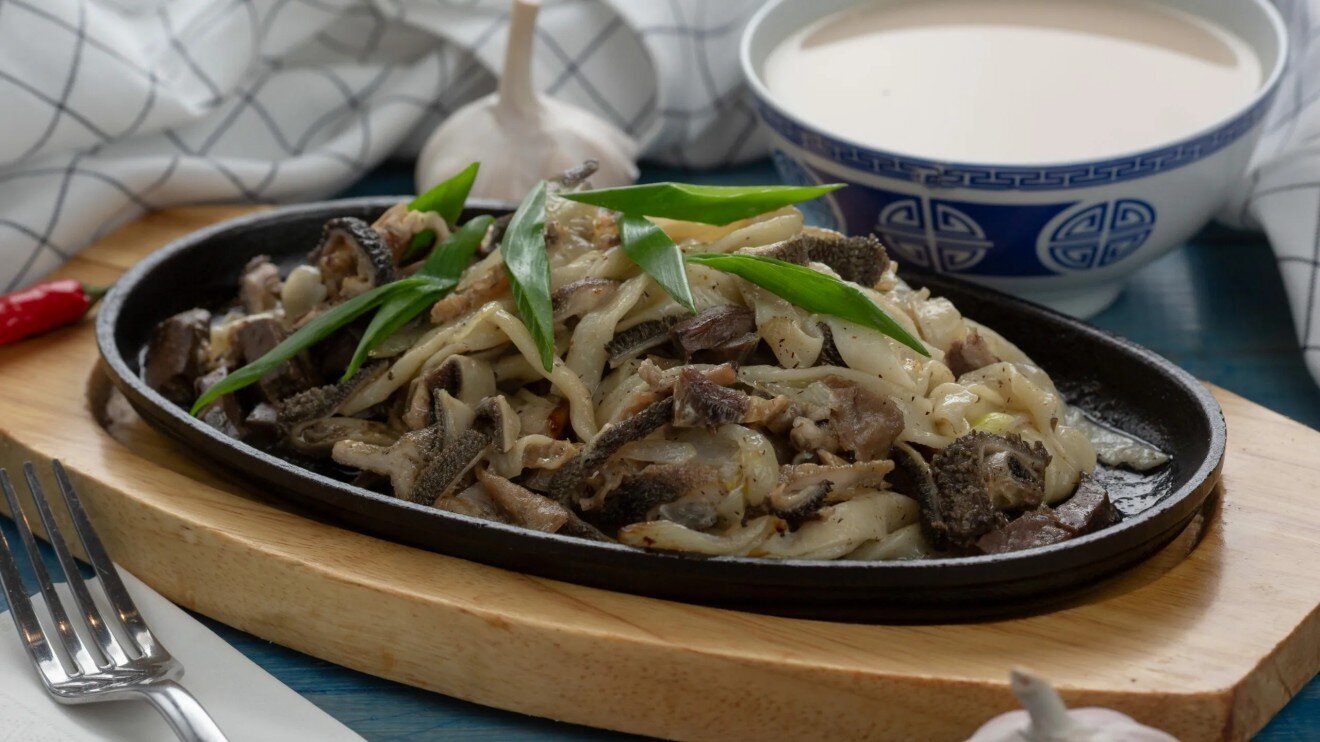
Dotur is a traditional Kalmyk dish — a soup made from sheep offal and blood sausage. It’s deeply rooted in Kalmyk nomadic culture and reflects the specifics of their traditional way of life.
Historical Background
The Kalmyks are descendants of the western Mongol Oirat tribes, who migrated to the lower Volga in the 17th century. As a nomadic people, the Kalmyks herded sheep, cattle, and horses across the Caspian steppe for centuries. Their national cuisine formed around the nomadic lifestyle, where meat and dairy from livestock were the main foodstuffs.
Dotur belongs to what’s known as Kalmyk «field» or «traveling» cuisine. It was cooked during long migrations, when every part of a slaughtered animal had to be used before it spoiled in the steppe conditions.
How It’s Made
Traditional dotur is made from sheep offal — liver, kidneys, lungs, heart, and rumen (stomach). The cooking process is fairly involved and takes more than two hours. The dish’s signature feature is using the abomasum (one of the stomach chambers of ruminants) as a natural casing for the blood sausage.
All the offal is first fried in a generous amount of melted fat until golden, then stewed with water until done. It’s then chopped and simmered together with the blood sausage.
Cultural Significance
In the context of the novel, the mention of dotur carries particular weight. The phrase «we’ll treat you to some dotur» is how Kalmyks extend hospitality, signaling national identity and cultural tradition — a kind of marker of belonging to the Kalmyk people.
By the mid-1990s, when the novel’s events take place, dotur was no longer an everyday dish even among Kalmyks. Many of the younger generation had never tasted it, and the skill of preparing this elaborate dish had largely been preserved only among the older generation.
Elista in the Novel’s Context
The mention of Elista — the capital of the Republic of Kalmykia — alongside dotur isn’t accidental. In the 1990s, Elista was going through a period of cultural revival under President Kirsan Ilyumzhinov. The city was actively positioning itself as a center of Kalmyk culture and Buddhism in Russia, which made the reference to national tradition especially fitting.
A Taste Note
Dotur is an acquired taste, with a very distinctive flavor and aroma. Many describe it as fairly spicy (from the generous amount of pepper) with a pronounced mutton smell. The blood sausage, an essential part of the dish, has a texture and taste somewhere between blood sausage and liver sausage.
Dotur is served hot, always with fresh raw onion added to each portion. It’s considered a very hearty, filling dish — especially important for nomads living the steppe life.