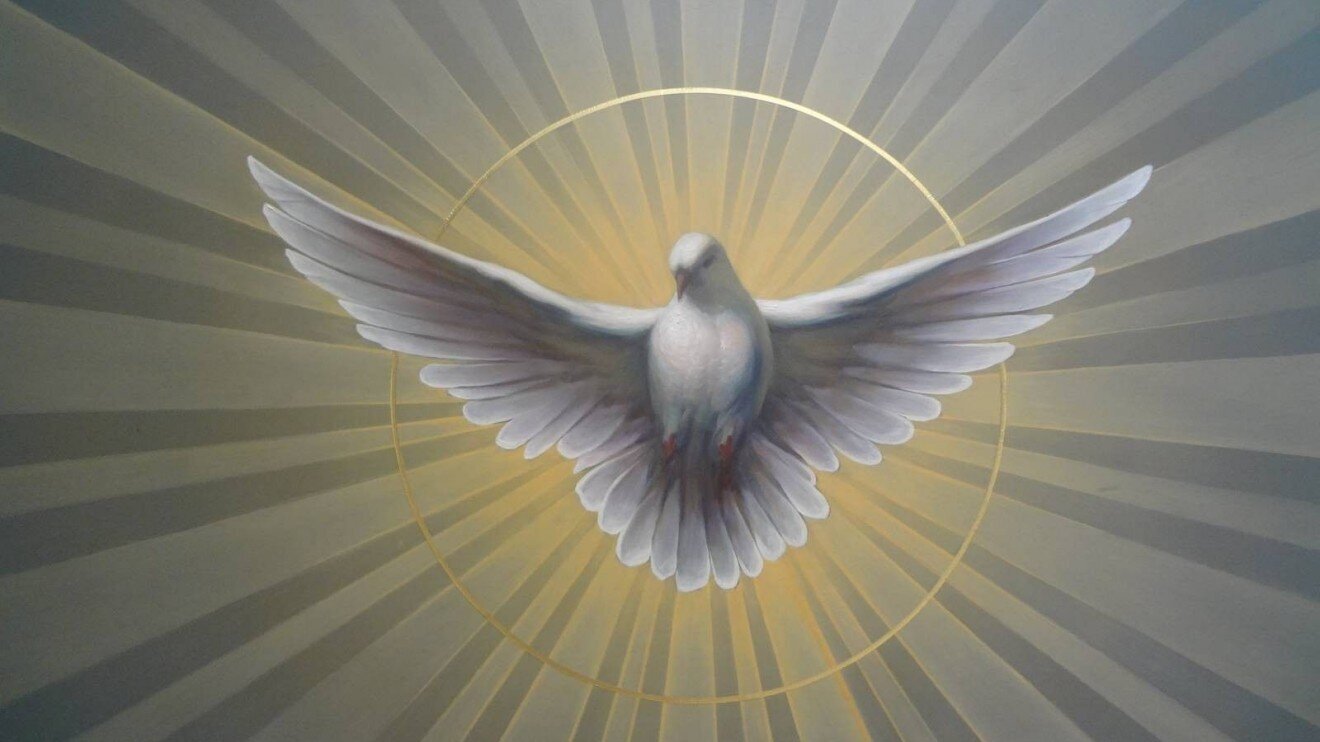
The Holy Spirit: Person, Power, and Mystery
The Holy Spirit is the Third Person of the Holy Trinity, of equal honor and one in essence with God the Father and the Son. In Christian tradition He is understood not as an abstract force or energy, but as a person, active in the world and in every believer. His mysterious presence attends the birth of the Church, inspires the prophets, and sanctifies and transforms the human soul. The Holy Spirit is the breath of God, a life-giving stream filling all that exists.
Origin and Terminology
The word «spirit» has different grammatical genders across languages: in Hebrew (ruach ha-kodesh) it is feminine; in Greek (pneuma hagion) neuter; in Latin (Spiritus Sanctus) and Russian, masculine. But regardless of grammatical gender, the meaning runs deep: this is not merely wind or breath, but a living, personal Divine hypostasis, distinct from the Father and the Son, yet equal to Them.
The Holy Spirit in the Old Testament and Judaism
In the Old Testament, the Holy Spirit is often called the «Spirit of God» — a creative, life-giving power. Genesis says: «And the Spirit of God moved upon the face of the waters» (Gen. 1:2). In Psalm 51, David cries out: «Take not thy holy spirit from me.»
Judaism does not recognize the Holy Spirit as an independent person. For the Jewish tradition it is more a manifestation of God’s power or of prophetic inspiration. However, in some sources, such as the Talmud and the midrashim, the Holy Spirit takes on features of an independent being — though still not as a Person of the Trinity.
The Holy Spirit in the New Testament
In the New Testament, the teaching on the Holy Spirit unfolds with new fullness. He descends on the Virgin Mary at Christ’s conception (Luke 1:35), on Jesus at His Baptism in the form of a dove (Matt. 3:16), and on the apostles at Pentecost in the form of tongues of fire (Acts 2:3–4). These are not mere symbols — they are moments of direct, effective intervention by the Holy Spirit in human history.
Jesus calls Him the Comforter (Greek Parakletos), the Advocate, the Teacher, the Truth. He says: «When he, the Spirit of truth, is come, he will guide you into all truth» (John 16:13).
The Creed and the Ecumenical Councils
At the Second Ecumenical Council (Constantinople, 381), it was affirmed that the Holy Spirit is «the Lord, the Giver of Life, who proceedeth from the Father, who with the Father and the Son together is worshipped and glorified.» This teaching underscores His personhood, divine nature, and hypostatic procession from the Father.
The Western Church later added the phrase filioque («and from the Son») to the Creed, which became one of the causes of the Great Schism between East and West. Orthodoxy firmly holds to the formula: the Holy Spirit proceeds from the Father alone.
The Work of the Holy Spirit
The Holy Spirit takes part in all of God’s works: in creation, in the Incarnation, in sanctification, in salvation. He dwells in the Church, acts through the Sacraments, and leads believers to holiness.
«The Spirit of God hath made me, and the breath of the Almighty hath given me life» (Job 33:4).
He grants prophecy, strength, healing, wisdom, courage, and purity. His fruits in a person are: love, joy, peace, longsuffering, gentleness, goodness, faith, meekness, and self-control (Gal. 5:22–23).
Baptism in the Holy Spirit
According to the Book of Acts, the Holy Spirit came down on believers who had been baptized, through the laying on of hands. This experience became known as «baptism in the Holy Spirit» — the living experience of God’s presence, granting new strength and spiritual gifts. Pentecostals and charismatics see this as a separate act of God, independent of water baptism.
The Gifts of the Holy Spirit
The gifts of the Spirit are special abilities given for the edification of the Church and service to others:
- The word of wisdom
- The word of knowledge
- Faith
- Gifts of healing
- The working of miracles
- Prophecy
- Discerning of spirits
- Divers kinds of tongues
- The interpretation of tongues
According to the prophet Isaiah (Isa. 11:2–3), the Spirit gives a person wisdom, understanding, counsel, might, knowledge, godliness, and the fear of the Lord.
The Fruits of the Holy Spirit
Unlike the gifts, the fruits of the Holy Spirit are the result of a person’s inner growth, cultivated by God. They require the participation of a person’s will and cooperation with grace:
- Love
- Joy
- Peace
- Patience
- Kindness
- Goodness
- Faithfulness
- Gentleness
- Self-control
The Holy Spirit as Teacher and Comforter
Jesus promised: «The Holy Ghost… shall teach you all things, and bring all things to your remembrance, whatsoever I have said unto you» (John 14:26). This is not merely the transmission of information — it is the enlightenment of the soul, guidance into truth, and comfort in sorrow. The Holy Spirit is the Teacher of hidden wisdom, an inner Light.
Visible Manifestations of the Spirit
Scripture describes forms in which the Holy Spirit was manifested:
- As a dove (at the Baptism of Jesus)
- As tongues of fire (at Pentecost)
- Through inspired speech in other tongues (Acts 2:3–10)
But God is invisible. These manifestations are merely symbols, accessible to human perception. They point to a reality that exceeds sensory experience.
Blasphemy Against the Holy Spirit
«And whosoever speaketh a word against the Son of man, it shall be forgiven him: but whosoever speaketh against the Holy Ghost, it shall not be forgiven him» (Matt. 12:32).
The Church Fathers interpret this as the conscious attribution of the Spirit’s works to evil, a stubborn rejection of manifest Truth. It is a refusal of salvation itself, since salvation is accomplished precisely by the power of the Holy Spirit.
The Holy Spirit in Worship and Iconography
In all Orthodox worship, the Holy Spirit holds a special place. Hymns and prayers, especially at Pentecost, glorify Him as the Giver of Life and the All-Holy One. In icons He is depicted as a dove — but only in the scene of Christ’s Baptism. All other forms are conventional.
The Day of the Holy Spirit
Celebrated on the 51st day after Easter, the Monday after Pentecost (Trinity Sunday). This day is dedicated to a special remembrance of the descent of the Holy Spirit on the apostles, the birth of the Church, and the beginning of a new era in the history of humanity’s salvation.
Conclusion
The Holy Spirit is not an abstract energy, not a symbol, not an image. He is the Living God. He penetrates to the very core of our lives, transforms the heart, elevates the mind, and fills existence with meaning. Without Him, there is neither faith, nor love, nor salvation.
He is the Comforter, the One who bears witness to Christ, who guides, inspires, strengthens, and leads. The believer calls upon Him not as a force, but as a Person. In prayer, in the silence of the heart, in trembling before the Sacraments, in the depths of conscience — the Holy Spirit is at work, changing a person from within.
«O Heavenly King, Comforter, Spirit of Truth, who art everywhere and fillest all things, treasury of good things and giver of life, come and dwell in us…»