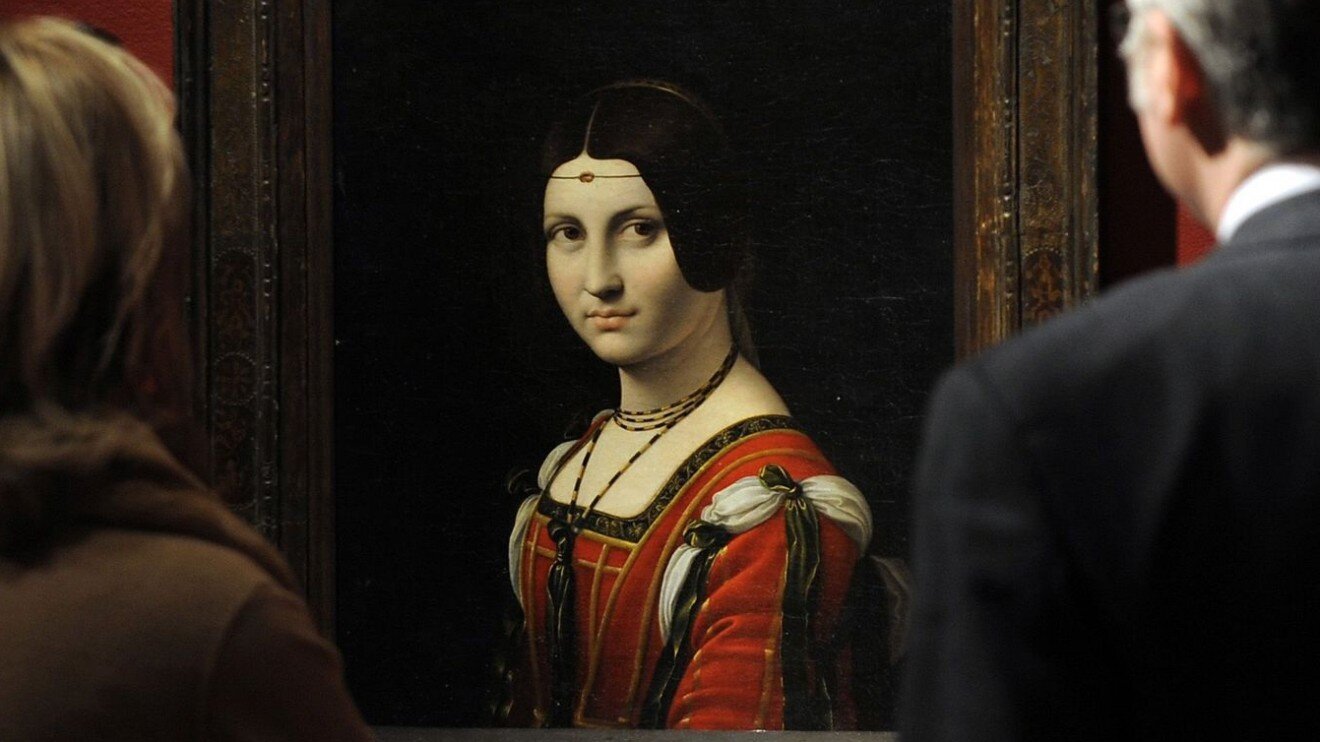
The ferronnière (French: ferronnière) is an elegant women's ornament — a hoop, ribbon, or chain set with a gemstone, pearl, or cluster of stones — worn on the head so that it hangs down over the forehead. This elegant accessory has been known since the Renaissance and has periodically returned to fashion over the centuries.
The origin of the name
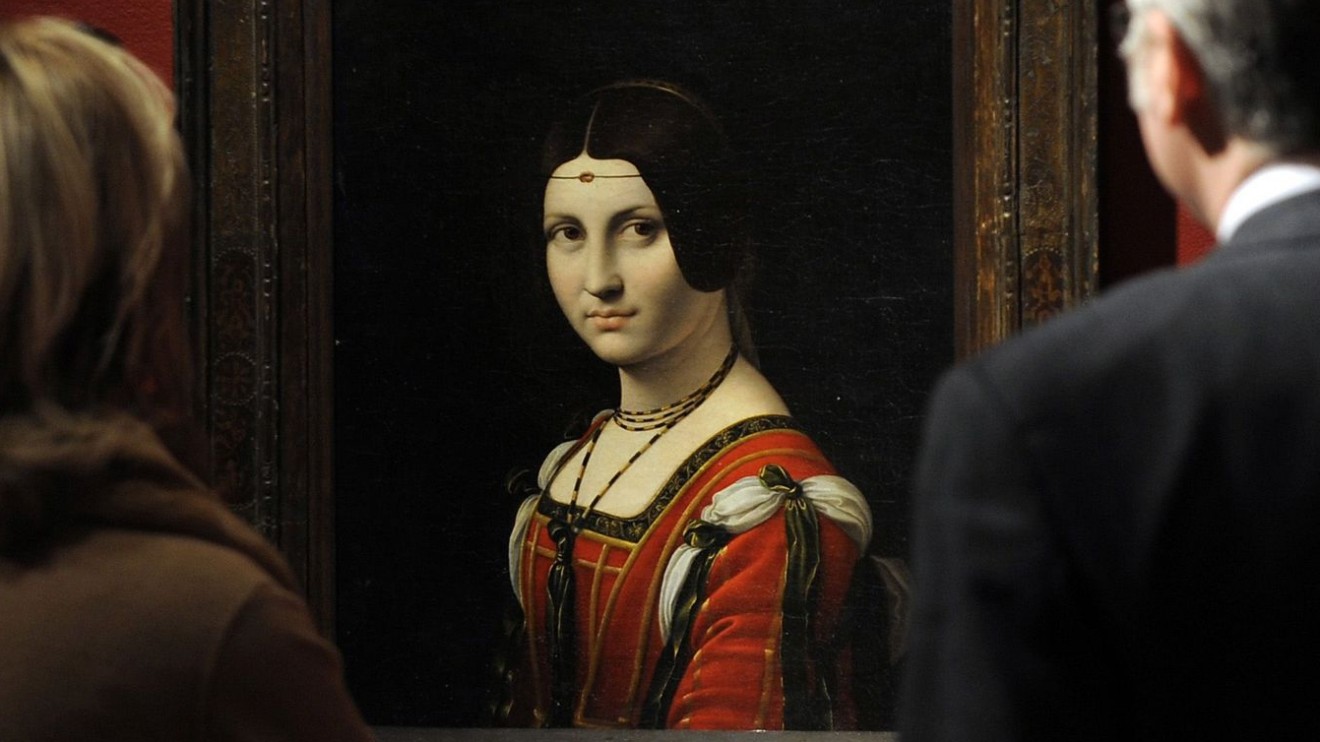
The name "ferronnière" comes from the famous portrait "La Belle Ferronnière," held in the Louvre. For a long time, it was believed to depict a certain Marguerite Feron, mistress of French king Francis I. In fact, the portrait, attributed to Leonardo da Vinci, likely depicts a Milanese noblewoman. The theory that the name derives from the French word "fer" (iron) has no historical basis.
The ornament's history
Although ferronnières have been known since the Renaissance, the name itself is first documented only in 1831-1832. In 15th-16th century Italy, forehead ornaments with a gold chain were popular among the noblewomen of Lombardy — they appear in many portraits of that era, including a depiction of Duchess Elisabetta Gonzaga by Raphael.
The ferronnière gained particular popularity at the French court in the mid-16th century — a great favorite of Francis I's second wife, Eleanor of Habsburg, who introduced it into court fashion in the early 1550s.
A 19th-century revival
In the early 19th century, alongside a revival of interest in the Renaissance, the ferronnière again became a fashionable accessory. It reached the height of its popularity during the Biedermeier era (1820s-1840s), when "romantic medieval jewelry" came into vogue. The famous opera singer Maria Malibran popularized the "à la Malibran" hairstyle, with a high bun and a ferronnière.
The ornament became popular in Russia too — as early as 1832, the newspaper "Severnaya Pchela" reported that "ferronnières have become a necessity." It's wearing a ferronnière that Natalya Nikolaevna Goncharova, Alexander Pushkin's wife, is depicted in the famous portrait by Alexander Bryullov.
Transformation and decline
By the late 19th century, the originally lavish diamond ferronnières had grown simpler — often worn on a velvet ribbon. In the early 20th century, "rivières" — bands of tightly set diamonds resembling a flowing stream of water — were used as forehead ornaments instead.
By the 1920s, ferronnières had fallen entirely out of fashion, replaced by wide bandeaux. The ornament saw a distinctive revival in the 1960s-70s within hippie culture, in the form of simple ferronnières made of beads, wood, and bone on a silk or leather cord.
Cultural significance
The ferronnière was more than an ornament — it was a symbol of status. It was part of a full parure — a set of jewelry matched by material, color, and ornamental design. In the context of 1993 Russia, when the novel is set, such a refined historical ornament could underscore its wearer's special status, a claim to aristocratic bearing, or a connection to the pre-revolutionary past, in a period when the new Russia was still taking shape.