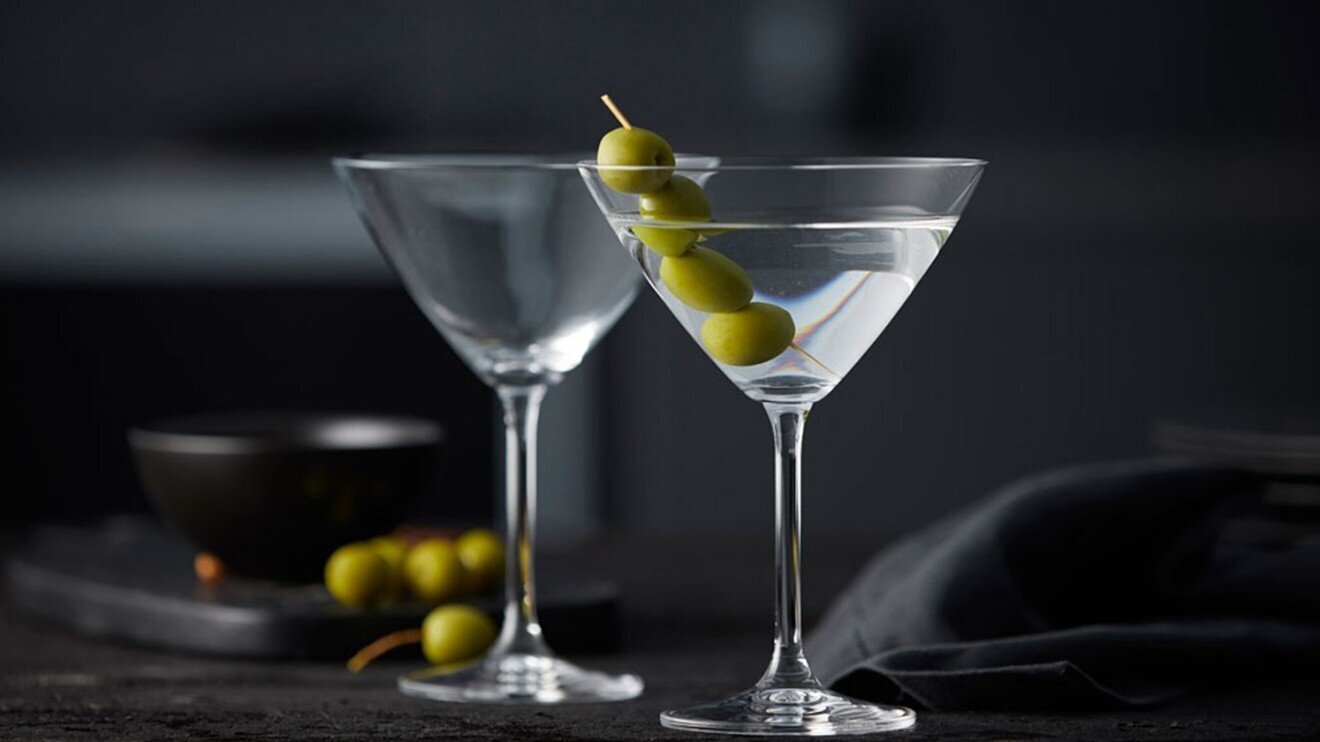
The martini cocktail glass, or martini glass, is one of the most recognizable symbols of bar culture. Its distinctive triangular shape is instantly associated with elegance, sophistication, and the world of cocktails. Yet few people stop to think that behind this iconic shape lies not just aesthetics, but carefully considered functionality and a genuinely interesting origin story.
An Important Clarification: Vermouth and the Cocktail Glass
Before diving into the glass’s history, a common misconception needs clearing up. Martini vermouth, produced by Bacardi Martini since 1863, and the martini cocktail glass are two entirely separate things that merely happen to share a name.
Martini vermouth is a fortified, herb-flavored wine sold in Bianco, Rosso, and Extra Dry styles. It’s traditionally served in a low, wide vessel — a rocks glass or old-fashioned glass — always over ice and in a larger pour. The wide surface area of such a glass is needed to let ice cubes chill the drink properly.
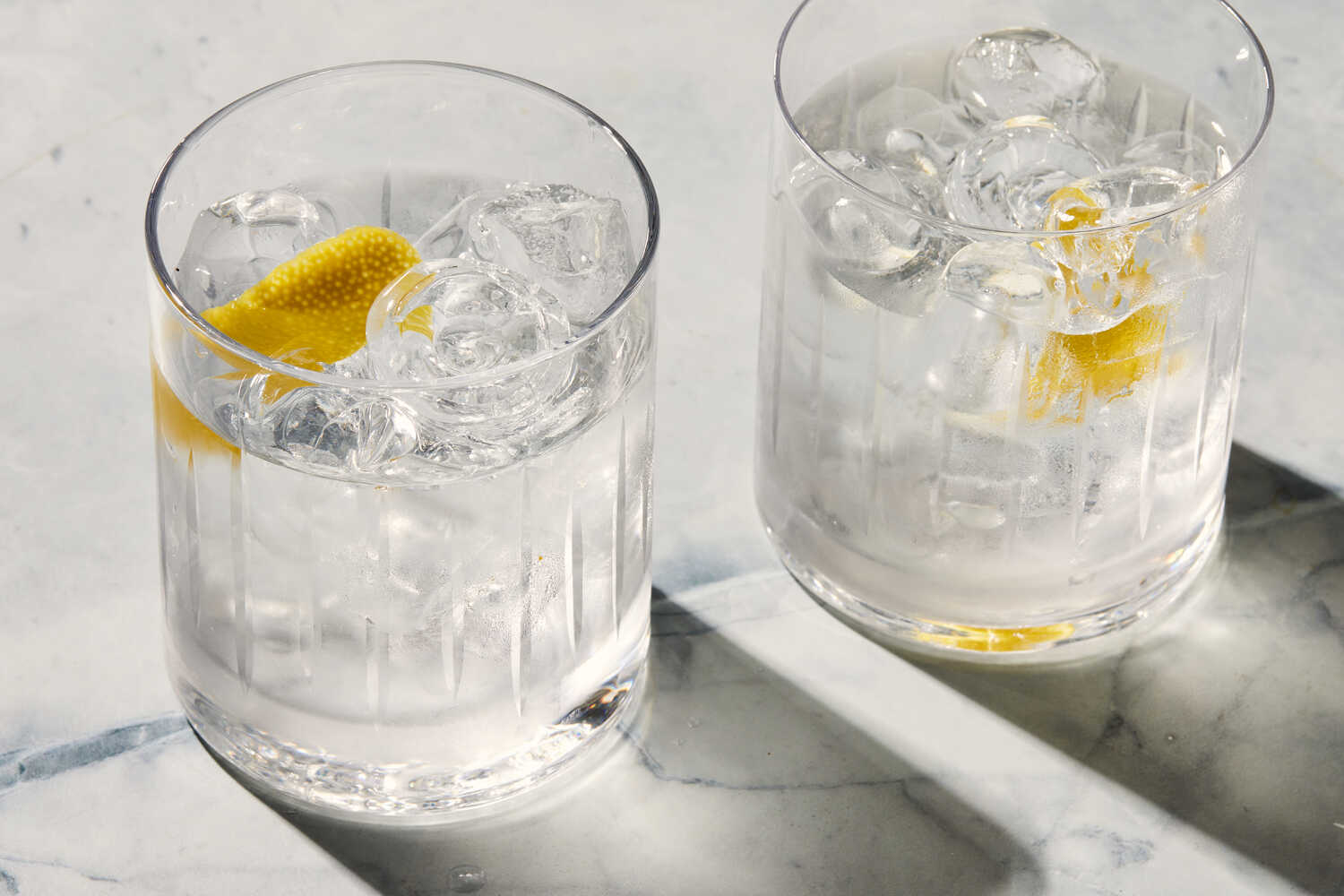
A rocks glass for vermouth
The martini cocktail glass, by contrast, is meant for medium-volume cocktails served without ice. The most common mistake made by novice bartenders is pouring Martini vermouth into a martini cocktail glass — a glaring breach of bar etiquette that betrays a misunderstanding of what either object is actually for.
Where the Name Comes From
The Martini drink took its name from its creator, Alessandro Martini, who, together with Luigi Rossi, introduced the world’s first sample of the new-formula Italian vermouth from the Martini distillery in 1863. In 1879 the partners opened a factory to produce the drink and registered the Martini & Rossi trademark. Since 1992 the brand has belonged to Bacardi, registered in Bermuda.
The cocktail glass got its name considerably later, and that name has less to do with the vermouth than with the popular cocktail the glass was designed for. Still, the coincidence of names has created confusion that persists to this day.
The History of the Triangular Glass
From Goblet to Cocktail Glass
The cocktail glass’s history reaches back to ancient times and is tied to the evolution of drinking vessels. Wine was originally drunk from goblets — wide bowls on a stem. The word «gobelet» in Old French means «bowl» or «cup.» In English it became «goblet.»
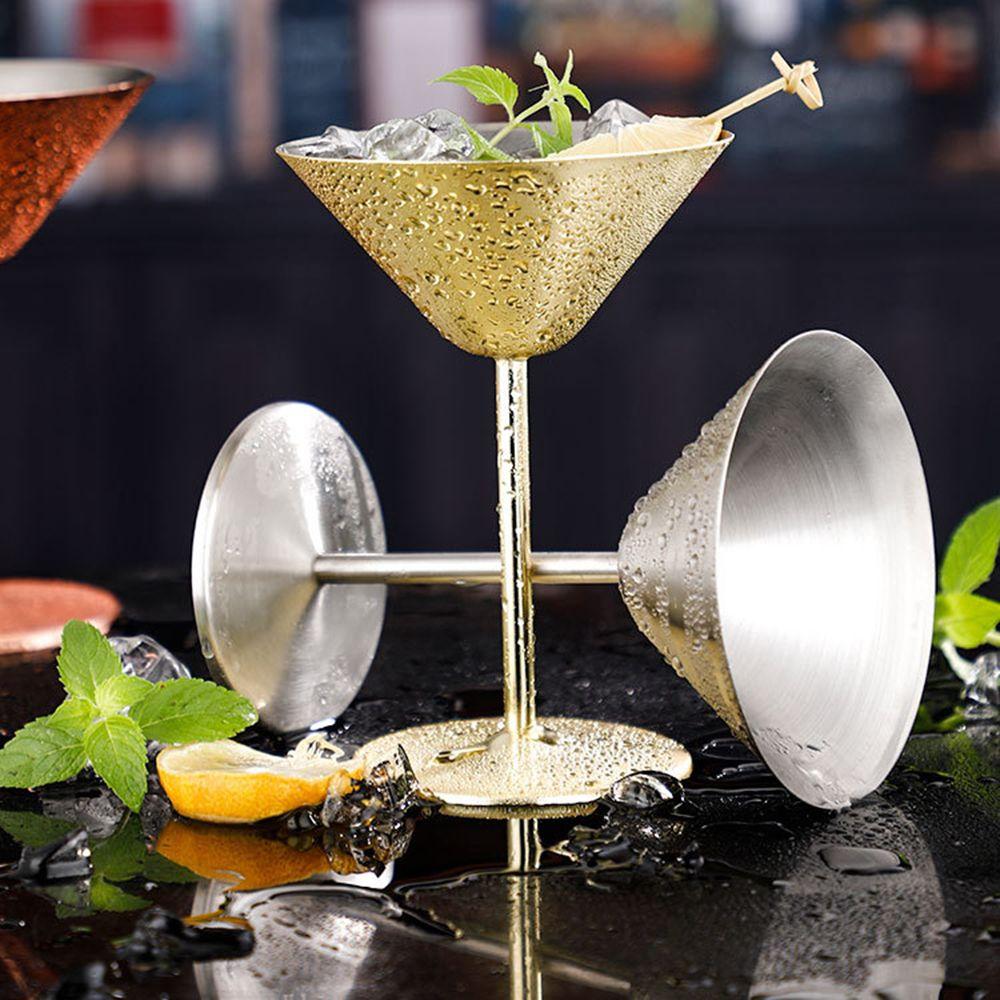
Goblet glasses
The goblet was originally associated with the chalice used for communion in religious rites, though there were differences: chalices typically had a wide base and were often decorated with a cross. Over time, goblets came into everyday use for wine by royal families and the aristocracy, before spreading to wider society.
The first goblets were made from clay, silver, and wood for practicality’s sake. In the eighteenth century, glass goblets came into fashion, becoming an essential fixture on any aristocratic table. They were decorated with hunting scenes, coats of arms, flowers, and other patterns.
It was wine glasses — in essence, evolved goblets — that became the pioneers of the cocktail industry. It was recommended that fashionable cocktails of the day be served in them and their many variations. In 1888, Harry Johnson’s bartending manual, one of the era’s definitive guides, included illustrations of a variety of glasses meant for serving cocktails.
The Birth of a Legend: 1925
The exact date the triangular cocktail glass first appeared remains a matter of debate. Various sources place its origin somewhere in the nineteenth century, but its official unveiling didn’t come until 1925, at the International Exhibition of Modern Decorative and Industrial Arts in Paris. That exhibition proved a turning point in the history of design and architecture, giving rise to the Art Deco style.
The compact glass was designed specifically for the dry martini and took the form of a V-shaped bowl set on a long stem with a flat base. In profile it resembles a triangle. That said, glasses of a similar shape had already existed since the sixteenth century — they only achieved worldwide popularity after 1925.
The glass’s unusual shape was chosen not just for aesthetic reasons, but for practical ones as well. The marketing efforts of the Martini brand, which actively promoted both its products and the bar culture surrounding them, played a significant role here.
A Prohibition-Era Legend
There’s an alternative, rather romantic account of the triangular glass’s origin, tied to America’s Prohibition era, which lasted from 1920 to 1933. During that period, drinking alcohol was banned by law, but people still found ways to enjoy their favorite drinks.
Owners of illegal bars and restaurants, known as speakeasies, came up with all sorts of tricks to disguise the fact that alcohol was being consumed. One such trick, the legend goes, was the use of oddly shaped glasses. According to this story, the martini glass’s wide top not only made it easy to mix a cocktail’s ingredients, but also let patrons quickly toss out the contents during a police raid.
From an open glass with a wide rim, it was very easy to get rid of the evidence, making it an ideal choice for underground drinking establishments. Though undocumented, this story has taken firm root in bar-culture folklore and adds a romantic note to the history of this elegant vessel.
Popularized Through Mass Culture
The martini glass’s popularity owes a great deal to its appearances in film and mass culture. The most famous fan of cocktails served in this glass is Agent 007, James Bond. His catchphrase — «shaken, not stirred» — became legendary, and the image of the elegant spy with a cocktail in a triangular glass became firmly lodged in the popular imagination.
Many viewers mistakenly assume James Bond is simply drinking vermouth, since «martini» and vermouth seem interchangeable. In fact, a dry martini cocktail is made from 60 ml of gin and just 10 ml of dry vermouth — the vermouth adds only a hint of aromatics, while gin forms the base.
The glass’s popularity traveled from Europe to America a quarter-century after its official debut. Its triangular shape came to symbolize countless drinking establishments. On the classic neon signs popular in the 1980s and ’90s, it was the single most common image used to signify a bar or a cocktail lounge.
Anatomy and Function
Structural Features
Anatomically, the glass takes the form of a triangle tapering downward, set on a tall, thin stem with a flat base. This seemingly simple design is in fact the product of carefully considered engineering, in which every element serves a function.
A standard cocktail glass holds 130 ml, corresponding to a single serving. Larger glasses are also available, ranging from 180 ml up to tumblers of 350 ml or more. Drinks served in this glass typically measure between 70 and 160 milliliters, though glassware makers may produce limited editions of even larger capacity.
Thermal Insulation
One of the chief functions of the glass’s long, thin stem is to thermally insulate the drink from the heat of the hand. Cocktails served in this glass are traditionally served chilled, and maintaining their optimal temperature throughout consumption is critical.
When someone holds the glass by its stem, their hand never touches the bowl containing the drink. This lets the cocktail hold its temperature far longer than if the bowl itself were held. The human body runs at roughly 36–37 degrees Celsius, while most cocktails are served at 4–8 degrees, so any contact between hand and bowl quickly warms the drink.
That’s exactly why experienced bartenders always instruct guests to hold the glass strictly by the stem. It’s not merely an etiquette rule, but a practical necessity for preserving the cocktail’s best qualities.
An Aromatic Funnel
The glass’s dramatically flared upper bowl isn’t just a design choice — it’s a crucial functional element. The wide, funnel-shaped bowl acts as an aromatic chamber, bringing the drinker’s nose as close as possible to the surface of the drink.
Thanks to its shape, the cocktail glass delivers the intended effect, giving free rein to the cocktail’s aromatic compounds. A sip engages not just the upper lip but the nose as well, allowing the full flavor and aroma of the cocktail to be appreciated. Modern gastronomy and mixology recognize that a large share of flavor perception — up to 80% — comes from smell, so the glass’s shape directly affects how we experience the drink.
An important point: a cocktail glass shouldn’t be drunk through a straw, since doing so loses up to 70% of the cocktail’s aroma. A straw sends the liquid straight to the back of the mouth, bypassing the taste receptors on the tip of the tongue and depriving the drinker of any chance to enjoy the aroma. It’s one of the most common mistakes people make when drinking cocktails.
Visual Aesthetics
The glass’s triangular shape isn’t just functional — it’s visually striking. Its clear walls let you appreciate the cocktail’s color and clarity, an important part of the overall experience. A gradient of hues, a layered structure, or crystal-clear purity all become part of the presentation.
The tall stem lends the glass elegance and grace, making it a recognizable work of art the world over. The clean geometric lines match the aesthetics of modernism and Art Deco, which dominated during the period when the glass became popular.
Rules for Using the Cocktail Glass
What Drinks Go in a Martini Glass
The martini cocktail glass is meant for serving medium-volume cocktails without ice. That means a good share of both classic and original cocktails can end up in this glass. Ingredients are first mixed in a shaker or mixing glass, then, already chilled, strained through a strainer into the glass.
Well-known cocktails served in a martini glass include:
- Dry Martini — the classic cocktail of gin and dry vermouth
- Daiquiri — a rum cocktail with lime and sugar syrup
- Cosmopolitan — a vodka-based cocktail with cranberry juice, made especially popular by Sex and the City
- Alexander — a cocktail of brandy, crème de cacao, and cream
- Paradise — a cocktail of gin, apricot brandy, and orange juice
- Manhattan — a cocktail of whiskey, sweet vermouth, and bitters
- Aviation — gin with crème de violette or maraschino and lemon juice
What Shouldn’t Go in a Martini Glass
Cocktails served over ice have no place in a martini glass. Its wide, open bowl isn’t built to hold ice cubes, which melt quickly and water down the drink. Ice can also easily spill out with any careless movement.
A rare exception is liqueurs served frappé — over finely crushed ice. Straight liqueurs are extremely sweet, with sugar content ranging from 150 to 500 grams per liter, so they can be topped with crushed ice and served with a small straw to cut the sweetness. This, however, is a rare practice, not a standard one.
Long drinks, highballs, and cocktails meant for slow, extended drinking also don’t belong in a martini glass. The glass’s shape isn’t built for prolonged contact with a drink — a cocktail served this way should be finished relatively quickly, while it still holds its optimal temperature.
Proper Drinking Technique
There are certain rules of etiquette and practical recommendations for drinking cocktails from a martini glass:
- Always hold the glass by the stem, not the bowl, to avoid warming the drink with the heat of your hand.
- Don’t use a straw — it robs you of the chance to enjoy the cocktail’s aroma.
- Take small sips, letting the drink and its aroma fully unfold.
- Don’t rush — a cocktail is made for enjoyment, but remember it should be finished while it’s still cold.
- Bring your nose close to the rim before each sip, to take in the aroma first.
Varieties of Cocktail Glasses
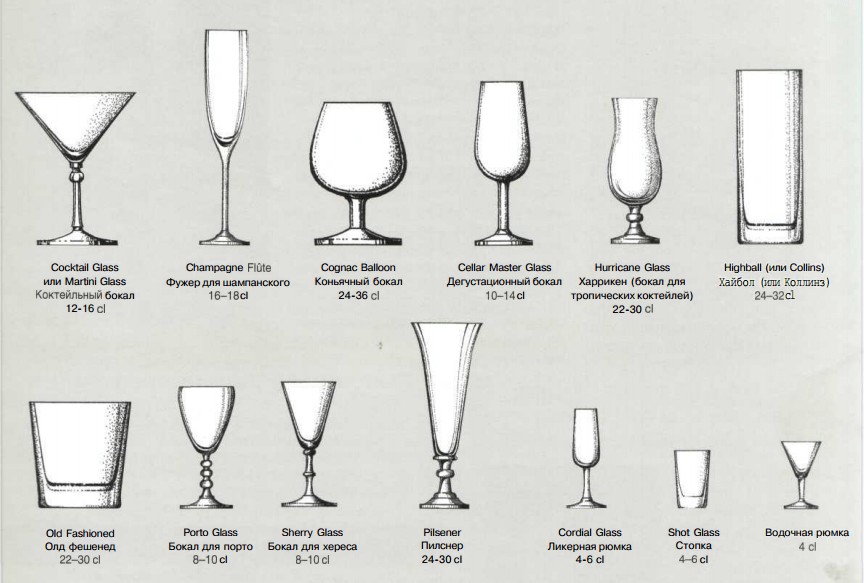
Glasses
The Classic Cocktail Glass
The classic cocktail glass is the very triangular glass under discussion here — a V-shaped bowl on a long stem. Its capacity typically runs 130–180 ml. It’s the universal choice for most classic cocktails.
Glasses with Curved Stems
There are martini-glass variations with unusual, curved, or decorative stems. Such glasses are often used in venues with a particular concept — speakeasy-style bars, for instance, which favor vintage glassware with crystal elements and carved decoration.
Curved stems can take various forms — spiral, wave-like, thickened, or bearing decorative elements. What matters is that such a stem still keeps the glass stable and fulfills its core function: thermal insulation.
The Nick & Nora Glass
This glass is an evolved version of the classic martini glass. It was created under the guidance of the well-known cocktail expert Dale DeGroff and first appeared in 1987 at the Rainbow Room in New York, where DeGroff’s company launched its cocktail program. That moment became the starting point for the classic cocktail renaissance that continues to this day.
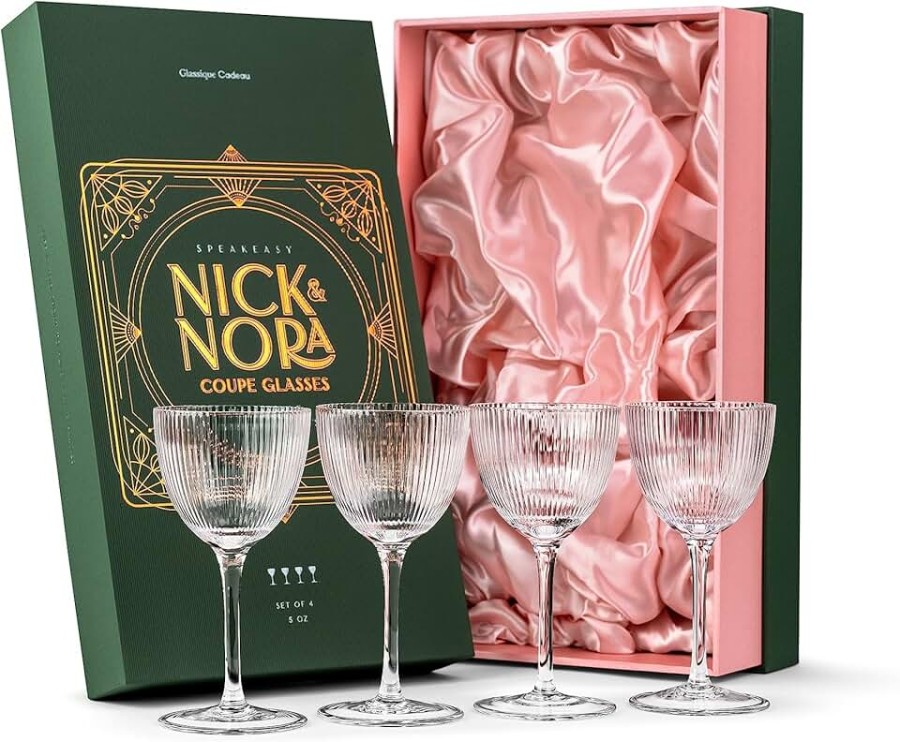
Nick & Nora glasses
DeGroff was unhappy with the bulky, awkward glassware of the 1980s and wanted something more refined, inspired by the style of Nick and Nora Charles — the charismatic detectives from Dashiell Hammett’s novel The Thin Man. He was also bothered by the fact that the classic cocktail glass’s overly wide bowl led guests to grip it by the bowl rather than the stem, warming the cocktail and dulling its original flavor.
The Nick & Nora glass has a more rounded, closed bowl shape, resembling a champagne coupe. Its capacity is usually smaller — around 120–150 ml. This shape better preserves aroma and temperature, and is more comfortable to use.
Coupe Glasses
Slightly rounded glasses, closely resembling champagne coupes, are another variation of cocktail glassware. They have a wide, shallow bowl and a long stem. Capacity typically runs 120–180 ml.
Such glasses are often used for champagne- or sparkling-wine-based cocktails, as well as for classic cocktails in venues aiming for a 1920s–30s vintage aesthetic.
Choosing Glassware for a Venue
Selection Criteria
When choosing martini glasses for a bar or restaurant, several important factors need to be weighed:
- Glass capacity — you need to decide on the portion sizes for the cocktails the venue will serve. Standard cocktails call for glasses of 130–150 ml, while larger signature mixes may need glasses up to 180–200 ml.
- A look that fits the venue’s concept — the glass design should match the overall interior style and positioning of the establishment.
- Glass manufacturer quality — it’s important to choose products from proven manufacturers, known for durability, chip resistance, and even wall thickness.
- Cost — a balance needs to be struck between quality and price, given the inevitable breakage that comes with regular use.
Matching the Concept
If a venue is styled as a speakeasy — an underground Prohibition-era bar — vintage glassware on a tall stem, preferably with crystal elements and carved decoration, is the right choice. This creates a 1920s–30s atmosphere and reinforces the historical styling.
If a venue leans toward minimalism or a contemporary style, the strict form of the classic glass beautifully underscores that restraint and lets the cocktail’s flavor shine without distracting decorative elements.
A venue with an elaborate kitchen and refined presentation would suit glasses with intricate stems and thin walls, extending the overall philosophy of sophistication and attention to detail.
Cultural Significance and Symbolism
A Symbol of an Era
The martini glass has become more than a utilitarian object — it’s a cultural symbol of an entire era. It’s associated with the Jazz Age, Prohibition, Hollywood glamour, and the world of spy fiction. This glass has traveled the path from functional vessel to style icon.
On neon bar and restaurant signs, the glass’s triangular silhouette became a universal symbol, instantly telling passersby they could enjoy cocktails inside. This image is so deeply lodged in the popular imagination that even a schematic triangle on a stem instantly evokes bar culture.
An Element of Luxury and Refinement
The martini glass has always been associated with a certain standard of living — refined, sophisticated, free of everyday ordinariness. A cocktail in such a glass isn’t just a drink; it’s a ritual, a moment of enjoyment set apart from routine.
Countless famous figures have, at one time or another, sipped a drink from this graceful glass. From the stars of Hollywood’s golden age to today’s celebrities, the martini glass remains a symbol of elegance and good taste.
Bar Culture and Professionalism
For a bartender, knowing the ins and outs of the martini cocktail glass, its rules of use, and its history is part of professional competence. Bar glassware is an integral part of any bar, and every bartender is expected not only to know its features and rules of use, but also the interesting facts and legends attached to it.
Knowing how to choose the right glass for a particular cocktail, serve it with all the proper finesse, and tell a guest about the glass’s history and features — that’s the mark of a true professional who treats their craft with respect and care.
Practical Aspects of Use
Preparing the Glass for Service
Properly preparing a glass for serving a cocktail is an important part of bartending craft. There are several techniques for ensuring optimal serving conditions:
- Chilling the glass — before serving a cold cocktail, the glass should be chilled. This can be done by placing it in the freezer for 10–15 minutes, or filling it with ice water while the cocktail is being prepared.
- Polishing — the glass must be spotlessly clean, free of streaks or fingerprints. Polishing is done with a clean, dry cloth right before serving.
- Checking for integrity — it’s essential to make sure the glass has no chips, cracks, or other defects that could spoil the drinking experience or even pose a risk to the guest.
Proper Pouring
The technique for pouring a cocktail into a martini glass has its own subtleties. The cocktail is strained from a shaker or mixing glass through a strainer, which holds back ice, fruit pieces, and other solids. It’s important to pour smoothly, controlling the flow so as not to spill the drink.
The ideal fill level is about 1–1.5 cm below the rim. This lets the guest bring the glass to their nose without fear of spilling, while also creating a visually appealing presentation.
Garnishing
Cocktails in a martini glass are often garnished in ways that add both visual appeal and complement the drink’s flavor profile:
- Olives, or an olive on a skewer — the classic garnish for a dry martini
- A lemon or lime twist — adds citrus aromatics
- A cocktail cherry — for sweeter drinks like the Manhattan
- Berries (cranberries, raspberries) — for fruit-based cocktails
- Edible flowers — for special signature creations
Care and Storage
Proper care for cocktail glasses extends their lifespan and preserves their original look:
- Wash glasses immediately after use, before drink residue can dry
- Use mild detergents free of abrasive particles
- Rinse thoroughly to leave no trace of detergent
- Dry upside down on a proper rack, or hang by the stem
- Store in a protected spot where glasses won’t touch each other
- Check periodically for chips and cracks
Modern Trends
A Return to the Classics
Recent decades have seen a renaissance in classic cocktail culture. Bartenders and mixologists are returning to the roots, studying old recipes and techniques. This movement, which began in the late 1980s with Dale DeGroff and his colleagues, continues today.
The classic martini glass is regaining popularity after a period of fascination with exotic shapes and oversized glasses in the 1980s and ’90s. Today’s bartenders favor more restrained sizes — 120–150 ml — that let a cocktail be finished while still at its ideal temperature.
Original Interpretations
Glassmakers today try to diversify their range as much as possible, offering original interpretations of the classic shape — glasses with unusual stems, colored glass, engraving, crystal facets, or modern minimalist forms.
Every bar can find something that fits its concept and drinks. This variety of forms and styles allows for a unique bar culture while still keeping a connection to classic tradition.
Environmental Considerations
The modern bar industry is paying increasing attention to sustainability, including in its choice of glassware. Preference goes to durable, quality glasses that will last for years, rather than cheap ones needing frequent replacement.
Some manufacturers offer glasses made from recycled glass, reducing the environmental footprint of production. Local manufacturing, which cuts down on transport costs and emissions, is another important consideration.
Conclusion
The martini glass, with its distinctive triangular shape, is far more than just a vessel for drinks. It’s a work of design, the product of an evolution in drinkware, a symbol of an entire cultural era, and a functional tool created to bring out the full flavor and aroma of a cocktail.
Its shape is the result of several factors: the long stem provides thermal insulation from the heat of the hand, the wide top creates an aromatic funnel that lets the full bouquet of a cocktail be appreciated, and the overall elegance of its form turns the act of drinking into a genuine aesthetic pleasure.
The glass’s history is closely intertwined with the history of cocktail culture itself — from the evolution of medieval goblets to its official unveiling at the 1925 Paris exhibition, from Prohibition-era legends to popularization through film and mass culture. Each stage of this history added new meanings to what might otherwise seem a simple object.
The martini glass’s core purpose is to help reveal the extraordinary flavor and aromatic combinations crafted specifically for us by the virtuosos of the bar industry. A well-chosen, well-used glass can turn an ordinary cocktail into an unforgettable experience, and its graceful form makes the whole process visually appealing and emotionally rich.
Today the martini glass remains one of the most important elements of bar culture, a symbol of sophistication and good taste. Its recognizable silhouette adorns bar signs the world over, and the glass itself continues to evolve, taking on new forms and interpretations while staying true to its classic purpose: making the enjoyment of cocktails as pleasant and memorable as possible.
Countless famous figures have, at one time or another, sipped a drink from this graceful glass. And with each passing year it wins new admirers, proving that truly good design, grounded in both function and beauty, can outlast the centuries and remain relevant no matter how fashion shifts.