Origins
«El Cóndor Pasa» (Spanish for «The Condor Passes») is one of the most famous melodies in the world, composed by Peruvian composer Daniel Alomía Robles in 1913. The piece is based on traditional Andean music and was originally part of a zarzuela (a musical play) of the same name.
Key Facts
- 1913 — composed by Daniel Alomía Robles
- First performed at the Mazzi Theatre in Lima
- 1933 — copyright registered in the U.S.
- Over 4,000 versions worldwide
Cultural Significance
- Peru’s unofficial second national anthem
- Part of Peru’s national cultural heritage
- A symbol of Andean culture
- 300 different sets of lyrics
The Simon & Garfunkel Version
The melody achieved worldwide fame thanks to the duo Simon & Garfunkel, who recorded it in 1970 under the title «El Cóndor Pasa (If I Could)» for the album «Bridge over Troubled Water.» Paul Simon first heard the melody performed by the group Los Incas at a Paris theater in 1965.
The Simon & Garfunkel version reached No. 18 on the Billboard Pop Singles chart and No. 6 on the Easy Listening chart. Critics praised the ballad’s «sensitivity and poignancy,» along with Simon’s skill in turning «a wonderful South American folk melody into a stunning commentary.»
The Andean Condor — a Majestic Bird
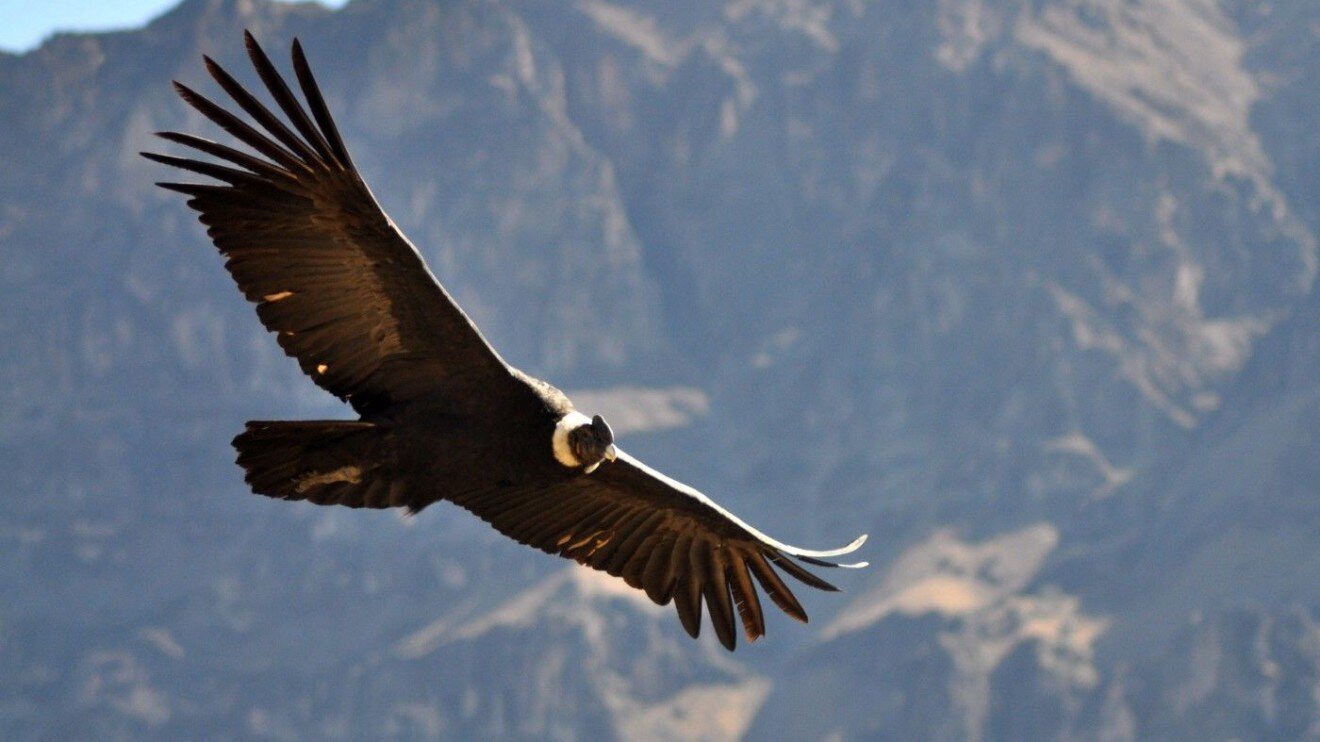
The Andean condor (Vultur gryphus) is one of the largest flying birds in the world and the sole member of the genus Vultur. This majestic bird lives in the Andes Mountains and the adjacent Pacific coastlines of western South America.
Physical Characteristics
- Wingspan up to 3.3 m
- Weight up to 15 kg
- Body length 100–130 cm
- Lifespan 70+ years
Records
The longest-lived bird: a condor named «Thaao» lived 79 years in captivity (1930–2010) — an absolute record among birds.
A master of soaring: can fly for hours with barely a wingbeat, riding thermal currents.
Appearance and Traits
An adult condor has black plumage with a white collar at the base of the neck and, especially in males, large white patches on the wings. The head and neck are nearly featherless and dark red in color, which can shift depending on the bird’s emotional state. Males have wattles on the neck and a large dark-red comb on the head.
Lifestyle and Behavior
Condors are scavengers, feeding mainly on the carcasses of large animals. They can cover more than 200 km a day searching for food. Thanks to their anatomical adaptations, condors are unmatched masters of soaring flight — capable of gliding for hours on rising currents of warm air.
Reproduction
- Monogamous — mate for life
- Sexual maturity at 5–6 years
- Lay one egg every 2 years
- Nest at altitudes up to 5,000 m
Diet
- Scavengers by nature
- Prefer large carcasses
- Feed on marine mammals near the coast
- Can go several days without eating
Symbolic Meaning
The Andean condor is a national symbol of Argentina, Bolivia, Chile, Colombia, Ecuador, and Peru. It plays an important role in the folklore and mythology of the Andean region, where it has long been associated with the sun god and considered the ruler of the upper world.
Conservation Status
The Andean condor is endangered. In 2020, its status was changed from «near threatened» to «vulnerable.» About 10,000 individuals remain in the wild. The main threats: habitat loss, secondary poisoning from animals shot by hunters, and persecution by humans.
In the Culture of Andean Peoples
In Andean mythology, the condor symbolizes strength, health, and a connection to the divine. Its bones and organs were believed to have healing properties. The image of the condor has appeared in Andean art since 2500 BCE and remains an inseparable part of the region’s indigenous religions.
The Connection Between the Song and the Bird
Choosing the condor as the central image of this famous melody was no accident. This majestic bird embodies the spirit of the Andes — freedom, grandeur, a connection to the sky. The condor can soar at tremendous heights on rising air currents, making it an ideal symbol of spiritual ascent and the transcendence of earthly limitations.
Symbolism in Music
- Freedom and independence
- The grandeur of nature
- Spiritual ascent
- Eternity and infinity
A Literary Image
- A metaphor for the soul’s flight
- A view from above
- Transcending limits
- Transcendence
The Science of Its Flight
Condors have unique adaptations for soaring flight. Studies have shown that 75% of all wing flaps happen during takeoff, while in flight a condor flaps its wings only 1% of the time. Charles Darwin, in «The Voyage of the Beagle,» wrote that he watched condors for half an hour without seeing a single wingbeat.
Adaptations for Flight
Anatomical
- • No prominent sternum keel
- • Long primary flight feathers
- • Broad wings with a large surface area
Behavioral
- • Riding thermal currents
- • Roosting on high ground
- • Gliding between thermals
Physiological
- • Efficient metabolism
- • Ability to fast for long periods
- • Thermoregulation
Modern Perception
In the 20th century, especially after Simon & Garfunkel popularized the song, the image of the condor became a universal symbol of freedom, transcending South American culture. The melody of «El Cóndor Pasa» has appeared in countless films, been used in advertising, and become a soundtrack for generations dreaming of freedom and rising above the everyday.
Influence on World Culture
The song had an enormous influence on the growth of worldwide interest in Latin American music. It became a bridge between traditional Andean culture and modern pop music, opening the Western world’s eyes to the richness of South America’s musical heritage.
Musical Legacy
- More than 4,000 versions of the melody
- 300 different sets of lyrics
- Performers from every continent
- Continuous airplay on radio stations
A Cultural Bridge
- A link between cultures
- Mutual understanding between peoples
- Educational value
- Emotional universality
Conclusion
«El Cóndor Pasa» and the image of the Andean condor represent a unique synthesis of musical art and natural symbolism. This melody, born in the Andes more than a century ago, continues to inspire people around the world, a reminder of the beauty of nature, the grandeur of freedom, and the universality of humanity’s longing for the sublime.