Historical background for the novel
What "expropriation" was, and where the slogan came from
In the early 20th century, Russian revolutionaries used the euphemism "expropriations" for armed robberies of state or private institutions, aimed at replenishing party coffers. The term came from the Marxist concept of "expropriating the expropriators" — seizing the means of production from capitalists for the benefit of working people.
The famous slogan "Loot the looters!" was first uttered in January 1918. Lenin used it in a speech on January 24, referring to a statement by the Don Cossack Shamov at the 3rd All-Russian Congress of Soviets on January 16 of that year. Shamov had declared: "We loot the looters." Lenin turned this phrase into a political slogan, explaining that it was the Russian translation of the Marxist term "expropriation of the expropriators."
In a speech at a session of the All-Russian Central Executive Committee (VTsIK) on April 29, 1918, Lenin declared: "In the slogan 'loot the looters,' I cannot find anything wrong, if history is allowed onto the stage. If we use the words 'expropriation of the expropriators,' then why should we not be able to do without the Latin words?"
The Bolsheviks justified their actions with Marxist surplus-value theory. Karl Marx wrote: "Centralization of the means of production and socialization of labor at last reach a point where they become incompatible with their capitalist integument. This integument is burst asunder. The knell of capitalist private property sounds. The expropriators are expropriated."
Revolution requires money: the party's financial problems
The RSDLP (Russian Social Democratic Labor Party) was organized in 1898, with the aim of preparing a Marxist proletarian revolution in the Russian Empire. As part of their revolutionary activity, Social Democrats and other revolutionary groups engaged in various combat operations, including expropriations.
In 1903, the RSDLP split into Bolsheviks and Mensheviks. These factions disagreed on many questions, including their attitude toward armed struggle. Lenin and his comrades favored building a tightly knit, professional party, whose main task was organizing a revolution and seizing power.
The 1905 revolution sharpened the party's financial problems. Voluntary contributions existed, but weren't enough even for legal work — holding congresses, publishing newspapers. And armed struggle, arms purchases, maintaining combat units and underground print shops, required entirely different sums.
Before the revolution, the Bolsheviks received support from benefactors, such as the manufacturer Savva Morozov, who donated significant sums to the Social Democrats. But during the revolutionary years, this wasn't enough. The simplest way to raise funds became outright robbery.
The Bolshevik Center and the organization of expropriations
After the Stockholm Congress of the RSDLP in the spring of 1906, at which the Mensheviks' moderate program prevailed, the Bolsheviks decided to act independently. A Bolshevik Center was secretly created, headed by three people:
- Vladimir Lenin — the ideological leader of the Bolsheviks
- Leonid Krasin — an engineer, the party's "treasurer," head of the Combat Technical Group
- Alexander Bogdanov — an RSDLP member since 1898, one of the leading theorists of Bolshevism
Bogdanov wrote of the Bolshevik Center: "The Bolsheviks, who established the Bolshevik Center at the London Congress, saw it as an organization that, on the one hand, expressed the basic ideas of the party's revolutionary wing, developing them in print, and, on the other, united the various Bolshevik groups scattered across Russia, and managed, under their control, the Bolsheviks' material resources."
One of the Bolshevik Center's main tasks became finding sources to replenish the party treasury. Lenin gave the go-ahead for expropriations, carried out in secret from the rest of the RSDLP.
The Combat Technical Group
The Combat Technical Group, under Leonid Krasin, organized the robberies. This organization appeared in St. Petersburg in early 1905. Its original goals were collecting weapons and forming worker detachments at industrial enterprises.
Krasin managed nearly all the Bolsheviks' combat detachments. In effect, the tactics of their political opponents, the Socialist Revolutionaries (SRs), who had long organized terrorist acts and robberies to fund their party treasury, were adopted wholesale.
Predecessors: the Narodnaya Volya movement
Expropriations were not a Bolshevik invention. The first major revolutionary robbery was carried out by the Narodnaya Volya movement in 1879. Fyodor Yurkovsky organized a bold raid on the Kherson provincial treasury.
The revolutionaries got into the building through a tunnel, and made off with nearly 160,000 rubles (about 55 million in modern terms). Most of the money, however, was found by police — only 10,000 rubles remained in the party treasury.
Under Alexander II, the Kherson incident was more the exception than the rule. The radical organizations of that time lacked an extensive network, and existed mainly on their members' enthusiasm.
The Bolsheviks' largest expropriations
Helsingfors (Helsinki), February 1906
The Combat Technical Group's first major "ex" (expropriation) took place in February 1906. The target was a branch of the State Bank in Helsingfors (Helsinki), the capital of the autonomous Grand Duchy of Finland.
The choice of location was deliberate. Finnish society stood on the brink of an explosion, over Nicholas II's Russification policy. In 1904, the Finnish patriot Eugen Schauman had shot and killed Governor-General Nikolai Bobrikov. The Bolsheviks found allies among radical Finnish Social Democrats.
The legal consequences mattered too — if arrested, revolutionaries would face a Finnish court, independent of the Russian Ministry of Justice.
The robbery was carried out by a group led by the Latvian Social Democrat Janis Luters. On February 13, 1906, eight robbers:
- Cut the telephone wires
- Entered the bank building
- Shot the guard
- Made off with 170,000 rubles
The street was blocked off by Finnish Red Guard forces. The criminals escaped successfully, but police quickly picked up their trail. The next day, five of the raiders were caught, with 22,500 rubles and 30,500 marks. Two more were caught on February 17, in Tammerfors (present-day Tampere).
One of them, Janis Chokke, shot his way out of the police station, killing two officers. Janis Luters managed to escape.
Despite the capture of most of the combat group, the expropriation was a success. The Bolshevik treasury gained a hundred thousand rubles. Those arrested received sentences of 10 to 15 years. Chokke was sentenced to life imprisonment. He died in prison in 1910, under unclear circumstances.
Moscow, March 1906: an alliance with the SRs
On March 20, 1906, a combat group of SR Maximalists (left-wing radicals who had split from the Socialist Revolutionaries) carried out a bold raid on the building of the Moscow Mutual Credit Society.
The raiders tied up the guards and forced the director to open the vault. The Maximalists made off with 875,000 rubles — an enormous sum.
Part of the loot went to Leonid Krasin. The Bolsheviks' Combat Technical Group supplied the SRs with weapons in return. The proceeds were invested in purchasing pistols and rifles abroad.
The Urals, August 1906
Alexander Bogdanov oversaw the combat groups' activity in the Urals. In August 1906, the Bolsheviks organized one of their most profitable robberies. Not far from Ufa, the brothers Mikhail, Erazm, and Ivan Kadomtsev made off with 200,000 rubles, after raiding artel workers who were transporting money under armed guard.
The Ural "Robin Hood" — Alexander Lbov
One of the most successful Ural expropriators was Alexander Lbov. Robbery wasn't his only occupation — it was more a matter of partisan warfare. Lbov didn't identify with any political force, and, according to his comrades, tried to avoid casualties among civilians.
A witness described the tactics of Lbov's band: "It was our rule, when robbing liquor shops, first to tell the female shop clerks to leave the premises, or else a bomb would be thrown. Only two women who failed to follow our order paid for it with their lives."
The sums from these robberies were small. They were split among the robbers, spent on buying weapons, distributed to the poor, and a small share was handed over to Ural branches of revolutionary parties, including Bolshevik organizations.
Lbov's band's most successful operation took place in July 1907. The partisans robbed a postal treasury aboard the steamship "Anna Stepanovna Lyubimova" on the Kama River, seizing 30,000 rubles. Six thousand were sent to the Bolsheviks with a request for weapons.
The request wasn't fulfilled. By that time the revolution was dying down, and the Bolsheviks had officially condemned expropriations. The Ural Bolshevik organizations even spoke out against Lbov's band: "It is necessary for the broadest possible strata to understand the complete unsuitability of these methods of struggle, and the harm they cause to developing the class consciousness of the proletariat, to the cause of revolution."
In early 1908, police arrested Alexander Lbov. After a brief investigation, he was hanged. In Soviet times, a cult formed around this partisan band. Arkady Gaidar, among others, wrote about Lbov and his comrades.
The 1907 Tiflis Robbery — the most notorious case
The Caucasus as a new center of expropriation
After the official condemnation of expropriations, the Bolsheviks continued working with combat groups. Activists left the party, and didn't publicize their ties to the revolutionaries. Even outright non-political elements — actual bandits — were courted for support.
The Caucasus became a new center of expropriation. Leonid Krasin's connections played a role here, having worked at Nobel's oil-extraction enterprises in Baku.
The 1905 revolution led to serious instability in the Caucasus. Tsarist authority did not always control the situation. For example, in the Ozurgeti district of Georgia, the "Guria peasant republic" was proclaimed in 1902, with Social Democrats playing a leading role. This self-governing body was crushed by government troops only after the 1905 revolution.
The chaos in the Caucasus provided an ideal backdrop for expropriations.
Kamo — the "master of disguise"
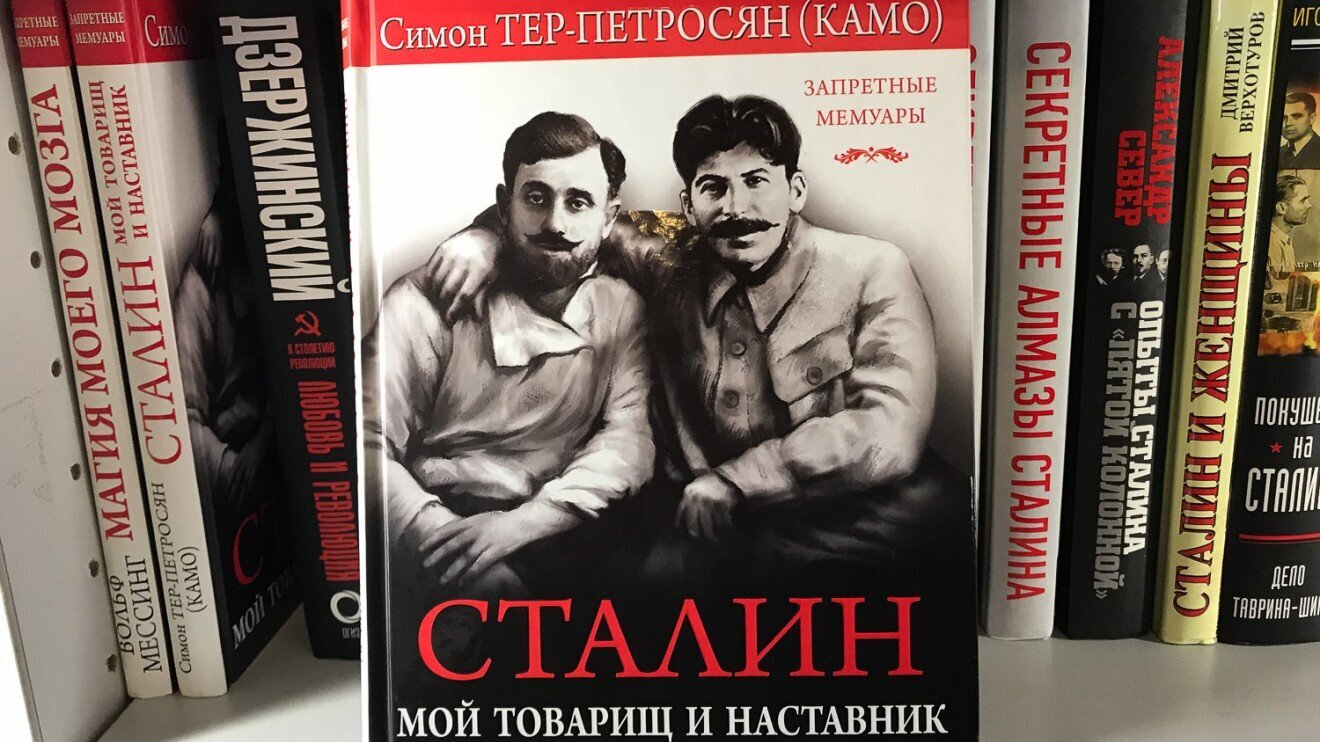
The leading role in the Caucasus robberies belonged to Simon Ter-Petrosian, known by the alias Kamo — a fellow countryman of Joseph Jughashvili (Stalin), and an RSDLP member since 1901.
Ter-Petrosian threw himself completely into underground work: delivering weapons, organizing prison breaks. According to contemporaries' recollections, Kamo had little grasp of ideology, but had an excellent understanding of how to raise money by force.
Ter-Petrosian was personally devoted to Lenin. Journalist Tatyana Vulikh recalled that he was ready to follow the Bolshevik leader "even against the whole party, despite their loyalty to it."
Nadezhda Krupskaya described Kamo this way: "This fighter of desperate courage and unbending willpower was, at the same time, a somewhat remarkably whole person, a bit naive, a tender comrade. He was passionately attached to Ilyich, Krasin, and Bogdanov. He visited us in Kuokkala. He befriended my mother, told her about his aunt, his sisters."
Stalin called Kamo a "master of disguise"; Lenin called him a "Caucasian bandit."
Kuokkala — the Bolshevik fighters' headquarters
In Kuokkala (present-day Repino, part of St. Petersburg's Kurortny District; in 1907, territory of the Grand Duchy of Finland), the Bolsheviks used proceeds from expropriations to set up a school-laboratory.
Here, explosives were made, combat groups trained, and dispatched into the Russian Empire. At the dacha "Vaza," rented by Gavriil Leiteizen, the entire Bolshevik leadership passed through at one point or another, including Lenin and Krupskaya.
Kamo's first operations
One of the first robberies by Kamo and his combat group, recruited from young mountaineers, took place in March 1906. The robbers attacked a carriage carrying money from a bank in Kutaisi, and made off with 15,000 rubles. Most of it went to the Bolsheviks.
Some researchers believe that Joseph Stalin, who had brought Kamo into the party, directly managed Ter-Petrosian's expropriations.
The operation of June 26, 1907
Ter-Petrosian pulled off his most notorious robbery after the RSDLP had already officially condemned expropriations.
In April 1907, senior Bolsheviks held a meeting in Berlin, where the organization of the robbery was discussed. Lenin, Krasin, Bogdanov, Stalin, and Maxim Litvinov took part. The group tasked Stalin and Kamo with organizing a bank robbery in Tiflis.
Stalin established contact with two informants: bank clerk Gigo Kasradze, and an old schoolmate, Voznesensky, who worked in the bank's postal service. Voznesensky reported that on June 26, 1907, a large shipment of money would be delivered to the bank by horse-drawn carriage.
Krasin helped make the bombs. A few weeks before the robbery, one exploded in Kamo's hands, badly damaging his eye and leaving a scar on his face. Kamo was bedridden, and had not fully recovered by the time of the robbery.
On June 26, 1907, 20 organizers met near Yerevan Square in Tiflis. Authorities had learned that a major operation was being planned, and beefed up police patrols, but this didn't help.
The operation's participants were dressed as peasants, and waited with revolvers and grenades. Kamo, dressed as a cavalry captain, drove onto the square in a horse-drawn phaeton.
Sofia Medvedeva-Ter-Petrosian (Kamo's wife) described the operation: "With a powerful swing of their arms, everyone threw their bombs. Two, then two more explosions. Two policemen and one Cossack lay on the pavement. The horses scattered the guards to the sides in terror. But the phaeton with the money didn't explode from the bomb, and the horses carried it off… This was the decisive moment, and only Bachua kept his head. He ran, cutting off the horses' path, and caught up with the phaeton at the far end of the square. Without hesitation, without a thought for himself, he threw a grenade under the horses' feet. And was thrown to the ground by the force of the blast."
The Georgian newspaper "Isari" reported: "No one could say whether the terrible roar was the result of cannon fire or bomb explosions… the sound caused panic everywhere… throughout the whole city, people ran. Carts and wagons galloped away."
The explosions were so powerful they knocked down several chimneys and shattered windows within a mile's radius. Stalin's wife, Ekaterina Svanidze, was standing on a balcony not far from the square with her family and small child. Hearing the explosions, they fled into the house in terror.
The fighters seized the money bags and threw them into Kamo's phaeton. With the money secured, Kamo quickly left the square. Encountering police carriages, he shouted: "The money is safe. Get to the square." The police obeyed, only realizing their mistake later.
All the raiders quickly dispersed; not one was caught.
The aftermath of the robbery
About fifty wounded lay on the square. Authorities announced three dead, but archival documents show around forty people were killed.
The State Bank did not report the exact amount lost. Estimates put it at approximately 341,000 rubles (about $3.4 million at 2008 exchange rates, or about $5 million at 2012 rates).
About 91,000 rubles were in small denominations, which couldn't be traced. The rest was in large 500-ruble notes, whose serial numbers were known to police.
Stalin's role
Stalin's exact actions on the day of the robbery are unknown and disputed. Various versions exist:
- Stalin took part in the attack, and was wounded by bomb fragments
- Stalin took an active part, and watched the operation from a distance
- Stalin "watched the merciless bloodshed from the courtyard of a mansion, smoking a cigarette"
- Stalin was at the railway station during the robbery, not on the square
Stalin's cousin recounted that he returned home the night of the robbery and told the family the operation had succeeded.
Leon Trotsky, analyzing numerous publications, concluded that Stalin directed the operations from a distance. Archival documents show that, from late 1904 or early 1905, Stalin was involved in drawing up expropriation plans, and oversaw the plans of the group that carried out the Tiflis robbery.
Global publicity
Newspapers around the world wrote about the robbery:
- London's "Daily Mirror": "Rain of Bombs: Revolutionaries Hurl Destruction among Large Crowds of People"
- "The Times": "Tiflis Bomb Outrage"
- Paris's "Le Temps": "Catastrophe!"
- "The New York Times": "Bomb Kills Many; $170,000 Captured"
Authorities mobilized army units, closed roads, and surrounded the square. A special team of detectives was brought in. But witness testimony was confused and contradictory. Authorities couldn't determine which group was responsible. Suspicion fell on Polish socialists, Armenians, anarchists, SRs, and even Russian state agencies.
The problem of the 500-ruble notes
Storage and transport
Kamo managed to bring almost the entire sum to Kuokkala. The funds were initially stored at the home of Stalin's friends in Tiflis, Mikha and Maro Bochoridze. The money was sewn into a mattress for ease of storage and transport.
The mattress was moved to another safe location, then placed on the director's couch at the Tiflis Meteorological Observatory (possibly because Stalin worked there). The director claimed he knew nothing about the stolen money.
Most of the stolen money ended up with Kamo. He transported it to Lenin in Finland. Kamo spent the rest of the summer at Lenin's dacha. In the fall, he went to Paris, then to Belgium to buy weapons and ammunition, and to Bulgaria for detonators.
Kamo's arrest in Berlin
In Berlin, Kamo delivered a letter from Lenin to the prominent Bolshevik physician Yakov Zhitomirsky, asking him to provide medical care to Kamo, who had not fully recovered from the bomb explosion.
Lenin didn't know that Zhitomirsky was a secret agent of the Russian government. He immediately reported this to the Okhrana (secret police), at whose request Kamo was arrested by the Berlin police.
At the time of his arrest, Kamo was found with a forged Austrian passport and a suitcase of detonators, which he had planned to use in another major robbery.
The impossibility of cashing large notes
A serious problem arose: most of the banknotes were in denominations of 500 rubles — the largest at the time. Such notes were always recorded specially, each with a unique serial number. After the robbery, information about them reached every bank in the Russian Empire.
Small notes were easy to exchange, but the serial numbers of the 500-ruble notes were known to the authorities, making it impossible to exchange them at Russian banks.
The plan for a simultaneous exchange across Europe
By the end of 1907, Lenin decided to exchange the remaining notes abroad. Krasin attempted to alter some of the banknotes' serial numbers.
Two hundred banknotes were smuggled abroad by Martyn Lyadov — sewn into his vest by Lenin's and Bogdanov's wives, at Lenin's apartment in Kuokkala.
The plan was for several people to exchange the stolen notes simultaneously, at a number of banks across Europe, in January 1908. This way, at least part of the money could be recovered even if some agents were caught.
But Zhitomirsky learned of the plan and reported it to the Okhrana, which contacted police departments across Europe, asking them to arrest anyone attempting to exchange the notes.
Mass arrests in January 1908
On January 18, 1908, large-scale detentions took place in several European capitals. Acting on tips from their Russian counterparts, police arrested six Bolsheviks, seizing more than thirty of the 500-ruble notes.
"The New York Times" reported a dramatic story: one woman, attempting to cash a note, tried to swallow it after police were called. But the arriving officers stopped her, grabbing her by the throat, seized the papers, and then arrested her accomplices at the train station.
On January 4, 1908, at the Gare du Nord in Paris, the Bolshevik Maxim Litvinov (future USSR People's Commissar for Foreign Affairs) and his mistress, Frida Yampolskaya, were detained. A search of Litvinov turned up twelve of the 500-ruble notes stolen in Tiflis.
France's Ministry of Justice expelled Litvinov from French territory, against the Russian government's request for extradition. Officially, it was stated that the Russian request had been submitted too late, but according to some accounts, the refusal was tied to political pressure from French socialists.
In Munich, Sarra Ravich, Tigran Baghdasaryan (real name Konstantin Zaryan), and Migran Khojmiryants (real name Armen Bekzadyan) were detained while trying to exchange money.
In January 1908, Jan Masters (Janis Strauyan) was detained in Stockholm. He was initially convicted for complicity in the robbery, but a Swedish appeals court sentenced him to six months in prison for theft, since it couldn't be proven that Masters knew the notes' origin.
Nadezhda Krupskaya's recollections
Nadezhda Krupskaya mentioned these events in her memoirs: "The money from the Tiflis expropriation was handed over to the Bolshevik faction. But it couldn't be used. It was in 500-ruble notes, which had to be exchanged. This couldn't be done in Russia, because the banks always had lists of the serial numbers of the 500-ruble notes taken in the expropriation. Now, with reaction running rampant, it was necessary to organize prison escapes, where the tsarist government was tormenting revolutionaries; it was necessary, to keep the movement from dying out, to set up underground print shops, and so on. Money was desperately needed."
The fate of the remaining notes
Conflicting accounts exist of the fate of the remaining money:
- According to one researcher, Lenin continued trying to exchange the notes, and managed to exchange some of them for 10,000 rubles, through an unknown woman in Moscow
- According to other accounts, Lenin gave up trying to exchange the notes after the arrests, but Bogdanov made an (unsuccessful) attempt to exchange banknotes in North America
- Krasin managed to falsify some serial numbers and exchange a few of the notes
One of Krasin's comrades, Alexander Ignatyev, recalled that the Bolsheviks' "treasurer" came up with a solution: an artist would alter the serial numbers on the banknotes, after which he would exchange them at various institutions. "In a bowler hat, hair parted, in gloves, he went around exchanging them at various institutions. The idea worked, and he managed to exchange all of them. Only two 500-ruble notes remained, buried in Finland, because they'd been poorly altered."
According to the official account, in January 1910, at a joint plenum of the Central Committee, the remaining 500-ruble notes were burned. That is how the era of expropriations symbolically came to an end.
Kamo: feigning madness and his prison escape
Krasin's advice
After his arrest in Berlin, while awaiting trial, Kamo received a note from Krasin, delivered through his lawyer, Oskar Cohn, telling him he should feign insanity.
An unbelievable performance
To demonstrate his insanity, Kamo:
- Refused food
- Tore his own clothes
- Pulled out his own hair
- Attempted to hang himself
- Cut his own veins
- Ate his own excrement
To confirm he wasn't faking, German doctors stuck pins under his fingernails, beat his back with a long rod, and burned him with hot iron. But he never broke character.
After all these tests, the chief physician of the Berlin psychiatric hospital wrote, in June 1909: "…there is no reason to believe that [Kamo] was simulating insanity. He is undoubtedly mentally ill, unfit to stand trial or serve a sentence. It is highly doubtful that he will ever fully recover."
Extradition to Russia
In 1909, Kamo was extradited to a Russian prison, where he continued feigning insanity. In April 1910, he was put on trial for his role in the Tiflis robbery, and ignored the proceedings throughout.
The trial was suspended, and a repeat medical evaluation concluded he was sane. The court found he had been in his right mind when he committed the robbery, but was currently mentally ill and should be treated.
His prison escape
In August 1911, after feigning insanity for more than three years, Kamo escaped from the psychiatric ward of the Tiflis prison, sawing through the bars on his window and climbing down a homemade rope.
After his escape, Kamo met with Lenin in Paris, and was upset to learn of the rift between Lenin, Bogdanov, and Krasin. He told Lenin about his detention and his feigned madness.
His new arrest and four death sentences
Leaving Paris, Kamo met with Krasin and planned another robbery. But before it could take place, Kamo was seized and tried in Tiflis in 1913, on a combined set of charges, including the Tiflis expropriation.
This time, Kamo didn't feign insanity, but pretended he had forgotten everything that had happened to him. The trial was brief, and Kamo was handed four death sentences.
Kamo, condemned to death, got lucky: in 1913, in honor of the tercentenary of the House of Romanov, his death sentence was commuted to life imprisonment. Kamo was freed after the February Revolution, in 1917.
The 5th RSDLP Congress and the condemnation of expropriations
After the suppression of the 1905 revolution, the RSDLP held its 5th Congress in London, in May-June 1907, to try to settle the disagreements between Bolsheviks and Mensheviks.
One of the main issues was combat activity, particularly expropriations. The most radical group of Bolsheviks, led by Lenin, favored continuing the robberies; the Mensheviks favored a peaceful, gradual approach to revolution.
The 5th Congress adopted a resolution condemning participation in combat operations, including expropriations, and calling for the dissolution of all combat groups. The resolution passed with 65 percent of participants in favor and 6 percent against (the rest abstained). All the Mensheviks and most of the Bolsheviks voted for it.
Despite the ban, during the 5th Congress the Bolsheviks secretly elected the Bolshevik Center, which planned a series of expropriations in various Russian cities. The Tiflis robbery took place just a few weeks after the congress ended.
A grand scandal and a split
The Bolsheviks exposed
Besides Kamo, none of the robbery's organizers were criminally prosecuted, and at first it was unclear who bore responsibility. But after the arrests of Kamo, Litvinov, and other people involved, Bolshevik participation became obvious.
This provoked outrage among the Mensheviks, who realized that the Bolshevik Center had been operating independently of the Central Committee, and had undertaken actions explicitly banned by the party congress.
The Mensheviks' reaction
The Menshevik leader Plekhanov spoke out in favor of splitting from the Bolsheviks. Plekhanov's colleague Martov said the Bolshevik Center was something between a secret factional Central Committee and a criminal gang.
The Tiflis party committee expelled Stalin and several participants in the robbery from its ranks. A party investigation against Lenin was thwarted by the Bolsheviks.
European Social Democrats
The robbery damaged the Bolshevik Center's relations with European Social Democratic groups. Russian Social Democracy's authority was seriously undermined.
Consequences in Georgia
The raid had an extremely negative resonance in Georgia, and left the Bolsheviks in Tiflis without effective leadership. After Ekaterina Svanidze's death in November 1907, Stalin rarely returned to Tiflis.
Other leading Bolsheviks in Georgia took almost no further part in party work after 1907. Bolshevik popularity in Tiflis continued to fall, and by 1911 the city's organization numbered no more than 100 members.
The split within the "troika"
Lenin's desire to distance himself from the robbery may have been one of the causes of his split with Bogdanov and Krasin. Stalin, too, distanced himself from Kamo's band, and kept quiet about his own role in the robbery.
After the revolution, the "troika" fell out. Lenin and Bogdanov became embroiled in ideological disputes, in which Krasin sided with Bogdanov. In June 1909, Bogdanov was removed from the Bolshevik Center.
In 1910, the Bolshevik Center was fully dissolved. The Bolsheviks temporarily reunited with the Mensheviks — a move for which Bogdanov criticized Lenin.
Bogdanov recalled: "At the time, luckily for me, I didn't understand this (special — for sole leadership) meaning of the struggle, otherwise I wouldn't have yielded at the first pretext, relying on truth and the future."
The united RSDLP didn't last long — already by 1911, Lenin's supporters had effectively split the party.
The later fates of the participants
After the 1917 Revolution
Many Bolsheviks who took part in the robberies gained political power in the new USSR:
- Vladimir Lenin became the USSR's first premier — until his death in 1924
- Joseph Stalin held that post until his death in 1953
- Maxim Litvinov became a diplomat, People's Commissar for Foreign Affairs (1930–1939)
- Leonid Krasin, who left politics after splitting with Lenin in 1909, rejoined the Bolsheviks after the 1917 revolution, and served as Soviet trade representative in London and as People's Commissar for Foreign Trade until his death in 1926
Kamo's death
After his release from prison, Kamo worked, in Soviet times, in customs, since, by some accounts, he was too unstable for work in security agencies.
He died in 1922 — struck by a truck while riding a bicycle. Though there is no proof of deliberate murder, some versions suggest Stalin ordered him killed as an inconvenient witness.
Bogdanov's fate
Bogdanov was expelled from the party in 1909, ostensibly over philosophical disagreements. After the Bolshevik revolution, he became a leading ideologist of Proletkult. He died in Moscow in 1928.
Conclusion: from romanticism to system
The Bolshevik expropriations of 1905–1910 were a vivid and contradictory episode in the revolutionary movement. It was an era of romanticism and desperation, when revolutionaries were ready for anything in the name of their ideals.
Combat groups could bring hundreds of thousands of rubles into the faction's treasury, but the price was high: dozens dead, a party split, undermined authority among European socialists, arrested comrades.
The 1907 Tiflis robbery was the most notorious and scandalous expropriation of all. It brought worldwide publicity, mass arrests across Europe, and nearly destroyed the Bolshevik faction.
The problem with the 500-ruble notes exposed the vulnerability of guerrilla financing methods. Of the 341,000 rubles, the Bolsheviks managed to realize only a small part — the rest had to be burned.
In January 1910, at a joint plenum of the Central Committee, the remaining notes were burned. That is how the era of expropriations symbolically came to an end.
Expropriations would soon return to history. After October 1917, the forcible seizure of assets would once again become part of the country's everyday life, but in a more systematic and centralized form — under the slogan "Loot the looters!," which would turn from a euphemism into the official policy of the new state.