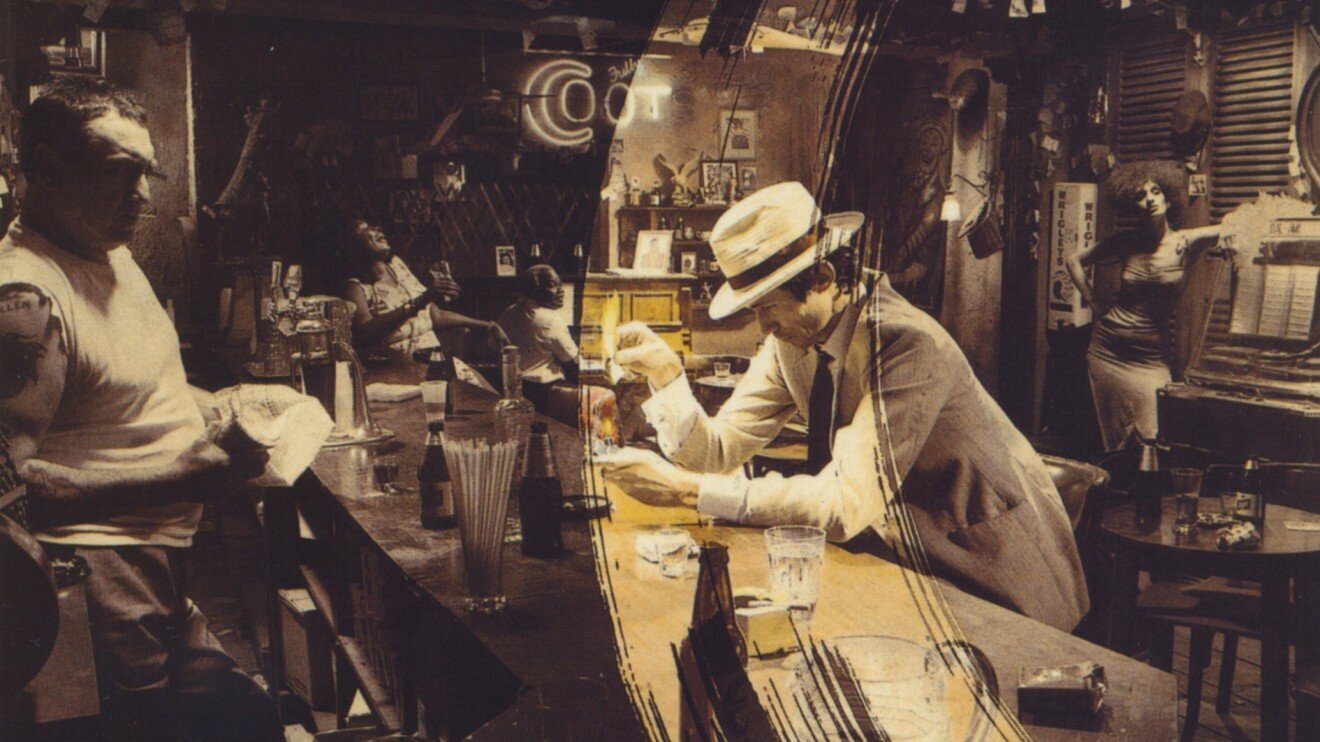
The word "shalman" is one of the most colorful and multivalent terms in Russian slang, its etymology and use reflecting a complex slice of Russian social history. This term, of Turkic origin, has for centuries denoted various types of marginal establishments, and its meaning has shifted depending on era, region, and social context.
Etymology and original meaning
According to etymological dictionaries, the word "shalman" is of Turkic origin, and was first recorded in Russian meaning a low-grade drinking establishment. The term is pejorative — that is, it carries a negative connotation from the outset, unlike the more neutral word "kabak" (tavern) or the official "drinking establishment."
Dictionaries of Russian argot record the following main meanings of the term:
- A den, an establishment with a bad reputation
- A beer hall, a beer room; any place where people typically drink alcohol (for example, a snack bar, a dumpling shop)
- A large crowd of people; noise, uproar, chaos
It's worth noting that the term's duality is already apparent in its dictionary definitions: on the one hand, a specific place (a drinking establishment); on the other, an abstract concept (disorder, chaos).
Shalman as a drinking establishment
Connection to the kabak
The term "shalman," in the sense of a drinking establishment, is closely tied to the history of the Russian kabak. The kabak — a genuinely Russian institution — appeared in the 16th century under Ivan IV. Originally, kabaks were a royal monopoly, intended for the oprichniki, but they later spread across Russia, becoming the main type of drinking establishment for ordinary people.
Kabaks had the following characteristic features:
- A state or franchised (откуп) ownership system
- Sale of hard alcoholic beverages (vodka, wine)
- An orientation toward the lower classes (peasants and townspeople)
- Little or no food
- Often located in basements or semi-basements
Over time, the word "kabak" acquired such a negative connotation that the authorities repeatedly tried to replace it: in 1746 with "drinking establishment," and under Catherine II with "drinking house." In everyday speech, however, the word persisted, and synonyms were used for especially low-grade establishments, among which "shalman" held a special place.
Distinctive features of the shalman
If the kabak was an official, if unprestigious, establishment, the shalman represented its degraded variant, or an illegal drinking spot. The shalman differed from an ordinary kabak in the following respects:
- Lower social status. Where a kabak might be visited by artisans, small traders, and even educated commoners, the shalman was a place for society's most marginal strata.
- Extremely poor conditions. Filth, cramped quarters, a lack of even basic amenities, and a foul smell were all more characteristic of the shalman than of an ordinary kabak.
- A criminal atmosphere. The shalman was often a gathering place for thieves, vagrants, fugitives, and other criminal elements.
- Illegality or semi-legality. Many shalmans operated without official permission, or outside regulation.
- Cheapness and low-quality drinks. Shalmans often sold diluted vodka, moonshine, or industrial alcohol.
In 19th- and early-20th-century Russian literature, the shalman is mentioned as a place where the fallen and destitute end up. It is not simply a place to drink, but a symbol of the social bottom.
Shalman as a brothel
A secondary meaning of the term
Alongside its primary meaning (a drinking establishment), the term "shalman" acquired another meaning in argot — a den, a brothel, a place providing sexual services. This secondary meaning is recorded in dictionaries as "a den, an establishment with a bad reputation."
This duality of meaning is not accidental, and is explained by several factors:
- A combination of functions. Many low-grade drinking establishments did in fact provide sexual services as well. Prostitutes worked out of kabaks and shalmans, serving intoxicated patrons.
- A shared marginality. Both drinking dens and brothels existed on the fringes of public morality, served the same clientele, and were often located in the same parts of town.
- A criminal milieu. Both types of establishment were tied to the criminal underworld: pimps, thieves, and bandits were regulars at both kinds of place.
- A contemptuous connotation. The word "shalman" is so pejorative that it could be applied to any place that provoked contempt or disgust in the speaker.
Historical context
Before the 1917 revolution, prostitution in Russia was legal, but strictly regulated. There were official "houses of tolerance" (brothels), which operated under police supervision and medical control. Alongside them, however, there existed many illegal dens, which people called shalmans.
After the revolution, prostitution was outlawed, and official brothels closed, but illegal prostitution continued to exist. In Soviet times, the word "shalman" in the sense of a brothel was used mostly in criminal argot, and virtually disappeared from active use.
The dive bar as a modern Western equivalent
What a dive bar is
To understand what the character Zhorik meant when he called the art-café "Cher Ami" a shalman, it helps to turn to the Western concept of the "dive bar," which is the closest English-language equivalent of the Russian "shalman" in its drinking-establishment sense.
The term "dive bar" first appeared in the American press in the 1880s, describing disreputable drinking establishments, often located in basements, where patrons "dived below." A classic dive bar has the following characteristics:
- A small, unpretentious, eclectic, old-fashioned establishment
- Cheap drinks
- Dim lighting
- A worn or dated interior
- Neon beer signs
- Canned beer for sale
- Cash-only service
- A local regular clientele
As the writer Todd Deaton put it: "Dive bars are like pornography: hard to define, but you know it when you see it."
Deaton's ideal dive bar
In 2004, Todd Deaton gave a classic description of the ideal dive bar:
"For me, the perfect dive bar is run by a big guy named Frank, where the smell of yesterday's beer still hangs in the air, and your search for clean bathrooms (or toilet paper) will forever go unanswered. A bottle of Bud costs two bucks, a shot of Jack is three dollars, and the Pabst Blue Ribbon comes in a can. The sign outside says 'Steaks, Dinners, Cocktails' — but no food has been served there since President Roosevelt. The dominant decor elements are red vinyl, Formica-wood, and cinder block."
A modern reappraisal
Interestingly, while the term "dive bar" was originally pejorative, in recent decades it has become a badge of honor among patrons seeking authenticity in such places. Dive-bar enthusiasts describe establishments as "very divey" or "not very divey," and compile rating scales of "diveyness."
Steve Vensen, founder of the California-based DBC (Dive Bar Connoisseurs), says: "Every dive bar is like a snowflake: diverse and unique... you always get the local subculture, and every time is an adventure."
The context of the 1990s in Russia
"Shalman" in the era of perestroika and post-Soviet reform
In the context of the novel, set in Russia in 1993, the word "shalman" takes on a special meaning. The early 1990s was a time of rapid social change, when old institutions had collapsed and new ones had not yet formed.
During this period, many new establishments appeared in Russia:
- Cooperative cafés and restaurants
- "Art-cafés" with pretensions to a Western style
- Casinos and gambling houses
- Nightclubs
- "Massage parlors" (often a cover for brothels)
Many of these establishments had grand foreign names (like "Cher Ami" — French for "Dear friend"), but were essentially the same old Soviet dives or dens with a minimal cosmetic makeover. Hence Zhorik's irony: the sign is pretentious ("art-café Cher Ami"), but in essence it's just an ordinary shalman.
Why Zhorik called the establishment a shalman
When Zhorik calls the art-café "Cher Ami" a shalman, he means precisely the Russian-Soviet equivalent of a dive bar — an inexpensive, unpretentious drinking establishment for "one's own kind," with no pretensions to high style. His description confirms this:
- "The crowd at the shalman is simple folk" — ordinary patrons, not the elite
- "Aspiring actors and actresses, editors, lighting technicians, and other characters from the film business" — bohemians, but not the top tier, rather the workhorses of the industry
- "With salaries on the pay scale" — not rich people, not "New Russians," but people with a fixed income
It matters that Zhorik "didn't notice the French chic" of the name. This means that for him, the pretentious sign "Cher Ami" was just a surface facade, while the essence of the place remained the same: a spot where simple working people of the arts drink. This is a classic 1993-model dive bar: cheap, no polish, for its own kind.
Cultural connotations of the word "shalman"
In literature
The word "shalman" appears in Russian literature in works depicting the social underworld or criminal milieu:
- In Kuprin's "The Pit," dens and shalmans are mentioned
- In thieves' songs and criminal folklore
- In works by Soviet writers depicting pre-revolutionary life
In modern language
In modern Russian, the word "shalman" is used rarely, and is perceived as archaic or as slang. It survives, however, in the speech of:
- Older generations, who remember Soviet times
- Criminal argot
- Ironic usage, to characterize unprepossessing establishments
- Historical novels and films set in the past
In the context of a novel set in 1993, the character Zhorik's use of the word "shalman" is entirely fitting: it marks him as a person familiar with folk culture, perhaps from a modest background, able to see the substance behind the sign.
The expression "raise a shalman"
The expression "raise a shalman" (or "shalman podnyat'"), recorded in dictionaries of argot, deserves special attention. It means "to make a racket, an uproar, chaos, a scandal." This expression is tied to the third meaning of the word "shalman" — a large crowd of people, disorder.
The expression comes from observations of the atmosphere in drinking dens, where fights, scandals, and drunken brawls regularly broke out. "To raise a shalman" means to create the same kind of chaos as in a typical shalman.
In modern speech, this expression is almost never used, having given way to the more common "make a scene," "raise a ruckus," "kick up a fuss."
Conclusion
The word "shalman" is a vivid example of a multivalent slang term that reflects a complex social reality. Its main meanings — a low-grade drinking establishment and a den (including a brothel) — are closely linked and grow out of a shared marginal milieu.
In the context of a novel set in 1993, the use of the word "shalman" to refer to an art-café with a pretentious French name performs an important artistic function: it reveals the gap between the outer European veneer of "new Russia" and its unchanged Russian-Soviet essence. By calling "Cher Ami" a shalman, Zhorik demonstrates his ability to see past a pretty sign to the reality — a plain drinking establishment for the not-so-well-off people of the arts, a modern Russian equivalent of the American dive bar.
This duality — the pretension to Western chic and the underlying "shalman-ness" — became a symbol of an entire era in the history of post-Soviet Russia, when the country tried to quickly adopt Western forms without the economic base or cultural tradition to support them. In this context, the word "shalman" sounds not merely as a contemptuous characterization of an establishment, but as an accurate sociological marker of the time.