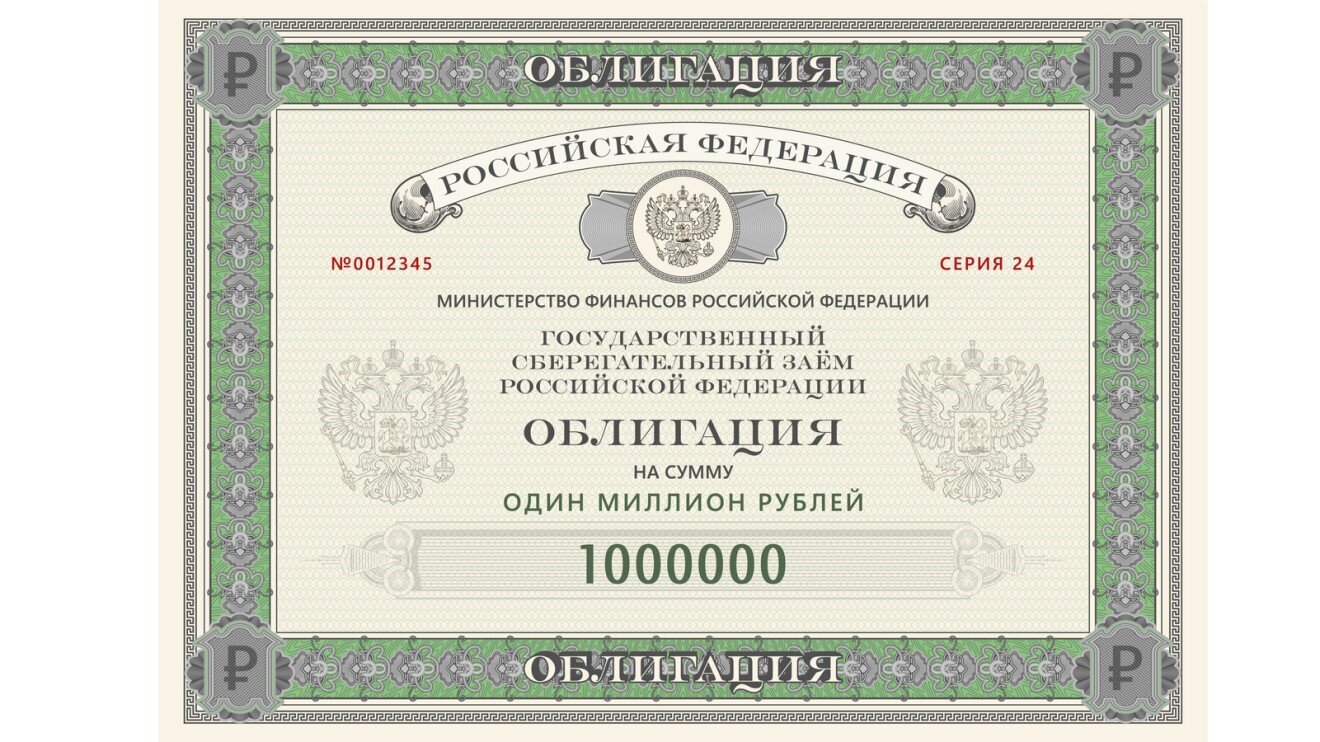
Government Short-Term Bonds (GKOs) were Russian Federation government securities issued by the Russian Finance Ministry from 1993 to 1998. They were registered discount bonds in book-entry form, serviced by the Central Bank of Russia.
How GKOs Worked
GKOs were issued as short-term, zero-coupon bonds with maturities ranging from a few months to a year. Return on GKOs came from the gap between the purchase price and face value at redemption — an investor bought a bond below face value, and the state paid full face value at maturity.
The first GKO issue took place on May 18, 1993. Of three-month bonds worth a combined 1 billion rubles, 885.4 million rubles’ worth were sold. GKO placement and trading ran through the trading system of the Moscow Interbank Currency Exchange (MICEX).
Bond Face Value by Period
- May 1993 – September 1994: 100,000 rubles
- October 1994 – December 1997: 1 million rubles
- From January 1998: 1,000 denominated rubles
The Growth of the GKO Market
At first, demand for GKOs was limited due to high inflation and the market being closed to foreign investors. But by the mid-1990s, the GKO market began growing rapidly:
- 1994: revenue from GKO sales reached 12.8 trillion rubles
- 1997: revenue reached 32 trillion rubles, of which 44.2% went toward covering the budget deficit
- As of January 1, 1998: the total volume of GKOs in circulation reached 272.6 trillion rubles
By 1998, the GKO market had become the primary source of financing for Russia’s budget deficit. The government, through subsidiaries of the Central Bank, generated additional demand for GKOs using funds raised from that same market.
High Yields and Their Consequences
A key feature of GKOs was their extraordinarily high yield. While comparable ordinary securities typically paid 4–5% annually, GKO yields reached 60% or more. Right before the 1998 crisis, GKO yields hit 140% annually.
Such high returns had serious economic consequences:
«Players in the GKO market made such enormous profits that it made no sense to bother with actual production.»
Companies and banks redirected funds en masse from the real economy into GKO speculation. Up to 70% of Western credit went into GKO bond transactions rather than the real economy. The funds raised were entirely unsuited to financing long-term development — industry, agriculture, high-tech development.
The Ponzi-Scheme Mechanism
The GKO economic model rested on a Ponzi-scheme mechanism. By December 1997, it became clear that revenue from placing new GKOs wasn’t enough to cover payments on old bonds. Instead of taking emergency steps to shore up the market, the government lifted restrictions on foreign investors.
As a result, a third of all the bonds ended up in foreign hands. Bonds sold at 50–60% of face value, and just a few months later the state would pay the full amount to the holder. As of January 1, 1998, all restrictions on capital outflow were lifted.
Signs of a Financial Pyramid
- Payments on old bonds funded by proceeds from placing new ones
- Extraordinarily high yields, unsupported by real assets
- A constant need to attract new investors to keep the system running
- No connection to the real economy
Key Figures in the GKO Market
The creation and operation of GKOs is associated with names like:
- Andrei Kozlov — headed the Central Bank of Russia’s securities department in 1992
- Bella Zlatkis — headed the Finance Ministry’s Department of Securities and the Stock Market from 1991 to 1998
An investigation by the Russian Prosecutor General’s Office found that speculation in the GKO market enriched roughly 780 government officials with no legal right to engage in such activity.
The 1998 Crisis and Default
On August 17, 1998, a technical default on GKOs was declared. Instead of the expected inflow of hard currency, there was a massive outflow — all the money was pulled out of the country, the national currency collapsed, and the GKO market crashed.
After the 1998 economic crisis, investments in GKOs lost two-thirds of their dollar value. The state froze all payments on its treasury obligations until February 1999.
The Role of the IMF and International Loans
One cause of the default was the misuse of an International Monetary Fund loan meant to support the ruble’s exchange rate. By various estimates, the first tranche of the loan, worth $4.8 billion, was used inefficiently or even embezzled.
The director of the Institute for Economic Analysis noted that the loan, totaling $9.8 billion, was used inefficiently: «The Central Bank sold $9.4 billion worth of foreign currency, of which only $2.5 billion went through currency exchanges. The lion’s share of the currency — about $6.9 billion — was sold directly to banks, bypassing the exchange market entirely.»
The Market’s Technical Organization
In July 1992, following a competition among Russian exchanges, the Bank of Russia tasked the Moscow Interbank Currency Exchange (MICEX) with building and maintaining the technological backbone of the GKO market — the trading, settlement, and depository systems.
An issue was considered successful if at least 20% of the planned GKO volume was sold during placement. Unsold GKOs could be offered again later. Early buyback on the secondary market was also possible.
Starting April 1, 1998, the National Depository Center handled GKO depository functions.
Impact on the Russian Economy
The GKO system had a devastating impact on the development of the Russian economy:
Negative Consequences
- Capital flight from the real economy
- Disincentivized production
- Growth of speculative transactions
- Corruption among government officials
- Financial instability
Short-Term Effects
- Financing the budget deficit
- Attracting foreign currency
- Development of securities-market infrastructure
- High income for speculators
Historical Assessment
By experts’ assessment, GKOs became «the largest financial scam of the entire post-Soviet era.» The strategic error was betting on short-term, high-yield bonds when comparable securities normally yielded 4–5% annually.
Conclusion
Government short-term bonds became a striking example of how financial instruments meant to solve a budget-deficit problem can lead to systemic crisis. The GKOs’ high yield created powerful incentives to move capital out of the real economy into speculative operations, ultimately undermining the foundations of the country’s economic development.
The 1998 GKO crisis became a turning point in Russia’s modern economic history, demonstrating the danger of excessive reliance on short-term speculative instruments to finance the state budget.