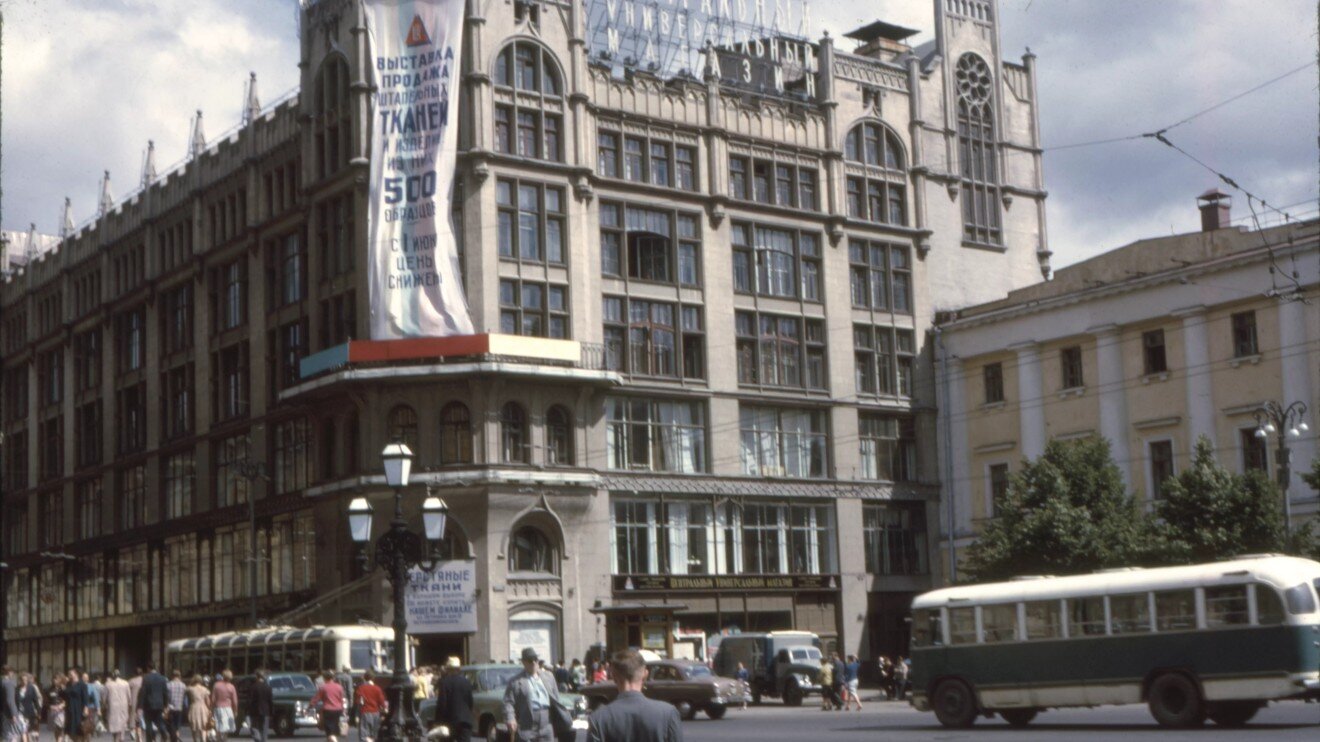
During the turbulent 1990s, Moscow’s famous department stores GUM, TsUM, and Passazh became symbols of the new economic reality, where spontaneous market trading thrived under the signs of former Soviet retail giants.
GUM: A Showcase for the New Capitalism
- The upper floors were taken over by the first foreign boutiques (Christian Dior, Burberry)
- Its galleries turned into rows of stalls run by individual traders
- Merchandise was taken on consignment from wholesalers at the Cherkizovsky market
- Particularly popular departments included:
- Italian leather and fur
- Turkish knitwear
- Polish cosmetics
TsUM: A Crossroads of Fashion and Crime
- Became a trading ground for the first «New Russians»
- The 3rd and 4th floors housed «commercial departments» rented out by the hour
- Main suppliers of merchandise:
- Shuttle traders bringing goods from the UAE and Turkey
- Criminal groups offloading contraband
- Former employees of Vneshposyltorg
- Notable in the assortment:
- Expensive leather jackets
- Italian suits
- High-end perfume
Passazh: A Kingdom of «Underground» Designers
- Became a center of Moscow’s alternative fashion scene
- Small-scale entrepreneurs rented 2-3 square meters at a time
- Merchandise was sourced:
- From underground ateliers
- From wholesale clothing depots in Orekhovo
- From resellers at the Cherkizovsky market
- Popular categories:
- Handmade leather goods
- Reworked imported clothing
- «Branded» counterfeits
The Economics of the Trade
A typical arrangement worked like this:
- Traders took goods on consignment for 30-50% of their value
- The consignment period ran 1-2 weeks
- Major suppliers had their own «watchers» stationed in the stores
- Many tenants paid double rent — the official rate plus a payment to their «protection»
Fun fact: it was in these very department stores that the practice of «fitting room kickbacks» first appeared, where sales staff took a percentage of every item sold from their assigned fitting room.