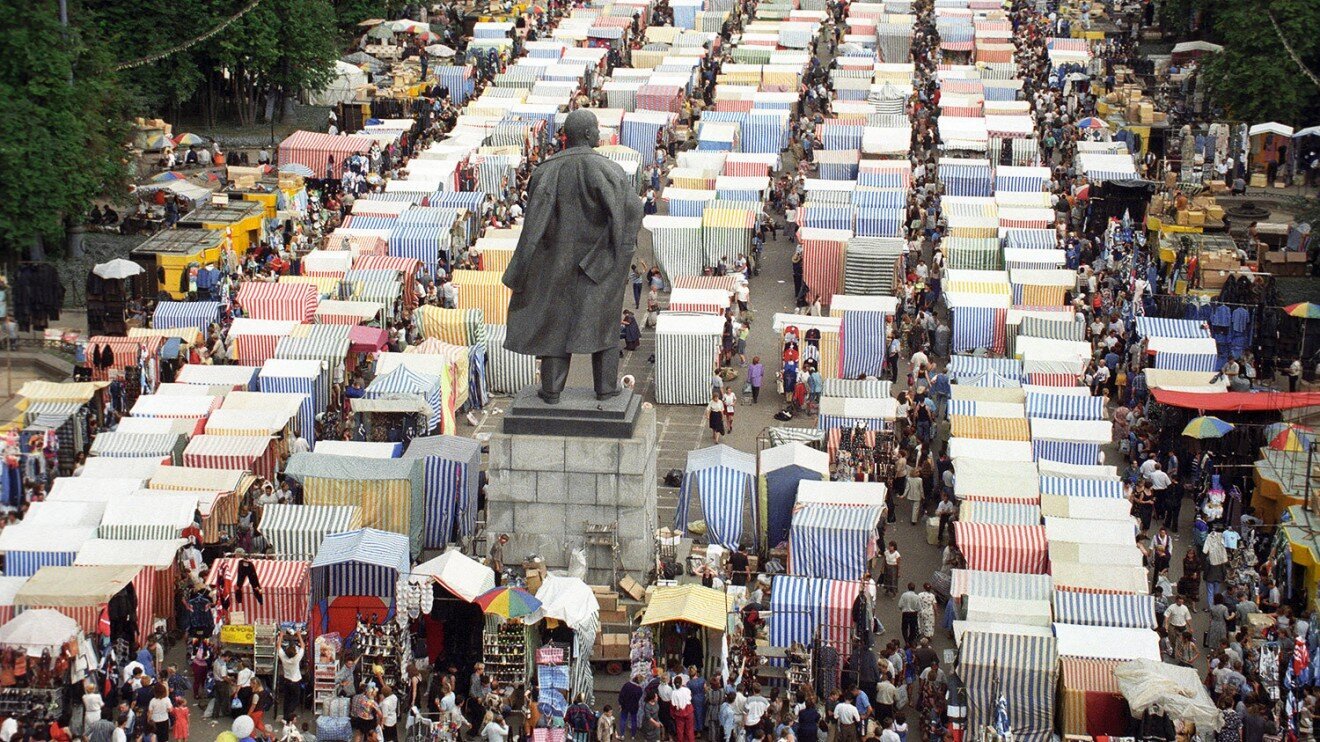
In the first years after the collapse of the USSR, Moscow’s largest sports arenas — Luzhniki, Dynamo, and CSKA — turned into gigantic clothing markets, symbols of the economic chaos and criminal lawlessness of the 1990s.
The Phenomenon of Stadium Flea Markets
Sports facilities were ideally suited for organizing spontaneous trade:
- Large open spaces (fields, running tracks).
- Convenient transport access.
- Covered stands and rooms for trading in winter.
- Existing utilities and infrastructure.
The first vendors appeared as early as 1991, and by 1993 the areas around the stadiums had fully transformed into massive trading zones.
Features of Each Market
Luzhniki
- The largest «spread.»
- Specialized in imported clothing and footwear.
- A hub for shuttle trading (goods from Turkey, China, Poland).
Dynamo
- Focused on electronics and household appliances.
- A place to unload stolen goods and contraband.
- The most criminalized of the markets.
CSKA
- Trade in military gear and equipment
- Sale of sporting goods
- A meeting place for army suppliers
The Criminal Element
Organized crime groups stood behind every market:
- They collected tribute from traders («protection» payments).
- They controlled the rental of trading spots.
- They settled disputes between sellers.
- They provided «security» for the territory.
Cultural and Social Context
The stadium markets became:
- A workplace for the first «shuttle traders.»
- A venue for illegal currency exchange.
- A center of Moscow’s shadow economy.
- A symbol of the social stratification of the 1990s.
Historical note: the last major stadium market (at Luzhniki) was shut down only in 2003, as part of the city’s urban improvement program.