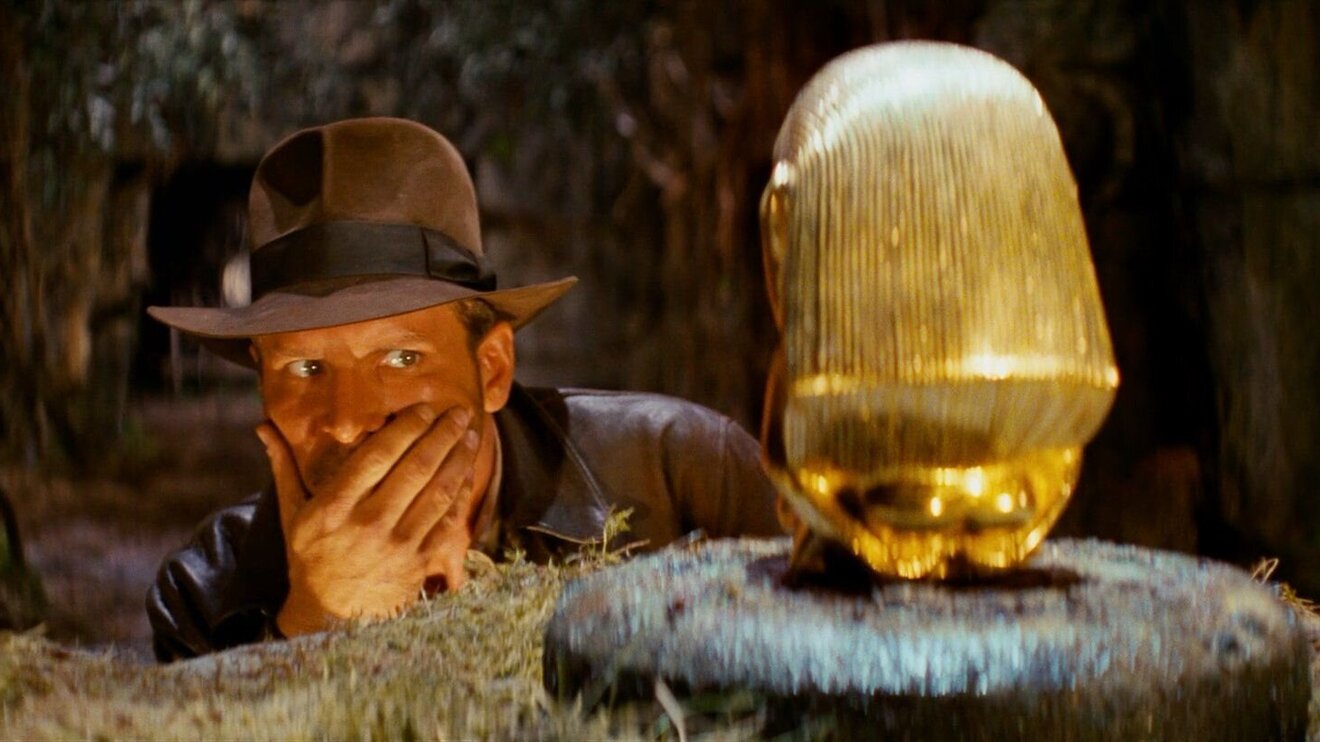
Origins of the Character
The character of Indiana Jones was conceived by director and screenwriter George Lucas in 1973. He was originally named Indiana Smith, but the surname was later changed to Jones at Steven Spielberg’s suggestion. The name came from Lucas’s own dog, an Alaskan malamute named Indiana, who also inspired the design of Chewbacca in "Star Wars."
Indiana Jones is a composite of the heroes of 1930s and 1940s adventure film serials, as well as characters from the pulp magazines Lucas read as a child.
Historical Prototypes
Though the filmmakers never pointed to specific historical prototypes for the character, several notable figures are often cited as influences:
- Otto Rahn — a German archaeologist and writer, an SS officer who searched for the Holy Grail
- Roy Chapman Andrews — an American paleontologist who worked in Inner Mongolia in the 1920s-30s
- Hiram Bingham — an American archaeologist who discovered Machu Picchu and taught at Princeton and Yale
- Percy Harrison Fawcett — a British colonel and explorer who vanished in the Amazon jungle in 1925
- Vendyl Jones — an archaeologist who searched for the Ark of the Covenant and wore a similar hat
- Frederick Albert Mitchell-Hedges — an archaeologist who claimed to have discovered a crystal skull in 1927
Character Biography
Full name: Dr. Henry Walton Jones Jr.
Born: July 1, 1899
Birthplace: Princeton, New Jersey
Occupation: Professor of Archaeology at Marshall College (Connecticut)
Indiana got his middle name, Walton, in honor of George Walton Lucas. He had a sister, Susie, who died of a fever in childhood. During the First World War, he served in the Belgian army under the name Captain Henri Defense, rose to officer rank, and later joined French intelligence.
During the Second World War, Jones worked as a CIA agent against the Soviet Union, alongside George McHale of British MI6. He has a daughter and a grandson, who appear in some episodes of the TV series. In old age, Indiana lost his right eye and wore an eyepatch.
Character Traits
Signature Gear
- Fedora — his distinctive brown hat
- Bullwhip — his primary weapon and tool
- Leather jacket — modeled on post-WWI pilot jackets
- Revolver — usually carries a pistol
- Moleskine notebook — a leather notebook for field notes
Personality Traits
- Ophidiophobia — a pathological fear of snakes
- Adventurousness — a drive for adventure
- Scholarly rigor — a serious approach to archaeology
- Heroism — a willingness to risk himself for a just cause
- Wit — a knack for finding a way out of tough situations
The Film Series
"Raiders of the Lost Ark" (1981)
Set in: 1936
Director: Steven Spielberg
Plot: Indiana races against the Nazis to find the Ark of the Covenant. His allies are his childhood sweetheart Marion Ravenwood and his loyal friend Sallah. His enemies are French archaeologist René Belloq and German agent Arnold Toht.
"Temple of Doom" (1984)
Set in: 1935 (a prequel)
Notable for: The darkest film in the series
Plot: Jones confronts an ancient cult of Thuggees worshipping the death goddess Kali. Together with singer Willie Scott and a boy nicknamed Short Round, he rescues kidnapped children and recovers the sacred Sankara stones.
"The Last Crusade" (1989)
Set in: 1938
Notable for: The introduction of Indiana’s father
Plot: The search for the Holy Grail alongside his father, Professor Henry Jones Sr. (Sean Connery). The film reveals the origins of Indiana’s signature gear and his fear of snakes. It turns out "Indiana" was the name of the family’s beloved dog.
"Kingdom of the Crystal Skull" (2008)
Set in: 1957
New enemies: Soviet agents
Plot: At the height of the Cold War, Indiana faces off against Colonel Irina Spalko, who is searching for a crystal skull of alien origin. Jones meets his son, Mutt Williams, whose existence he never knew about.
"Dial of Destiny" (2023)
Director: James Mangold (replacing Spielberg)
Notable for: The final film in the series, the only one not directed by Spielberg or based on a Lucas story, though both served as executive producers.
Television Projects
From 1992 to 1996, the TV series "The Young Indiana Jones Chronicles," created by George Lucas, aired on television. Aimed at a younger audience, it showed the character taking part in major events of the 20th century.
How the Character Came About
The character’s story began in the summer of 1977 in Hawaii, where Lucas and Spielberg were vacationing after finishing "Star Wars" and "Close Encounters of the Third Kind," respectively. When Spielberg said he wanted to direct a James Bond film, Lucas suggested he had "a better character," describing the concept of Indiana Jones. Spielberg called it "James Bond without the gadgets."
Cultural Influence and Recognition
2003
The American Film Institute ranked Indiana Jones second on its list of the 100 greatest movie heroes.
2020
Empire magazine named Indiana Jones the greatest movie character of all time.
Philosophy of the Character
Indiana Jones embodies the duality of the modern man, scholar and adventurer. Within university walls, he’s a calm archaeology professor lecturing students. But the moment he sets off on an expedition, he becomes a fearless adventurer, ready to risk his life for historical discovery.
Indiana Jones’s Core Principles
- "It belongs in a museum!" — archaeological finds should be studied, not exploited for personal gain
- A scientific approach — despite the adventurism, a serious attitude toward archaeology and history
- Protecting the innocent — a readiness to help those who need protection
- Fighting totalitarianism — standing against both Nazism and Communism
Legacy and Influence
Indiana Jones became a cult character who defined an entire genre of adventure cinema. His image influenced the creation of many other archaeologist-heroes in film, literature, and video games. The franchise proved that the retro style of the 1930s could be successfully adapted for a contemporary audience.
The character also helped popularize archaeology as a field, albeit in a somewhat romanticized form. Many real archaeologists cite the Indiana Jones films as what sparked their interest in the profession, despite the significant gap between movie archaeology and the real scientific work.
Conclusion
Indiana Jones remains one of the most beloved and recognizable characters in film history. His image combines a scholar’s intellect, a hero’s courage, and the humanity of an ordinary person with his own fears and weaknesses. The franchise successfully blended entertainment with education, introducing millions of viewers to history and archaeology through the lens of thrilling adventure.
Concluding in 2023 with "Dial of Destiny," the Indiana Jones series left an indelible mark on world culture. The character became a symbol of the idea that science and adventure can go hand in hand, and that the pursuit of knowledge can turn life into a thrilling journey full of discovery and heroism.