The Character’s Origins
Uriah Heep appears in «David Copperfield» (1849-1850) — a work Charles Dickens considered his favorite creation. The novel was published in monthly installments from May 1849 to November 1850, and Heep became the chief antagonist of the second half of the narrative.
Unlike his previous works, Dickens did not draft an overall plan for this novel, so many of the character’s details took shape as he wrote. The name «Uriah Heep» was settled on at the last moment, along with the names of other key characters — Traddles, Barkis, Creakle, and Steerforth.
The Character’s Prototypes
According to scholars of Dickens’s work, the prototype for Uriah Heep may have been Thomas Powell — a clerk for the publisher Thomas Chapman, a friend of the writer’s. Powell «wormed his way into the Dickens family’s confidence» and was later exposed as a fraudster and thief who had embezzled £10,000 from his employer. He subsequently attacked Dickens in pamphlets, particularly criticizing his social origins and standing.
Some scholars also suggest that Heep’s manner and physical traits may have been drawn from Hans Christian Andersen, whom Dickens met shortly before writing the novel.
Character Portrait
Appearance and Manner
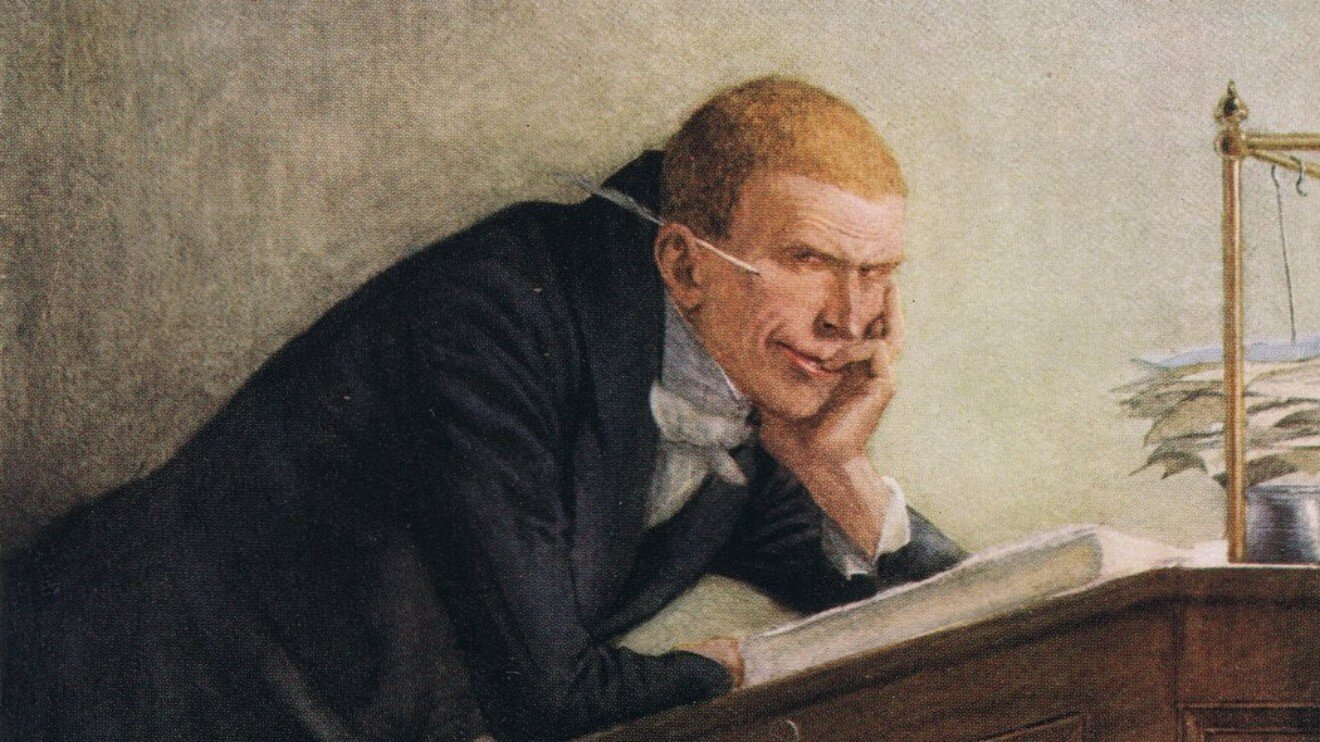
Dickens gave Uriah Heep a repellent appearance that mirrors his inner deformity. He is described as a gaunt, pale young man with red eyes and clammy hands. His manner — ostentatious humility, constant bowing, and obsequious smiles — creates the image of a man who uses outward submissiveness as a mask for his true intentions.
One of Heep’s most memorable traits is his constant repetition of the word «’umble» (humble), pronounced with the initial H dropped. This speech tic became one of the character’s most recognizable features and a symbol of his false humility.
Psychological Portrait
Uriah Heep is a complex psychological type — a man who wields ostentatious self-abasement as a weapon to achieve his ends. His «humility» is a carefully calculated strategy that lets him win people’s trust and exploit their weaknesses for his own purposes.
Dickens shows how skillfully Heep manipulates other people’s guilt and sympathy. He presents himself as a victim of circumstance, a man from the lower orders who supposedly knows his place, while all the while gradually seizing power and influence.
Role in the Novel’s Plot
Clerk to Mr. Wickfield
David first meets the fifteen-year-old Uriah Heep when he comes to live with Mr. Wickfield and his daughter Agnes. Heep works as a clerk in Wickfield’s law office and quickly realizes that his widowed employer suffers from alcoholism.
Rather than help his employer, Heep sees an opportunity for his own advancement in the man’s weakness. He encourages Wickfield’s drinking, convinces him that he commits financial improprieties while drunk, and blackmails him into making him a partner in the firm.
Designs on Agnes
One of the most repellent aspects of Uriah Heep’s character is his intention to marry Agnes Wickfield. He openly confesses to David (whom he hates) his plans to manipulate Agnes into marriage. This desire reflects not love but a hunger to finally cement his hold over the Wickfield family.
Exposure and Downfall
Uriah Heep makes a fatal mistake when he hires Mr. Micawber as a clerk. He assumes Micawber will never risk his own financial security by exposing Heep’s frauds. But Micawber turns out to be an honest man, and together with David and Tommy Traddles he gathers evidence of Heep’s crimes.
They let Uriah go free only after he reluctantly agrees to resign and return the stolen money. Later in the novel David meets Heep one last time in prison, where he is serving a sentence for bank fraud while awaiting transportation. Even behind bars Heep keeps playing the model prisoner, but in conversation with David his unchanged malice shows through.
The Character’s Symbolic Meaning
A Critique of Social Mobility
Uriah Heep represents the dark side of social mobility in Victorian society. Whereas Dickens generally supported the idea that talent and diligence should be rewarded, Heep shows how that system can be twisted and exploited by dishonest people.
His ostentatious humility is a parody of the Victorian values of modesty and knowing one’s place. Heep uses those values as a mask for his ambitions, exposing their hypocritical core.
A Mirror for the Protagonist
Uriah Heep serves as a kind of «negative mirror» for David Copperfield. Both characters come from modest families and strive to climb the social ladder. But where David uses honest means — education, hard work, and talent — Heep resorts to deceit and manipulation.
Scholars note that Heep is skilled at exploiting the pathos of his humble origins, using it to win sympathy while concealing ruthless ambition. David, by contrast, tends to suppress memories of his own modest past and mask his social ambitions behind a show of genteel mistrust.
An Embodiment of Hypocrisy
In a broader sense, Uriah Heep symbolizes hypocrisy as a social phenomenon. His constant professions of humility, paired with his drive for power, reflect the contradictions of Victorian society, where outward displays of virtue often concealed self-interested motives.
Literary Devices in the Character’s Construction
The Symbolism of the Name
Dickens worked carefully on his characters’ names, creating an «allegorical impulse» for the development of the plot’s themes. The name «Uriah» has biblical roots — it belonged to the Hittite warrior whom King David sent to certain death in order to take his wife, Bathsheba. The name carries connotations of betrayal and dishonesty.
The surname «Heep» may symbolize accumulation, fitting the character’s greed, or may point to his low standing (as in the expression «at the bottom of the heap»).
Speech Characteristics
Dickens uses Uriah Heep’s speech as the primary tool for characterizing him. The constant repetition of «’umble» becomes his verbal mask and a source of comic effect. But beneath the comedy lies deep irony — the more Heep speaks of his humility, the more apparent his pride and ambition become.
Physical Details
Dickens emphasizes Heep’s repellent physical traits — his clammy hands, red eyes, snakelike movements. These details are no accident: in the novel, snakes symbolize evil, and Heep is repeatedly compared to one.
Uriah Heep in the Context of Dickens’s Work
His Place Among Dickens’s Antagonists
Uriah Heep occupies a special place among Dickens’s villains. Where characters like Fagin from «Oliver Twist» or Quilp from «The Old Curiosity Shop» represent a more straightforward evil, Heep is a complex psychological type who uses socially acceptable forms of behavior to achieve criminal ends.
He anticipates later Dickens characters, such as Pecksniff from «Martin Chuzzlewit» or Mr. Merdle from «Little Dorrit,» who likewise use a show of respectability to conceal their dark dealings.
Social Critique
Through Uriah Heep, Dickens critiques not only individual hypocrisy but also broader social problems of the Victorian era. The character embodies the dangers of unchecked social mobility, where the absence of moral restraint allows unscrupulous people to work the system to their own advantage.
Influence on Culture and Literature
In Adaptations
Uriah Heep became one of the most memorable characters in «David Copperfield» and has appeared in numerous film and television adaptations of the novel. Actors who have played him include Roland Young (1935), Ron Moody (1969), Martin Jarvis (1974), Nicholas Lyndhurst (1999), and Ben Whishaw (2018).
Each interpretation emphasizes different facets of the character — from the comic side of his ostentatious humility to the sinister nature of his true character.
In Modern Culture
The name Uriah Heep has become a byword for a hypocritical, fawning person. The British rock band Uriah Heep, founded in 1969, took its name directly from this Dickens character.
The phrase «as humble as Uriah Heep» is used in English to describe false modesty or ostentatious self-deprecation masking self-interested motives.
The Character’s Psychological Relevance
Modern Parallels
Uriah Heep remains a relevant character in the modern world, since the type of person he represents exists in every era. His strategy of using ostentatious humility to gain power and influence resonates in today’s corporate and political structures.
Psychologists note that Heep’s behavior displays the classic hallmarks of a manipulative personality — the ability to read other people’s weaknesses and exploit them for his own ends, all while presenting himself as a victim of circumstance.
Lessons from the Character
Uriah Heep’s image serves as a warning about the need to distinguish true humility from false. Dickens shows that genuine virtue needs no constant proclamation, whereas ostentatious modesty often conceals the opposite qualities.
Literary Analysis
Structural Role in the Novel
In terms of the novel’s composition, Uriah Heep performs an important structural function. He is the chief antagonist of the second half of «David Copperfield,» creating a contrast with the more straightforward evil of Mr. Murdstone in the first half.
Where Murdstone represents outward coercion and open violence, Heep embodies a more refined form of evil — psychological manipulation and hidden aggression. This progression traces David’s own development: as a child he faces direct violence, as an adult, subtler forms of human baseness.
Thematic Significance
Within the novel’s central theme — the formation of character — Uriah Heep represents one possible path for a man of humble origin. He shows what happens when social ambition is not restrained by moral principle.
Dickens uses this character to explore class consciousness and social mobility, revealing both the bright and dark sides of Victorian society.
Conclusion
Uriah Heep remains one of the greatest literary embodiments of human hypocrisy. Created by Charles Dickens more than 170 years ago, the character remains relevant and instantly recognizable today.
The power of Heep’s image lies in the fact that Dickens did not simply draw a caricature of hypocrisy, but portrayed the complex psychology of a man who uses socially acceptable forms of behavior to achieve unworthy ends. His «humility» is not merely a mask but a carefully calculated strategy for manipulating those around him.
Within «David Copperfield,» Uriah Heep serves as an important structural and thematic element, helping to reveal both the protagonist’s character and the broader social problems of the Victorian era. His image reminds us of the need to distinguish true virtue from false, and that the most dangerous people are often those who hide behind a mask of humility and decency.
Uriah Heep is a character who compels readers to reflect not only on the nature of evil but on their own ability to recognize hypocrisy and manipulation in everyday life. Therein lies the enduring value of this outstanding creation of Charles Dickens.
Fun Fact
When Mrs. Jane Seymour Hill, Mrs. Dickens’s masseuse, recognized herself in the character of Miss Mowcher, she threatened legal action. Dickens was forced to revise the character’s psychology, making her less of a caricature and, by the novel’s end, turning her into a friend of the protagonist.