In 1993, access to foreign scientific and technical journals in Russia was severely limited and amounted to a genuine luxury for a Soviet-educated student. After the USSR's collapse, scientific ties with the Western world were only just beginning to be rebuilt, and currency restrictions made subscribing to foreign publications all but impossible for most academic institutions.
Prestigious American Scientific Journals
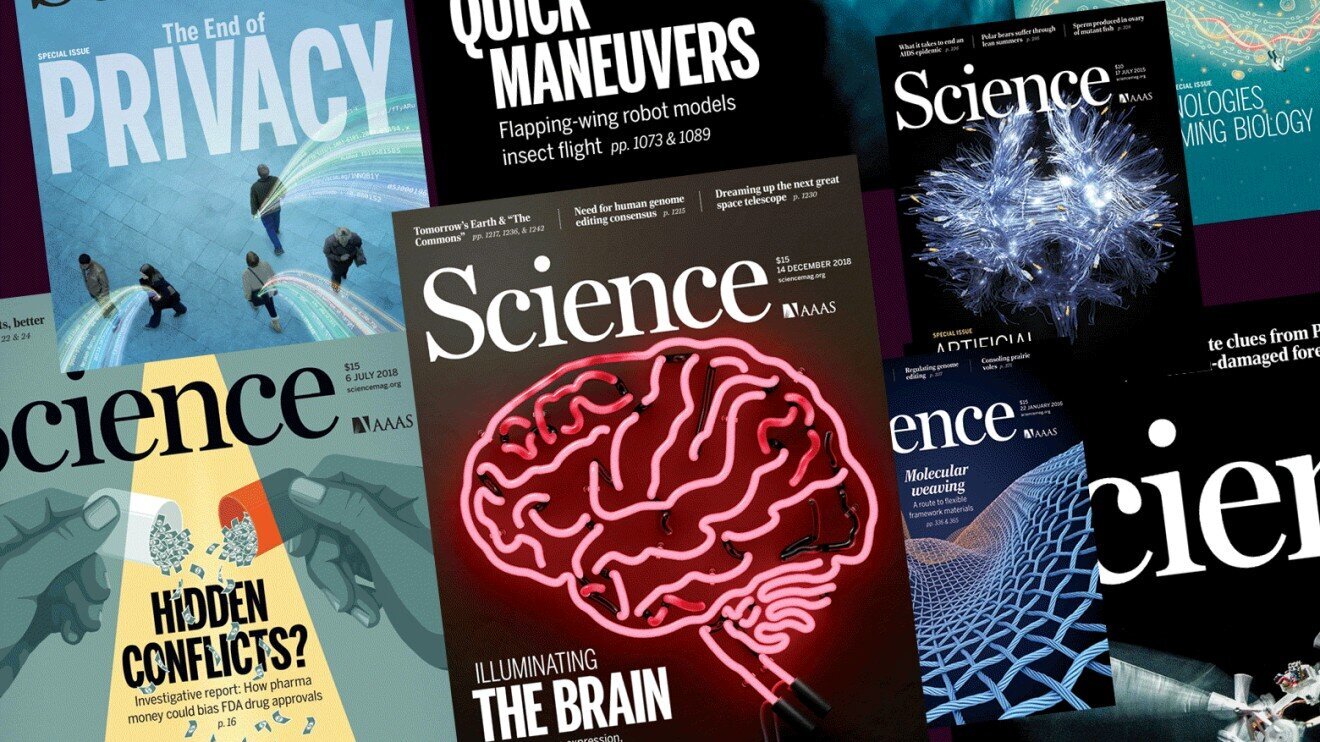
Science — the flagship publication of American science, published by the American Association for the Advancement of Science (AAAS) since 1880. By the early 1990s the journal already held status as one of the world's most authoritative scientific publications, where breakthrough research across every field, from physics to biology, appeared.
Scientific American, founded in 1845, occupied a special place as a popular-science magazine that made complex scientific concepts accessible to a general audience. For Soviet students and young scientists, it was especially valuable, letting them keep up with current trends in world science.
Proceedings of the National Academy of Sciences (PNAS) — the official journal of the U.S. National Academy of Sciences, publishing fundamental research since 1914. By 1993 it already had an impact factor above 9, making it one of the most-cited scientific publications.
British Scientific Publications
Nature, published since 1869, was recognized by the early 1990s as the most prestigious scientific journal in the world. Publishing in Nature was considered the pinnacle of a scientific career. The journal was known for its rigorous peer review and for publishing only genuinely groundbreaking discoveries.
Specialized Publications
Among specialized journals, particular authority belonged to Cell (the leading publication in molecular biology and biochemistry), Physical Review Letters (the prestigious physics journal of the American Physical Society), and The Lancet (the oldest medical journal, founded in 1823).
The Situation in 1993 Russia
Amid the economic crisis and currency restrictions, Russian libraries and universities suffered an acute shortage of Western scientific literature. Subscribing to a leading Western journal cost thousands of dollars a year, well beyond the means of most institutions. The few copies that did make it to Moscow's and St. Petersburg's central libraries were passed from hand to hand, photocopied, and hunted after by students and graduate students alike.
A student with access to fresh issues of Science or Nature gained an automatic advantage, staying current with the latest discoveries months, even years, ahead of classmates. That explains the narrator's envy of Gena's erudition — at the time, information really was power.
The Mechanics of Access
The internet was practically nonexistent in 1993 Russia, so the only way to get hold of foreign journals was a print subscription or copies obtained through scientific contacts. Many publications arrived months late, and their print runs in the USSR and Russia were extremely limited.
That's exactly why Gena's ability to "flip through foreign scientific and technical journals" on a Saturday in 1993 marks him not only as a top student, but as someone with access to exclusive sources of information — a genuine luxury for the time.