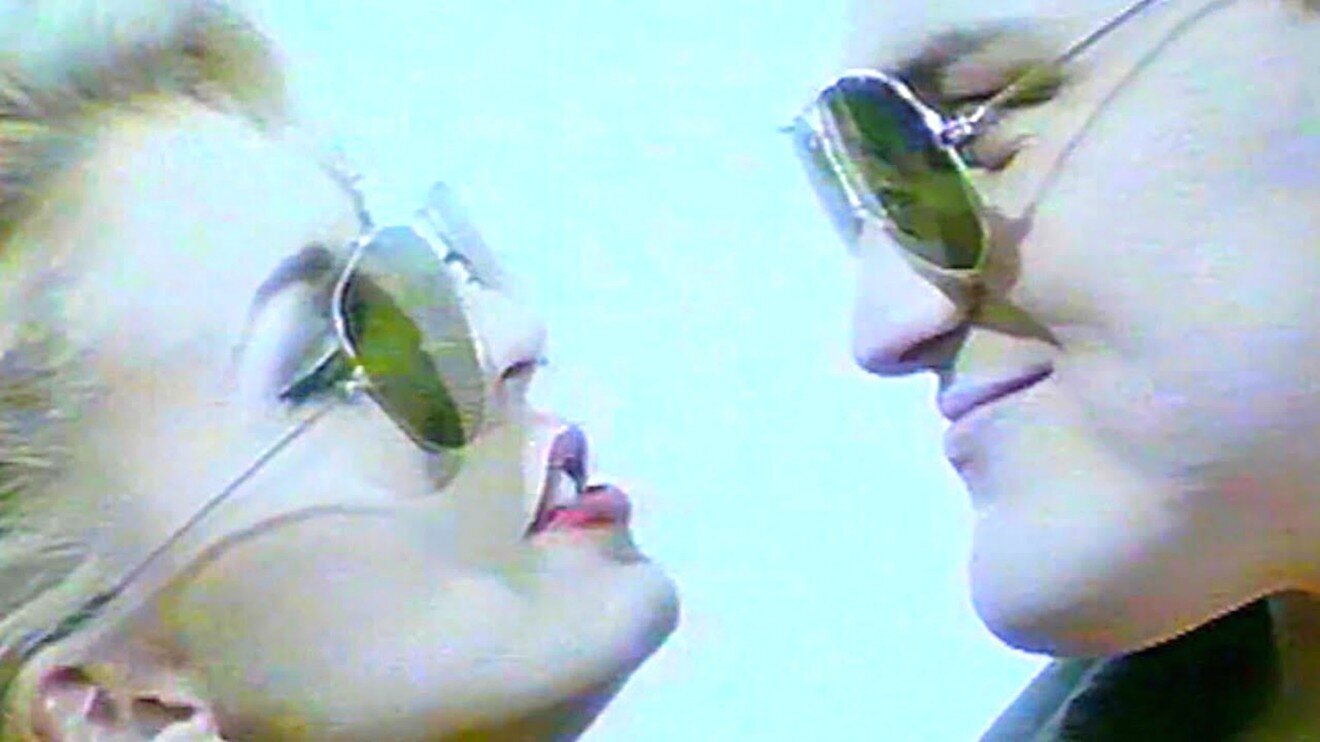
The line "I'll give you back everything you ever gave me" is the hook of the chorus from "Posmotri v Glaza" ("Look Into My Eyes"), a song that became a cult hit of the early 1990s and a symbol of the new Russian pop scene.
A Singer-Phenomenon
Natalya Igorevna Vetlitskaya (b. August 17, 1964, Moscow) is a singer who came to embody the transition from Soviet to post-Soviet pop music. The daughter of a nuclear physicist and a piano teacher, she grew up doing ballroom dancing and music, which later shaped her stage persona.
Vetlitskaya's career began in the mid-1980s as a dancer and backup singer in some of the era's popular groups: Rondo, Klass, Ideya Fix, and Mirage. With Mirage she even briefly filled in for departed member Natalia Gulkina, touring cities across the USSR.
Birth of a Hit
"Posmotri v Glaza" was written by Andrei Zuyev, a musician from Novosibirsk who moved to Moscow and, as it happened, found his fortune there after meeting Vetlitskaya. Zuyev admitted he wrote the song trying to do things differently, even though he'd barely written a single song before it.
"Honestly, a lot of people turned their noses up. Not just at the song — in general, people said, why does Natalya even need this? She was a socialite back then, nobody believed she'd make it as a singer. More of a party girl, some kind of dancer. But from the very start I had a feeling this one would take off."
The song's co-producer was Igor Matvienko, who noted that the musicians looked to Western models when putting the track together, drawing in particular on elements from Malcolm McLaren's then-popular "Deep in Vogue."
A Cultural Phenomenon
"Posmotri v Glaza" became a genuine cultural phenomenon of 1991–1992. In 2011, Time Out magazine included it on a list of "100 songs that changed our lives," calling Vetlitskaya "the nation's pop pride" and noting that by late 1992, "you'd have to be deaf not to know her song 'Look Into My Eyes' — and loving pop music wasn't remotely embarrassing anymore!"
The magazine Afisha also included the song, in 2011, on its list of the twenty most striking Russian pop hits of the previous two decades, highlighting the paradoxical mix in Vetlitskaya's work of eroticism and innocence, and a voice that "always seemed to sing with some elusive self-irony."
A Groundbreaking Music Video
A music video for the song was shot in 1991 and became almost as famous as the song itself. It was directed by Fyodor Bondarchuk and Tigran Keosayan (who was dating Vetlitskaya at the time), with Sergei Kozlov behind the camera.
The video was shot at VGIK, Russia's state film school, with no script, pure improvisation. The now-famous shot of a powder brush dusting Vetlitskaya's face became a symbol of the new, freewheeling Russian pop scene. In October 1992, the video won the top prize at Moscow's "Generation-92" festival, and in 2018 it made the Meduza list of "30 greatest music videos in music history."
The Era in Context
By 1993, when the novel's events take place, Natalya Vetlitskaya was at the height of her fame. Her album Posmotri v Glaza (1992) was one of the first successful solo projects of the post-Soviet pop scene. The singer embodied a new Russia — free, uninhibited, oriented toward Western standards, yet retaining its own distinctive melodicism and warmth.
Vetlitskaya's image — leather outfits, platinum hair, a signature delivery — became the template for the Russian pop diva of the early 1990s. Her concerts sold out, and her songs never left the radio waves or the dance floors anywhere in the country.